Appendix A
Journal Article Critique Guidelines*
I. Citation
A. Provide a full citation of the article (as given in this study guide).
II. Topic
A. Briefly describe the topic of the journal article as provided by the author. Is the topic
clearly specified? Does the abstract meaningfully summarize the purpose and
content of the article? How might this work be integrated into one of the sections in
your textbook?
B. Identify the author’s major objective in this article.
C. Identify the important concepts and variables being focused on by the author. Are
the definitions for concepts clear?
D. Does the author seem to be making any assumptions?
E. Is there bias apparent in the author’s approach?
III. Theory
A. Is the author being guided by a particular theoretical perspective or theory? If so,
describe the author’s interpretation and use of the theory.
B. Does the theory seem to be applied appropriately to the issue or topic?
C. Compare the author’s understanding and use of the theory to how the theory is
presented in the text.
IV. Research Methods
A. What research design does the author use? Does it seem appropriate for the
author’s objective?
B. Does the author clearly describe the procedures used for this research?
C. What procedures were used to select subjects for this study? What was the response
rate?
D. Is the study cross-sectional or longitudinal in design?
, E. Are the data clearly and meaningfully presented?
V. Discussion and Interpretations
A. Do the data support the author’s conclusions?
B. Is the article thought provoking? What new questions, if any, is the author raising?
C. What is your evaluation of the author’s literature review? How comprehensive is it?
Does the author include citations from more than just one perspective or viewpoint?
D. Is the research cited current? Does the author provide historical perspective
through the citations?
VI. Reflection
A. How has this article expanded upon material presented in the text?
B. What was the most important thing you learned by reading and critiquing this
article?
*The above prompts are meant as general questions or issues to address while reading
and critiquing a scholarly journal article. For each of the Roman numeral headings,
you are to summarize the article’s content. Organize your thoughts to enable yourself
to be clear, succinct, and imaginative in your critique.
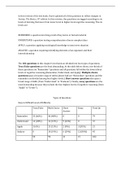
, In this revision of the test bank, I have updated all of the questions to reflect changes in Sociology, 14th
edition. There is also a new system for identifying the difficulty of the questions. In earlier editions, the
questions were tagged in one of three ways: factual (recall of factual material), conceptual (understanding
key concepts), and applied (application of sociological knowledge to a situation). In this revision, the
questions are now tagged according to the six levels of learning that help organize the text. Think of these
six levels as moving from lower-level to higher-level cognitive reasoning. The six levels are:
REMEMBER: a question involving recall of key terms or factual material
UNDERSTAND: a question testing comprehension of more complex ideas
APPLY: a question applying sociological knowledge to some new situation
ANALYZE: a question requiring identifying elements of an argument and their interrelationship
EVALUATE: a question requiring critical assessment
CREATE: a question requiring the generation of new ideas
The 176 questions in this chapter’s test bank are divided into four types of questions. True/False
questions are the least demanding. As the table below shows, two-thirds of these questions are
“Remember” questions and all questions fall within the lowest three levels of cognitive reasoning
(Remember, Understand, and Apply). Multiple-choice questions span a broader range of skills (almost
half are “Remember” questions and the remainder are divided among four higher levels.) Short answer
questions also span a broad range of skills (from “Understand” to “Evaluate”). Finally, essay questions
are the most demanding because they include the four highest levels of cognitive reasoning (from
“Apply” to “Create”).
Types of Questions
Easy to Difficult Level of Difficulty
True/False Mult Choice Short Answer Essay Total Qs
Remember 33 (66%) 44 (44%) 0 0 77
Understand 11 (22%) 21 (21%) 6 (37.5%) 0 38
Apply 6 (12%) 14 (14%) 2 (12.5%) 2 (20%) 24
Analyze 0 16 (16%) 6 (37.5%) 3 (30%) 25
Evaluate 0 5 (5%) 2 (12.5%) 2 (20%) 9
, Create 0 0 0 3 (30%) 3
50 100 16 10 176
Journal Article Critique Guidelines*
I. Citation
A. Provide a full citation of the article (as given in this study guide).
II. Topic
A. Briefly describe the topic of the journal article as provided by the author. Is the topic
clearly specified? Does the abstract meaningfully summarize the purpose and
content of the article? How might this work be integrated into one of the sections in
your textbook?
B. Identify the author’s major objective in this article.
C. Identify the important concepts and variables being focused on by the author. Are
the definitions for concepts clear?
D. Does the author seem to be making any assumptions?
E. Is there bias apparent in the author’s approach?
III. Theory
A. Is the author being guided by a particular theoretical perspective or theory? If so,
describe the author’s interpretation and use of the theory.
B. Does the theory seem to be applied appropriately to the issue or topic?
C. Compare the author’s understanding and use of the theory to how the theory is
presented in the text.
IV. Research Methods
A. What research design does the author use? Does it seem appropriate for the
author’s objective?
B. Does the author clearly describe the procedures used for this research?
C. What procedures were used to select subjects for this study? What was the response
rate?
D. Is the study cross-sectional or longitudinal in design?
, E. Are the data clearly and meaningfully presented?
V. Discussion and Interpretations
A. Do the data support the author’s conclusions?
B. Is the article thought provoking? What new questions, if any, is the author raising?
C. What is your evaluation of the author’s literature review? How comprehensive is it?
Does the author include citations from more than just one perspective or viewpoint?
D. Is the research cited current? Does the author provide historical perspective
through the citations?
VI. Reflection
A. How has this article expanded upon material presented in the text?
B. What was the most important thing you learned by reading and critiquing this
article?
*The above prompts are meant as general questions or issues to address while reading
and critiquing a scholarly journal article. For each of the Roman numeral headings,
you are to summarize the article’s content. Organize your thoughts to enable yourself
to be clear, succinct, and imaginative in your critique.
, In this revision of the test bank, I have updated all of the questions to reflect changes in Sociology, 14th
edition. There is also a new system for identifying the difficulty of the questions. In earlier editions, the
questions were tagged in one of three ways: factual (recall of factual material), conceptual (understanding
key concepts), and applied (application of sociological knowledge to a situation). In this revision, the
questions are now tagged according to the six levels of learning that help organize the text. Think of these
six levels as moving from lower-level to higher-level cognitive reasoning. The six levels are:
REMEMBER: a question involving recall of key terms or factual material
UNDERSTAND: a question testing comprehension of more complex ideas
APPLY: a question applying sociological knowledge to some new situation
ANALYZE: a question requiring identifying elements of an argument and their interrelationship
EVALUATE: a question requiring critical assessment
CREATE: a question requiring the generation of new ideas
The 176 questions in this chapter’s test bank are divided into four types of questions. True/False
questions are the least demanding. As the table below shows, two-thirds of these questions are
“Remember” questions and all questions fall within the lowest three levels of cognitive reasoning
(Remember, Understand, and Apply). Multiple-choice questions span a broader range of skills (almost
half are “Remember” questions and the remainder are divided among four higher levels.) Short answer
questions also span a broad range of skills (from “Understand” to “Evaluate”). Finally, essay questions
are the most demanding because they include the four highest levels of cognitive reasoning (from
“Apply” to “Create”).
Types of Questions
Easy to Difficult Level of Difficulty
True/False Mult Choice Short Answer Essay Total Qs
Remember 33 (66%) 44 (44%) 0 0 77
Understand 11 (22%) 21 (21%) 6 (37.5%) 0 38
Apply 6 (12%) 14 (14%) 2 (12.5%) 2 (20%) 24
Analyze 0 16 (16%) 6 (37.5%) 3 (30%) 25
Evaluate 0 5 (5%) 2 (12.5%) 2 (20%) 9
, Create 0 0 0 3 (30%) 3
50 100 16 10 176