Dispute Resolution Introduction
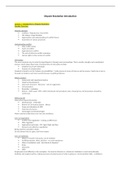
Lecture 1 - Introduction to Dispute Resolution
Module Overview
Module rationale
Conflicts / Disputes are a fact of life
Not always a legal situation
Appreciation and understanding of conflict theory
Awareness of various processes
Understanding conflict
Why conflict arises
Types of conflict
Approaches to conflict
The role of ethics in conflict resolution
Human rights in the context of conflict
Civil Justice
The most common way to solve the legal dispute is through court proceedings. This is usually a lengthy and complicated
process, which obeys fixed rules. Characteristics of civil justice include:
Initiation by private individuals
Purpose of compensation
Standard of proof is on the ‘balance of probabilities’. Costly process in terms of time as well as money. Family law is not so
focused on evidence and most recently focuses on getting evidence.
What is justice?
Adversarial and inquisitorial justice
Historical development
Civil court structure / hierarchy - role of magistrates
Civil procedure
Remedies - mediation
Reform - Wolf report 1999, which introduced civil procedure rules, showing how civil procedures should be
carried out.
ADR in the UK
Alternative Dispute Resolution
Development - 1950s-80s
Reform of Civil Justice System - effects
Scope and situations of ADR
Overview of process
Advantages and disadvantages
Many commercial Barristers are now also mediators.
Intro to Negotiation
Conflict and negotiation - looking at differences
Why negotiate?
Approaches and styles - FFF, fight, flight and flow
Elements and effective negotiation
Being assertive and able to listen.
Do not always have to agree, but have respect
Intro to Mediation
What is it exactly? 3rd party, use of mediator
Avoiding expense, delay, decision - no court experience
When is mediation used / what kinds of disputes?
Roles
Outcomes
Skills
Employment and difficulty in the workplace. Can lead to tribunals or a dismissal. Mediation is used internationally.
Facilitate and support parties, making everyone involved aware of what is going on. Communication skills - confidence.
,Intro to Arbitration
A practitioners perspective - arbitrators
Statutory basis - arbitration acts (1966)
Contextual usage - commercial international disputes and the procedure / costs / challenging awards /
enforcement
Arbitrator makes the decision, whereas the mediator doesn’t.
Advantages of Arbitration include there being a decision however it is a win / lose situation
Tribunals
Development and growing use of tribunals
Need, role and function within the framework of dispute resolution - not evidence based
The merits of the tribunal forum
Reform
Litigation in context
The case of Morris v UK
McLibel film - human rights / freedom of speech
Aims of CCCU Mediation Clinic
Provide mediation services to local / wider community
Enhance teaching and learning across curricula
Encourage research
Intern and peer opportunity
Lecture 2 - Understanding Conflict
Conflict may be defined simple as a class of interests or aspirations actual or perceived.
Disputes are immediate manifestations of conflict, and arise when people take actions
based on this actual or perceived clash.
⁃ Risken et al.
Definition:
⁃ A serious disagreement or agreement, typically a protracted one a prolonged armed
struggle: religions conflicts.
⁃ A state of mind in which a person experiences a clash of opposing feelings or needs:
bewildered by her own inner conflict, she could only stand there feeling vulnerable.
⁃ A serious incompatibility between two or more opinions, principles or interests:
there was a conflict between business and domestic life.
Conflicts will always exist and this is totally normal. How we view conflict will determine
how we deal with it. It may be viewed as:
⁃ a feeling
⁃ disagreement
⁃ a real of perceived incompatibility of interests
⁃ inconsistent world views
⁃ a difference of behaviour or belief
Conflict or dispute?
Commentators views differ - some see them as different entities
Continuum view - no fine distinction but perhaps difference in degree. Disputes are less
intense and more negotiable and conflicts are more intense, less negotiable.
e.g. referendum in Catalonia.
,Conflict theory
Individual characteristics - could be an innate human characteristic as we are drawn towards
conflict due to unmet human needs.
Social process - a development of individuals characteristics. The relationship between
parties, e.g. competition for resources.
Social structure - Marx (have and have notes) often used today to explain power disparities
in the content of race, gender, and social class division.
Conflict analysis
Conflict as perception - involves needs, interests, wants or values that are incompatible with
someone else’s.
Conflict as a feeling - emotional reaction to a situation. Can be one way (i.e. you can
perceive it whilst the other doesn’t)
Conflict as action - die to the direct attempt to get where we want. May involve power,
violence or other destructive action.
Sources of conflict
Needs/Wants/Requirements all drive conflict.
⁃ Structure
This is the dynamics of the participants that might be creating the conflict, for example boss
and employee.
⁃ Communication
Humans communicate through both verbal and nonverbal methods. Paying attention to
both ways of communicating is an integral part of the conflict resolution process and could
easily hamper it if one person is talking one way and acting or posturing another.
⁃ Emotions
Are powerful drivers to the human psyche and the decision making process.
⁃ Values
Different people have different needs and goals. Don’t assume that everyone thinks the
same way as you do. Problems can arise. Need to accept that each person shares his or her
own value system.
⁃ History
A person’s past experiences and the history of a relationship between two people involved
in conflict plays a significant role in the resolution process.
, The Wheel / Circle of Conflict by Moore & Mayer.
Personal
Intra - conflict felt by a person within him/herself, e.g. work-family balance
Inter - between two people, co workers, friends, partners, neighbours.
Motivation - usually an expression of feelings or hostility, grounded in personality.
Inter-Group
Ethnocentrism - where the group perceptions, values and aspirations are favoured over
another groups.
Strengths of group identify - strengthens the groups members’ resolve to achieve
aspirations. Creates positive group behaviour (us and them)
Conflict stalemate = rigid changing views of differing interests; rigid unchanging views of
self; incompatible views; poor communication; win/lose perception.
Organisational
Can create mistrust: risk avoiding behaviour, reduced cooperation, less sharing of resources.
Negations: can break down due to poorly managed conflict. Parties may not reach an
agreement.
Functional
If managed well - it can facilitate; innovation / change, better quality decisions.
Expose ignored problems - facilitate discourse, enable understanding of how things are.
⁃ ( See Emily Durkheim, Morton Deutsch, George Simmel, and Lewis Coser)
Dysfunctional
If not managed well - it can cause: personal stress, anxiety and burnout.
Organisational - climate of mistrust, reduced cooperation.
Lecture 1 - Introduction to Dispute Resolution
Module Overview
Module rationale
Conflicts / Disputes are a fact of life
Not always a legal situation
Appreciation and understanding of conflict theory
Awareness of various processes
Understanding conflict
Why conflict arises
Types of conflict
Approaches to conflict
The role of ethics in conflict resolution
Human rights in the context of conflict
Civil Justice
The most common way to solve the legal dispute is through court proceedings. This is usually a lengthy and complicated
process, which obeys fixed rules. Characteristics of civil justice include:
Initiation by private individuals
Purpose of compensation
Standard of proof is on the ‘balance of probabilities’. Costly process in terms of time as well as money. Family law is not so
focused on evidence and most recently focuses on getting evidence.
What is justice?
Adversarial and inquisitorial justice
Historical development
Civil court structure / hierarchy - role of magistrates
Civil procedure
Remedies - mediation
Reform - Wolf report 1999, which introduced civil procedure rules, showing how civil procedures should be
carried out.
ADR in the UK
Alternative Dispute Resolution
Development - 1950s-80s
Reform of Civil Justice System - effects
Scope and situations of ADR
Overview of process
Advantages and disadvantages
Many commercial Barristers are now also mediators.
Intro to Negotiation
Conflict and negotiation - looking at differences
Why negotiate?
Approaches and styles - FFF, fight, flight and flow
Elements and effective negotiation
Being assertive and able to listen.
Do not always have to agree, but have respect
Intro to Mediation
What is it exactly? 3rd party, use of mediator
Avoiding expense, delay, decision - no court experience
When is mediation used / what kinds of disputes?
Roles
Outcomes
Skills
Employment and difficulty in the workplace. Can lead to tribunals or a dismissal. Mediation is used internationally.
Facilitate and support parties, making everyone involved aware of what is going on. Communication skills - confidence.
,Intro to Arbitration
A practitioners perspective - arbitrators
Statutory basis - arbitration acts (1966)
Contextual usage - commercial international disputes and the procedure / costs / challenging awards /
enforcement
Arbitrator makes the decision, whereas the mediator doesn’t.
Advantages of Arbitration include there being a decision however it is a win / lose situation
Tribunals
Development and growing use of tribunals
Need, role and function within the framework of dispute resolution - not evidence based
The merits of the tribunal forum
Reform
Litigation in context
The case of Morris v UK
McLibel film - human rights / freedom of speech
Aims of CCCU Mediation Clinic
Provide mediation services to local / wider community
Enhance teaching and learning across curricula
Encourage research
Intern and peer opportunity
Lecture 2 - Understanding Conflict
Conflict may be defined simple as a class of interests or aspirations actual or perceived.
Disputes are immediate manifestations of conflict, and arise when people take actions
based on this actual or perceived clash.
⁃ Risken et al.
Definition:
⁃ A serious disagreement or agreement, typically a protracted one a prolonged armed
struggle: religions conflicts.
⁃ A state of mind in which a person experiences a clash of opposing feelings or needs:
bewildered by her own inner conflict, she could only stand there feeling vulnerable.
⁃ A serious incompatibility between two or more opinions, principles or interests:
there was a conflict between business and domestic life.
Conflicts will always exist and this is totally normal. How we view conflict will determine
how we deal with it. It may be viewed as:
⁃ a feeling
⁃ disagreement
⁃ a real of perceived incompatibility of interests
⁃ inconsistent world views
⁃ a difference of behaviour or belief
Conflict or dispute?
Commentators views differ - some see them as different entities
Continuum view - no fine distinction but perhaps difference in degree. Disputes are less
intense and more negotiable and conflicts are more intense, less negotiable.
e.g. referendum in Catalonia.
,Conflict theory
Individual characteristics - could be an innate human characteristic as we are drawn towards
conflict due to unmet human needs.
Social process - a development of individuals characteristics. The relationship between
parties, e.g. competition for resources.
Social structure - Marx (have and have notes) often used today to explain power disparities
in the content of race, gender, and social class division.
Conflict analysis
Conflict as perception - involves needs, interests, wants or values that are incompatible with
someone else’s.
Conflict as a feeling - emotional reaction to a situation. Can be one way (i.e. you can
perceive it whilst the other doesn’t)
Conflict as action - die to the direct attempt to get where we want. May involve power,
violence or other destructive action.
Sources of conflict
Needs/Wants/Requirements all drive conflict.
⁃ Structure
This is the dynamics of the participants that might be creating the conflict, for example boss
and employee.
⁃ Communication
Humans communicate through both verbal and nonverbal methods. Paying attention to
both ways of communicating is an integral part of the conflict resolution process and could
easily hamper it if one person is talking one way and acting or posturing another.
⁃ Emotions
Are powerful drivers to the human psyche and the decision making process.
⁃ Values
Different people have different needs and goals. Don’t assume that everyone thinks the
same way as you do. Problems can arise. Need to accept that each person shares his or her
own value system.
⁃ History
A person’s past experiences and the history of a relationship between two people involved
in conflict plays a significant role in the resolution process.
, The Wheel / Circle of Conflict by Moore & Mayer.
Personal
Intra - conflict felt by a person within him/herself, e.g. work-family balance
Inter - between two people, co workers, friends, partners, neighbours.
Motivation - usually an expression of feelings or hostility, grounded in personality.
Inter-Group
Ethnocentrism - where the group perceptions, values and aspirations are favoured over
another groups.
Strengths of group identify - strengthens the groups members’ resolve to achieve
aspirations. Creates positive group behaviour (us and them)
Conflict stalemate = rigid changing views of differing interests; rigid unchanging views of
self; incompatible views; poor communication; win/lose perception.
Organisational
Can create mistrust: risk avoiding behaviour, reduced cooperation, less sharing of resources.
Negations: can break down due to poorly managed conflict. Parties may not reach an
agreement.
Functional
If managed well - it can facilitate; innovation / change, better quality decisions.
Expose ignored problems - facilitate discourse, enable understanding of how things are.
⁃ ( See Emily Durkheim, Morton Deutsch, George Simmel, and Lewis Coser)
Dysfunctional
If not managed well - it can cause: personal stress, anxiety and burnout.
Organisational - climate of mistrust, reduced cooperation.