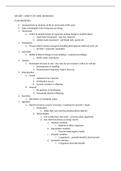
NATURE + VARIETY OF LIVING ORGANISMS
8 LIFE PROCESSES
characteristics to all forms of life at some point of life cycle
help us distinguish from living and non-living
1. Movement
a. Action by organism/part of organism causing change in position/place
i. organ level movement – leg, arm, head etc.
ii. cellular level movement – red blood cells, sperm etc.
2. Respiration
a. Process which releases energy by breaking down glucose molecule w/in cell
i. Aerobic + anaerobic respiration
3. Sensitivity
a. Ability to detect changes in surroundings + respond accordingly
i. Smell, vision, hearing etc.
4. Growth
a. Permanent increase in size + dry mass by an increase in cell no or cell size
i. Development of seedling
ii. Measurement of growth, height, mass etc.
5. Reproduction
a. Sexual
i. Gametes from 2 parents
ii. Fertilization occurs
iii. Genetic variation in offspring
b. Asexual
i. No gametes or fertilization
ii. Genetically identical offspring
6. Excretion
a. Elimination of metabolic waste
7. Nutrition
a. Need for food as a source of energy + materials for growth + repair
i. Autotrophs
1. Make their own food by photosynthesis (plants)
ii. Heterotrophs
1. Can’t make their own food – consume other organisms
2. Use chemical energy as energy source
a. Holozoic nutrition
i. Depend on other organisms
b. Saprophytic nutrition
i. Feed on dead organic matter
c. Parasitic nutrition
i. 2 organisms – parasite benefits, host harmed
d. Symbiotic nutrition
i. 2 organisms but both benefit
8 LIFE PROCESSES
characteristics to all forms of life at some point of life cycle
help us distinguish from living and non-living
1. Movement
a. Action by organism/part of organism causing change in position/place
i. organ level movement – leg, arm, head etc.
ii. cellular level movement – red blood cells, sperm etc.
2. Respiration
a. Process which releases energy by breaking down glucose molecule w/in cell
i. Aerobic + anaerobic respiration
3. Sensitivity
a. Ability to detect changes in surroundings + respond accordingly
i. Smell, vision, hearing etc.
4. Growth
a. Permanent increase in size + dry mass by an increase in cell no or cell size
i. Development of seedling
ii. Measurement of growth, height, mass etc.
5. Reproduction
a. Sexual
i. Gametes from 2 parents
ii. Fertilization occurs
iii. Genetic variation in offspring
b. Asexual
i. No gametes or fertilization
ii. Genetically identical offspring
6. Excretion
a. Elimination of metabolic waste
7. Nutrition
a. Need for food as a source of energy + materials for growth + repair
i. Autotrophs
1. Make their own food by photosynthesis (plants)
ii. Heterotrophs
1. Can’t make their own food – consume other organisms
2. Use chemical energy as energy source
a. Holozoic nutrition
i. Depend on other organisms
b. Saprophytic nutrition
i. Feed on dead organic matter
c. Parasitic nutrition
i. 2 organisms – parasite benefits, host harmed
d. Symbiotic nutrition
i. 2 organisms but both benefit