Instability of Tudor Monarchy
(1547-1558)
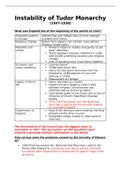
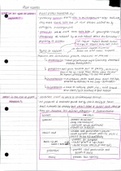
What was England like at the beginning of the period on 1547?
England’s position Catholic fear and military fear of much stronger
in Europe Scotland and France.
Religious change Broken from papacy, but Catholic even without
religious houses open.
Rebellion and Monarch relied on nobility and gentry to put
unrest down rebellions.
There had been previous rebellions in 1536
with 40,000 protesting taxation and religious
change.
Lack of standing army to put down rebellion.
Economic and Land enclosure
social conditions 1540s food prices rise
Henry VIII had spent all money from the
Dissolution of Monasteries on war and
defence in 1540s.
Debasement of coinage.
Legacy of Henry Henry was seen as a tyrant.
VIII Edward VI had a Regency Council split
between religious conservatives and
reformers set up for him by Henry.
Centralized power to the Crown due to lack of
influence of Church. Significant Erastian
beliefs.
1543 Third Succession Act: Declared that
Mary had a right to the throne after Edward
VI, and then Elizabeth.
Government of Most of the decisions were made by the King
England himself and the Privy Council
Parliament simply existed to raise taxes or
new laws.
The factionalism of the Council was the biggest issue to
anticipate in 1547. The Succession act left questions open
towards a possible Catholic reformation in the future.
How serious were the problems caused by the minority of Edward
VI?
1543 Third Succession Act: Declared that Mary had a right to the
throne after Edward VI. Passed because Henry wanted a smooth
succession after Edward, due to issues with his age his reign could
go wrong.
, Past monarchs like Henry III were examples of where a young king
could have a successful monarchy, but the political climate of
Edward VI’s time was completely different.
Latimer quotes the Old Testament in denouncing
Minors cannot control factions if even grown men could not.
A child could not be a military leader.
The overall image of a strong, self-assured King did not really work
will Edward, as he was always had men to make decisions for him.
Evidenced in 1553 where coins no longer showed him as a child but
a man on horseback.
The fear of the factions in 16-man council that Henry wanted in his
will meant central power was inevitable for Somerset to take
immediately in January 1547.
The handover of power to Somerset was smooth, as it was
tactically announced at the same time of Henry’s death. However,
there was question to the legality of Somerset’s power as it went
against Henry’s wishes.
Key members of Edward’s Council
Duke of Somerset, Edward Seymour: Edward’s uncle and autocratic
ruler until the coup against him in 1549. Lost favour with council
and gentry over his eccentric way of ruling and preference for the
poor.
Paget: Supporter and close friend of Somerset, who promoted him
to Comptroller of the Household. However, began to get worried by
Somerset’s way of government and the religious uprisings. Demoted
in Northumberland’s council but reinstated in Mary’s.
Gardiner: Catholic bishop. Key role in religious reform (heresy laws)
in Mary’s Council.
Wriothesely: Backed Northumberland in the coup against Somerset.
Religious conservative.
Cecil: Agreed to the change in the Devise, but then swore loyalty to
Mary when she arrived in London in 1553.
Earl of Warwick/Duke of Northumberland: Lord President of Council
from 1550. Developed Somerset’s policies but was ambitious and
tried to gain power for his own means. Commander of Main Army in
England so controlled London.
Was Somerset’s attempted coup in 1549 a serious threat to
stability?
Autocratic rule
Aloof and eccentric; did not appeal to gentry nor nobility
Signed off on the death of his own brother in January 1549 Thomas
Seymour, to avoid being associated with treason on his behalf.
(1547-1558)
What was England like at the beginning of the period on 1547?
England’s position Catholic fear and military fear of much stronger
in Europe Scotland and France.
Religious change Broken from papacy, but Catholic even without
religious houses open.
Rebellion and Monarch relied on nobility and gentry to put
unrest down rebellions.
There had been previous rebellions in 1536
with 40,000 protesting taxation and religious
change.
Lack of standing army to put down rebellion.
Economic and Land enclosure
social conditions 1540s food prices rise
Henry VIII had spent all money from the
Dissolution of Monasteries on war and
defence in 1540s.
Debasement of coinage.
Legacy of Henry Henry was seen as a tyrant.
VIII Edward VI had a Regency Council split
between religious conservatives and
reformers set up for him by Henry.
Centralized power to the Crown due to lack of
influence of Church. Significant Erastian
beliefs.
1543 Third Succession Act: Declared that
Mary had a right to the throne after Edward
VI, and then Elizabeth.
Government of Most of the decisions were made by the King
England himself and the Privy Council
Parliament simply existed to raise taxes or
new laws.
The factionalism of the Council was the biggest issue to
anticipate in 1547. The Succession act left questions open
towards a possible Catholic reformation in the future.
How serious were the problems caused by the minority of Edward
VI?
1543 Third Succession Act: Declared that Mary had a right to the
throne after Edward VI. Passed because Henry wanted a smooth
succession after Edward, due to issues with his age his reign could
go wrong.
, Past monarchs like Henry III were examples of where a young king
could have a successful monarchy, but the political climate of
Edward VI’s time was completely different.
Latimer quotes the Old Testament in denouncing
Minors cannot control factions if even grown men could not.
A child could not be a military leader.
The overall image of a strong, self-assured King did not really work
will Edward, as he was always had men to make decisions for him.
Evidenced in 1553 where coins no longer showed him as a child but
a man on horseback.
The fear of the factions in 16-man council that Henry wanted in his
will meant central power was inevitable for Somerset to take
immediately in January 1547.
The handover of power to Somerset was smooth, as it was
tactically announced at the same time of Henry’s death. However,
there was question to the legality of Somerset’s power as it went
against Henry’s wishes.
Key members of Edward’s Council
Duke of Somerset, Edward Seymour: Edward’s uncle and autocratic
ruler until the coup against him in 1549. Lost favour with council
and gentry over his eccentric way of ruling and preference for the
poor.
Paget: Supporter and close friend of Somerset, who promoted him
to Comptroller of the Household. However, began to get worried by
Somerset’s way of government and the religious uprisings. Demoted
in Northumberland’s council but reinstated in Mary’s.
Gardiner: Catholic bishop. Key role in religious reform (heresy laws)
in Mary’s Council.
Wriothesely: Backed Northumberland in the coup against Somerset.
Religious conservative.
Cecil: Agreed to the change in the Devise, but then swore loyalty to
Mary when she arrived in London in 1553.
Earl of Warwick/Duke of Northumberland: Lord President of Council
from 1550. Developed Somerset’s policies but was ambitious and
tried to gain power for his own means. Commander of Main Army in
England so controlled London.
Was Somerset’s attempted coup in 1549 a serious threat to
stability?
Autocratic rule
Aloof and eccentric; did not appeal to gentry nor nobility
Signed off on the death of his own brother in January 1549 Thomas
Seymour, to avoid being associated with treason on his behalf.