Positive and Negative Charges
Monday, 28th February 2022
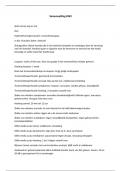
The Action Potential:
The cell membrane separates charges that then can allow for the cell to be used
as a biological battery.
Inside the cell, there is a high concentration of potassium and outside there is a
high concentration of sodium.
Inside the cell, proteins bind to the potassium, however the proteins are
highly negative thus making the intracellular fluid negative to the positive
extracellular fluid.
This is the membrane potential, which inside the cell has a volt of -70mV or
the RMP.
Leak channels are what maintain
this potential by allowing the
controlled movement of ions into
and out of the cell when necessary.
Various membrane transporters allow for the creation of this membrane
potential.
Voltage gated, ligand gated and mechanically gated channels are vital.
A wave of depolarisation or the
stimulus is used to alternate the
charges inside and outside the cell
as it moves down the neurone.
Positive and Negative Charges 1
Monday, 28th February 2022
The Action Potential:
The cell membrane separates charges that then can allow for the cell to be used
as a biological battery.
Inside the cell, there is a high concentration of potassium and outside there is a
high concentration of sodium.
Inside the cell, proteins bind to the potassium, however the proteins are
highly negative thus making the intracellular fluid negative to the positive
extracellular fluid.
This is the membrane potential, which inside the cell has a volt of -70mV or
the RMP.
Leak channels are what maintain
this potential by allowing the
controlled movement of ions into
and out of the cell when necessary.
Various membrane transporters allow for the creation of this membrane
potential.
Voltage gated, ligand gated and mechanically gated channels are vital.
A wave of depolarisation or the
stimulus is used to alternate the
charges inside and outside the cell
as it moves down the neurone.
Positive and Negative Charges 1