Criminology task 5B:
Describe trial process:
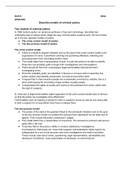
There are three sorts of offences in the criminal system: summary, triable either way, and indictable.
Summary offences are minor offences such as driving while intoxicated or battery that are
prosecuted in a magistrate's court. Depending on the gravity of the offence, cases can be tried in
either a magistrate's court or a crown court. For example, theft at a corner shop would be
prosecuted in magistrate's court, but theft in an automobile would be prosecuted in crown court.
Finally, the most serious offences are indictable offences, which include murder or rape; these cases
are heard in crown court. In the scenario, murder is an example of an indictable offence.
Within the criminal justice system, there are four sorts of courts. The magistrate's court is the lowest
in the hierarchy, and they hear every case before determining which cases will be sent to the next
court. In general, 95% of cases are heard here. These are often the more serious offences, but they
can include triable offences in either direction. The magistrate's court is made up of three lay
magistrates who are not legally competent but are assisted in sentencing by a legal clerk. The verdict
and punishment are determined by the magistrates; however, their sentencing powers are restricted
to six months in jail or a £5000 fine.
The crown court, which hears all indictable matters and major triable either way cases, is the next
court in the hierarchy. It is made up of a judge and a jury of twelve members who are representative
of the UK population. The verdict is reached by a jury, but the punishment is handed out by a judge.
Normally, a unanimous decision is necessary; however, if this is not possible, the judge may accept a
majority decision of 10/12 individuals. The judge serves as a referee, leading the jury and clarifying
legal topics, but their primary responsibility is to impose the sentence. A jury trial is only organised
when a defendant pleads not guilty, although under the Criminal Justice Act of 2003, a judge can
also sit alone and make a judgement in unusual situations.
The court of appeal hears appeal from the crown court after a verdict or sentence has been given. To
go back to the court of appeal, the defendant or prosecution needs leave to appeal by a judge, which
grants them permission to continue with their case. A defendant may choose to appeal their verdict,
or a prosecution to ensure a verdict is safe, and that a miscarriage of justice is not occurring, as if
there are any mistakes during trial, a defendant may require compensation. The judge who hears the
case in the court of appeal may order a retrial, vary a sentence or quash a verdict.
The Supreme Court, historically known as the House of Lords, is the UK's highest court and handles
the most severe matters. However, in order for the Supreme Court's 12 justices to hear the case, it
must include an issue of public significance, and leave to appeal is also necessary. The court's ruling
is definitive, and it binds all courts to the same result. They also have the authority to modify the law
or enact new legislation if they believe it is necessary.
Bail is simply when a defendant is released from custody until the next stage of the case, and it
might be conditional or unconditional. People can be released on bond at any time following an
arrest, such as before a charge is filed or while awaiting a court. When the crime is murder, bail can
be granted by a police custody officer, a crown court judge, or a magistrate's judge. Bail conditions
such as curfew, residency in specific areas, or being placed on tag may be imposed. This may be
essential for a variety of reasons, including guaranteeing the defendant will surrender to bail,
ensuring they do not conduct another crime, or interfering with a witness. When determining bail,
several factors must be examined, including the suspect's name and residence, the nature of the
offence committed, the defendant's record, and the strength of the evidence against the suspect.
Describe trial process:
There are three sorts of offences in the criminal system: summary, triable either way, and indictable.
Summary offences are minor offences such as driving while intoxicated or battery that are
prosecuted in a magistrate's court. Depending on the gravity of the offence, cases can be tried in
either a magistrate's court or a crown court. For example, theft at a corner shop would be
prosecuted in magistrate's court, but theft in an automobile would be prosecuted in crown court.
Finally, the most serious offences are indictable offences, which include murder or rape; these cases
are heard in crown court. In the scenario, murder is an example of an indictable offence.
Within the criminal justice system, there are four sorts of courts. The magistrate's court is the lowest
in the hierarchy, and they hear every case before determining which cases will be sent to the next
court. In general, 95% of cases are heard here. These are often the more serious offences, but they
can include triable offences in either direction. The magistrate's court is made up of three lay
magistrates who are not legally competent but are assisted in sentencing by a legal clerk. The verdict
and punishment are determined by the magistrates; however, their sentencing powers are restricted
to six months in jail or a £5000 fine.
The crown court, which hears all indictable matters and major triable either way cases, is the next
court in the hierarchy. It is made up of a judge and a jury of twelve members who are representative
of the UK population. The verdict is reached by a jury, but the punishment is handed out by a judge.
Normally, a unanimous decision is necessary; however, if this is not possible, the judge may accept a
majority decision of 10/12 individuals. The judge serves as a referee, leading the jury and clarifying
legal topics, but their primary responsibility is to impose the sentence. A jury trial is only organised
when a defendant pleads not guilty, although under the Criminal Justice Act of 2003, a judge can
also sit alone and make a judgement in unusual situations.
The court of appeal hears appeal from the crown court after a verdict or sentence has been given. To
go back to the court of appeal, the defendant or prosecution needs leave to appeal by a judge, which
grants them permission to continue with their case. A defendant may choose to appeal their verdict,
or a prosecution to ensure a verdict is safe, and that a miscarriage of justice is not occurring, as if
there are any mistakes during trial, a defendant may require compensation. The judge who hears the
case in the court of appeal may order a retrial, vary a sentence or quash a verdict.
The Supreme Court, historically known as the House of Lords, is the UK's highest court and handles
the most severe matters. However, in order for the Supreme Court's 12 justices to hear the case, it
must include an issue of public significance, and leave to appeal is also necessary. The court's ruling
is definitive, and it binds all courts to the same result. They also have the authority to modify the law
or enact new legislation if they believe it is necessary.
Bail is simply when a defendant is released from custody until the next stage of the case, and it
might be conditional or unconditional. People can be released on bond at any time following an
arrest, such as before a charge is filed or while awaiting a court. When the crime is murder, bail can
be granted by a police custody officer, a crown court judge, or a magistrate's judge. Bail conditions
such as curfew, residency in specific areas, or being placed on tag may be imposed. This may be
essential for a variety of reasons, including guaranteeing the defendant will surrender to bail,
ensuring they do not conduct another crime, or interfering with a witness. When determining bail,
several factors must be examined, including the suspect's name and residence, the nature of the
offence committed, the defendant's record, and the strength of the evidence against the suspect.