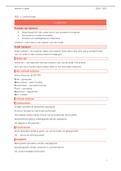
International relations – Readings
Lecture 1
Required Readings:
1. Heywood, Global Politics, Chapter 1 (Introducing Global Politics).
Global politics is based on a comprehensive approach to world affairs that
takes account not just of political developments at a global level, but also
at and, crucially, across, all levels – global, regional, national, sub- national
and so on. In that sense, ‘the global’ and ‘the international’ complement
one another and should not be seen as rival or incompatible modes of
understanding.
‘International’ politics has been transformed into ‘global’ politics through a
variety of developments. New actors have emerged from the world stage
alongside states and national governments. Levels of interconnectedness
and interdependence in world politics have increased, albeit unevenly. And
international anarchy has been modified by the emergence of a framework
of regional and global governance.
Globalization is the emergence of a complex web of interconnectedness
that means that our lives are increasingly shaped by events that occur,
and decisions that are made, at a great distance from us. Distinctions are
commonly drawn between economic globalization, cultural globalization
and political globalization. However, there are significant debates about
whether globalization is actually happening and how far it has transformed
world politics.
The two mainstream perspectives on global politics are realism and
liberalism; these are both grounded in positivism and focus on the balance
between conflict and cooperation in state relations, even though they offer
quite different accounts of this balance. Critical perspectives, by contrast,
tend to adopt a post-positivist approach to theory and contest the global
status quo by aligning themselves with the interests of marginal- ized or
oppressed groups.
Global politics is an ever-shifting field, with, if anything, the pace of change
accelerating over time. Debates have emerged about the changing nature
of power and the shifting configuration of global power, about whether
national security has been displaced by international, global or even
human security, and about the extent to which justice now has to be
considered in cosmopolitan or global terms.
2. Boyle, Michael J. 2016, ‘The Coming Illiberal Order’, In Survival 58:2, pp. 35-66.
3. Duncombe, Constance and Tim Dunne (2018), After Liberal World Order, In International
Affairs 94: 1, pp.25–42.
Lecture 2
Required Readings:
, 1. Heywood, Global Politics, Chapters 3 & 21 (Theories of Global Politics & Why
Theory Matters).
Chapter 3
! The realist model of power politics is based on the combined ideas of
human selfishness or egoism and the structural implications of
international anarchy. While this implies a strong tendency towards
conflict, blood- shed and open violence can be constrained by the balance
of power. The key dynamics in the international system flow from the
distribution of power (or capacities) between and among states.
! The central theme of the liberal view of international politics is a belief in
harmony or balance. The tendency towards peace, cooperation and
integration is by factors such as economic interdependence, brought about
by free trade, the spread of democracy and the construction of
international organizations. However, over time, liberalism (or
neoliberalism) has become increasingly indistinct from realism.
! The key critical perspectives on global politics are Marxism in its various
forms, social constructivism, post- structuralism, feminism, green politics
and postcolonialism. In their different ways, these theories challenge
norms, values and assumptions on which the global status quo is based.
Critical theorists tend to view realism and liberalism as ways of concealing,
or of legitimizing, the global power asymmetries.
! Many critical theorists embrace a post-positivist perspective that takes
subject and object, and therefore theory and practice, to be intimately
linked. Post-positivists question the belief that there is an objective reality
‘out there’, separate from the beliefs, ideas and assumptions of the
observer. Reality is therefore best thought of in ‘inter-subjective’ terms.
! Increased levels of global interconnectedness, linked to accelerated
globalization, has brought a series of new theoretical challenges. These
include the difficulties that complexity poses to conventional linear
thinking, the possibility that the world now constitutes a single moral
community, and reduced value of theoretical para- digms.
Chapter 21
Theory has a range of uses and a number of dimensions. Its uses include
analyzing and explaining events, simplifying the world, widening and/or
sharpening our perceptual field, defining our ethical horizons, and
providing a guide to action. Although distinct explanatory, interpretive and
normative dimensions of theory can be identified, these sometimes
overlap.
! Attempts to establish ‘good’ theory are sometimes dismissed as
pointless, on the grounds that rival theories are incommensurable.
However, others argue that theories can be evaluated using the standard
criteria employed in the social sciences. These include a theory’s
correspondence to reality, its explanatory power, its parsimony and
elegance, and its logical coherence.
! Paradigms aid understanding in that they define what is important to
study, draw attention to significant trends, patterns and processes, and
Lecture 1
Required Readings:
1. Heywood, Global Politics, Chapter 1 (Introducing Global Politics).
Global politics is based on a comprehensive approach to world affairs that
takes account not just of political developments at a global level, but also
at and, crucially, across, all levels – global, regional, national, sub- national
and so on. In that sense, ‘the global’ and ‘the international’ complement
one another and should not be seen as rival or incompatible modes of
understanding.
‘International’ politics has been transformed into ‘global’ politics through a
variety of developments. New actors have emerged from the world stage
alongside states and national governments. Levels of interconnectedness
and interdependence in world politics have increased, albeit unevenly. And
international anarchy has been modified by the emergence of a framework
of regional and global governance.
Globalization is the emergence of a complex web of interconnectedness
that means that our lives are increasingly shaped by events that occur,
and decisions that are made, at a great distance from us. Distinctions are
commonly drawn between economic globalization, cultural globalization
and political globalization. However, there are significant debates about
whether globalization is actually happening and how far it has transformed
world politics.
The two mainstream perspectives on global politics are realism and
liberalism; these are both grounded in positivism and focus on the balance
between conflict and cooperation in state relations, even though they offer
quite different accounts of this balance. Critical perspectives, by contrast,
tend to adopt a post-positivist approach to theory and contest the global
status quo by aligning themselves with the interests of marginal- ized or
oppressed groups.
Global politics is an ever-shifting field, with, if anything, the pace of change
accelerating over time. Debates have emerged about the changing nature
of power and the shifting configuration of global power, about whether
national security has been displaced by international, global or even
human security, and about the extent to which justice now has to be
considered in cosmopolitan or global terms.
2. Boyle, Michael J. 2016, ‘The Coming Illiberal Order’, In Survival 58:2, pp. 35-66.
3. Duncombe, Constance and Tim Dunne (2018), After Liberal World Order, In International
Affairs 94: 1, pp.25–42.
Lecture 2
Required Readings:
, 1. Heywood, Global Politics, Chapters 3 & 21 (Theories of Global Politics & Why
Theory Matters).
Chapter 3
! The realist model of power politics is based on the combined ideas of
human selfishness or egoism and the structural implications of
international anarchy. While this implies a strong tendency towards
conflict, blood- shed and open violence can be constrained by the balance
of power. The key dynamics in the international system flow from the
distribution of power (or capacities) between and among states.
! The central theme of the liberal view of international politics is a belief in
harmony or balance. The tendency towards peace, cooperation and
integration is by factors such as economic interdependence, brought about
by free trade, the spread of democracy and the construction of
international organizations. However, over time, liberalism (or
neoliberalism) has become increasingly indistinct from realism.
! The key critical perspectives on global politics are Marxism in its various
forms, social constructivism, post- structuralism, feminism, green politics
and postcolonialism. In their different ways, these theories challenge
norms, values and assumptions on which the global status quo is based.
Critical theorists tend to view realism and liberalism as ways of concealing,
or of legitimizing, the global power asymmetries.
! Many critical theorists embrace a post-positivist perspective that takes
subject and object, and therefore theory and practice, to be intimately
linked. Post-positivists question the belief that there is an objective reality
‘out there’, separate from the beliefs, ideas and assumptions of the
observer. Reality is therefore best thought of in ‘inter-subjective’ terms.
! Increased levels of global interconnectedness, linked to accelerated
globalization, has brought a series of new theoretical challenges. These
include the difficulties that complexity poses to conventional linear
thinking, the possibility that the world now constitutes a single moral
community, and reduced value of theoretical para- digms.
Chapter 21
Theory has a range of uses and a number of dimensions. Its uses include
analyzing and explaining events, simplifying the world, widening and/or
sharpening our perceptual field, defining our ethical horizons, and
providing a guide to action. Although distinct explanatory, interpretive and
normative dimensions of theory can be identified, these sometimes
overlap.
! Attempts to establish ‘good’ theory are sometimes dismissed as
pointless, on the grounds that rival theories are incommensurable.
However, others argue that theories can be evaluated using the standard
criteria employed in the social sciences. These include a theory’s
correspondence to reality, its explanatory power, its parsimony and
elegance, and its logical coherence.
! Paradigms aid understanding in that they define what is important to
study, draw attention to significant trends, patterns and processes, and