Growth, Institutions and Business | reading notes
Chapter 1
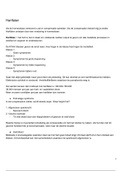
Gross domestic product Measure of value of all goods and services produced in a
country in a year
Output
National income
Purchasing power parity Set of artificially constructed factors
how much one can buy considering GDP
Ratio scale Proportional differences in used variable
Linear scale Equal differences in used variable
Rule of 72 Doubling time ≈ 72/g
g, percentage annual growth
Uneven growth of income Slow growth (but long)
US
Europe
Later and quick growth
Japan
Fail to grow
sub-saharan Africa
Chapter 2
Inputs production Capital
tools for workers
collective equipment
Investment
goods/services devoted to the production
of new capital rather than consumed
Productivity
amount of output produced with each
unit of capital
technology
available knowledge about how
input can be combined to produce
output
efficiency
how available technology and
inputs are used in productivity output
Fundamentals
deeper underlying factors
economic policies
geography
3 key ideas What makes a country richer?
- Accumulation inputs into production vs
productivity
- Difference in technology and difference
in efficiency
, - Proximate/ultimate factors
proximate cause (event that
is responsible for observed result)
ultimate cause (something
that affects an observed result
through a chain of intermediate
events)
The production function Relation factors of production and quantity of output
Economic model Simplified representations of reality that can be used to
analyze how economic variables are determined
quantitative analysis, use data in assigning
magnitudes to the different part of an economic model
utility, maximizing happiness
disposal
observational
experimental
Scatterplots Each observation is represented by a single point
see overall relationship between 2 variables
Variable A characteristic of the observation that we are examining
Outliers Inconsistent observations
Correlation Degree to which 2 variables tend to move together
Correlation coefficient
number between -1 and 1
Example
- X causes Y
- Y causes X (reverse causation)
- There is no direct causal relationship
between X and Y
omitted variable, a 3rd variable
Chapter 3
Capital Tools for economist
- Machinery
- Buildings
- Infrastructure
Productive, produced, limited, earn return, wears out
Investment Process producing capital
Depreciation
, wearing out process of capital
Production function Y=F(K, L)
K, capital
L, labor
Constant return to scale
doubling input (K and L) -> double output (Y)
Capital per worker (quantity)
k=K/L
Output per worker (quantity)
y=Y/L
y= f(k), per worker production function
Marginal product Extra output produced when one more unit of the input is
used in production
MPK=f(k+1) – f(k)
Diminishing marginal product
adding unit of single input new output
becomes smaller
Cobb-Douglas production F(K,L) = AKalphaL1-alpha
function
Alpha, output elasticity of labor
Capital’s share of income Fraction of national income (Y) that is paid out as rent on
capital
(MPK*K)/Y
Steady state Point in the Solow model, where investment equals
depreciation
Chapter 1
Gross domestic product Measure of value of all goods and services produced in a
country in a year
Output
National income
Purchasing power parity Set of artificially constructed factors
how much one can buy considering GDP
Ratio scale Proportional differences in used variable
Linear scale Equal differences in used variable
Rule of 72 Doubling time ≈ 72/g
g, percentage annual growth
Uneven growth of income Slow growth (but long)
US
Europe
Later and quick growth
Japan
Fail to grow
sub-saharan Africa
Chapter 2
Inputs production Capital
tools for workers
collective equipment
Investment
goods/services devoted to the production
of new capital rather than consumed
Productivity
amount of output produced with each
unit of capital
technology
available knowledge about how
input can be combined to produce
output
efficiency
how available technology and
inputs are used in productivity output
Fundamentals
deeper underlying factors
economic policies
geography
3 key ideas What makes a country richer?
- Accumulation inputs into production vs
productivity
- Difference in technology and difference
in efficiency
, - Proximate/ultimate factors
proximate cause (event that
is responsible for observed result)
ultimate cause (something
that affects an observed result
through a chain of intermediate
events)
The production function Relation factors of production and quantity of output
Economic model Simplified representations of reality that can be used to
analyze how economic variables are determined
quantitative analysis, use data in assigning
magnitudes to the different part of an economic model
utility, maximizing happiness
disposal
observational
experimental
Scatterplots Each observation is represented by a single point
see overall relationship between 2 variables
Variable A characteristic of the observation that we are examining
Outliers Inconsistent observations
Correlation Degree to which 2 variables tend to move together
Correlation coefficient
number between -1 and 1
Example
- X causes Y
- Y causes X (reverse causation)
- There is no direct causal relationship
between X and Y
omitted variable, a 3rd variable
Chapter 3
Capital Tools for economist
- Machinery
- Buildings
- Infrastructure
Productive, produced, limited, earn return, wears out
Investment Process producing capital
Depreciation
, wearing out process of capital
Production function Y=F(K, L)
K, capital
L, labor
Constant return to scale
doubling input (K and L) -> double output (Y)
Capital per worker (quantity)
k=K/L
Output per worker (quantity)
y=Y/L
y= f(k), per worker production function
Marginal product Extra output produced when one more unit of the input is
used in production
MPK=f(k+1) – f(k)
Diminishing marginal product
adding unit of single input new output
becomes smaller
Cobb-Douglas production F(K,L) = AKalphaL1-alpha
function
Alpha, output elasticity of labor
Capital’s share of income Fraction of national income (Y) that is paid out as rent on
capital
(MPK*K)/Y
Steady state Point in the Solow model, where investment equals
depreciation