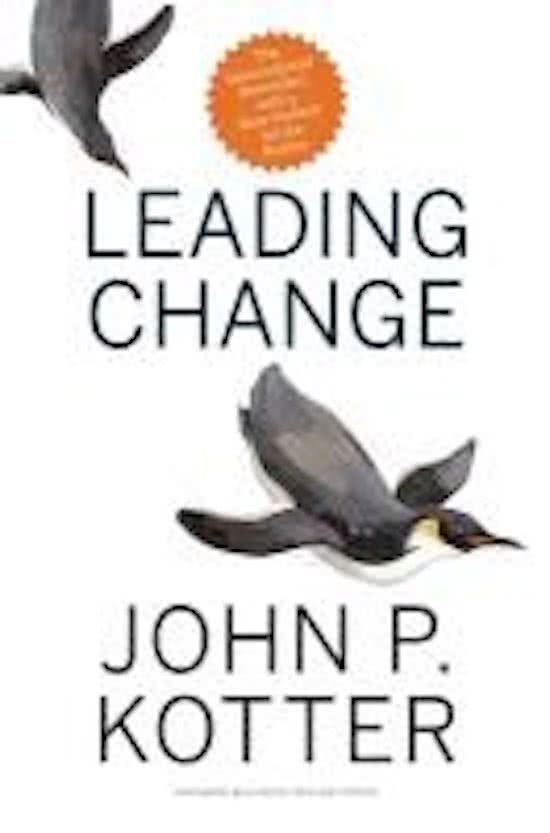
Leading change
Introduction
Why a whole course on change?
Change is difficult which is why people resist it. It is everywhere, but the fundamentals may be similar,
therefore it is important to try and understand it.
Some good questions:
• Is change necessary?
• Is change always a positive thing?
Some facts:
• People may resist the change that you propose. Even if it is the right thing to do.
Ex. Changing your kids eating habits and
getting them to do something other than
watch tv all day.
• People may resist that you change. Even if it is the right thing to do. This might be the reason
because you went through a process that the others didn’t go through. Therefore, they might see
it as a radical change while you have been thinking about it a lot.
Ex. Changing religion to Islam for example because you know it will make you feel
good, but people around you might see it
as a radical change. It might be possible
that they block you like not being a part
anymore of the family activities etc.
• You may resist that you change. Even if it is the right thing to do.
Ex. Change is not always black and white,
you might have conflicting thoughts.
In this part we will focus on change and the people dimension. Meaning that we take the whole issue
change back to the individual level. Change depends on people and leading change implies engaging,
committing and empowering people.
Change is often craved but brings also negative feelings. Everyone may want change but changing
ourselves is not something that we want and results in resistance by many people.
It is a bit funny though that resistance is a main issue when it comes to change because change is
inevitable, it is a constant way of life. Change is everywhere, we experience it every day, even in more
normal circumstances. And yet somehow, we are not well equipped for change. We dislike it because it
gives us stress. So, managing change and learning to adapt to it takes time, energy, effort and training.
1
,Before leaders can create the right circumstances and support for change, they need to understand the
sources of resistance. This is what we will try to do in the remainder of this course.
CHANGE IS EVERYWHERE, INEVITABLE AND CONSTANT
Implementing change, successful change, in companies is becoming more and more difficult. Change can
be described as a sigmoid curve. It is classic life cycle.
Many products, organizations etc. disappear eventually, but today the time scale is becoming even more
compressed. Products and organizations disappear as fast as they appeared, which makes change even
more complex. This is the reason why implementing successful change is more and more difficult and why
we also see a high fail rate of initiatives.
This doesn’t mean that all changes will fail, but only that more efforts have to be done to make change a
success.
WHEN TO CHANGE?
If we look back at the curve, successful change can be depicted as a new curve that begins. But you have
to be careful. If you would start at point Y, then it is too late. At point Y you reached the moment in time
where it might be impossible to implement change effectively.
The difficulty is of course that at point X, which would be the good point to start change, there is no
apparent need for change.
2
,That means that modern organizations should be on the lookout for forces and drivers for change
continuously. Survival means going from one sigmoid curve to another one and keep adapting to changing
conditions. If organizations want to change effectively, they have to proactive in it. They have to anticipate
when things are good.
An Example:
2004: consulting business gets its own environment
2006: consulting starts HR WebWorx (now HR Software)
2007: consulting starts business line MPSAP (now AS Division)
2008: consulting starts business HR Service Center (now AS/GO Division)
2009: consulting starts up regional branches
2010: Consulting starts with Foreign Employers
2011: consulting starts Warrants business
2012: consulting starts business unit HR On Site
In 2003 SD Worx Ebit was -8.50% although they had large growth and revenue. Highlighting that even
though they were growing they were going backwards therefore we should look at point Y and see that
at the maturity a firm can still grow through the power of change in order to avoid a decline.
Therefore, a company should focus on Adaptability and commercial alignment. Do investments and
development and also invest in training, all of these will create value.
Another example demonstrates big difficulties in the “Implementation Gap” of companies.
3
, A CX strategy comprises the plans you put in place to provide positive experiences at each customer
touchpoint along the customer journey and the purposeful ways to measure those experiences – both
online and off. A good CX strategy creates meaningful experiences that can improve customer loyalty.
This picture shows an implementation gap of 64%. Demonstrating that change is in fact difficult and that
not all that aspire to bring change achieve in successfully doing so.
FORCES FOR CHANGE? WHY CHANGE?
One could ask himself that if change is so challenging, why change at all? But unfortunately, it is not all in
our own hands.
There is either an external drive (globalization of markets, digitalization, technological changes, political
or social changes etc.) or an internal drive (low performance, new leadership, low satisfaction, new
mission, conflict etc.).
People and organizations should be at the lookout for the right moments to change. Sometimes change
will be accepted or embraced and sometimes we will adopt change more reluctantly. But research has
shown that in general change is accepted more easily if people know why to change. The clearer it can be
stated what the purpose for change is, the higher the success rate.
What are the drivers of change?
4
Introduction
Why a whole course on change?
Change is difficult which is why people resist it. It is everywhere, but the fundamentals may be similar,
therefore it is important to try and understand it.
Some good questions:
• Is change necessary?
• Is change always a positive thing?
Some facts:
• People may resist the change that you propose. Even if it is the right thing to do.
Ex. Changing your kids eating habits and
getting them to do something other than
watch tv all day.
• People may resist that you change. Even if it is the right thing to do. This might be the reason
because you went through a process that the others didn’t go through. Therefore, they might see
it as a radical change while you have been thinking about it a lot.
Ex. Changing religion to Islam for example because you know it will make you feel
good, but people around you might see it
as a radical change. It might be possible
that they block you like not being a part
anymore of the family activities etc.
• You may resist that you change. Even if it is the right thing to do.
Ex. Change is not always black and white,
you might have conflicting thoughts.
In this part we will focus on change and the people dimension. Meaning that we take the whole issue
change back to the individual level. Change depends on people and leading change implies engaging,
committing and empowering people.
Change is often craved but brings also negative feelings. Everyone may want change but changing
ourselves is not something that we want and results in resistance by many people.
It is a bit funny though that resistance is a main issue when it comes to change because change is
inevitable, it is a constant way of life. Change is everywhere, we experience it every day, even in more
normal circumstances. And yet somehow, we are not well equipped for change. We dislike it because it
gives us stress. So, managing change and learning to adapt to it takes time, energy, effort and training.
1
,Before leaders can create the right circumstances and support for change, they need to understand the
sources of resistance. This is what we will try to do in the remainder of this course.
CHANGE IS EVERYWHERE, INEVITABLE AND CONSTANT
Implementing change, successful change, in companies is becoming more and more difficult. Change can
be described as a sigmoid curve. It is classic life cycle.
Many products, organizations etc. disappear eventually, but today the time scale is becoming even more
compressed. Products and organizations disappear as fast as they appeared, which makes change even
more complex. This is the reason why implementing successful change is more and more difficult and why
we also see a high fail rate of initiatives.
This doesn’t mean that all changes will fail, but only that more efforts have to be done to make change a
success.
WHEN TO CHANGE?
If we look back at the curve, successful change can be depicted as a new curve that begins. But you have
to be careful. If you would start at point Y, then it is too late. At point Y you reached the moment in time
where it might be impossible to implement change effectively.
The difficulty is of course that at point X, which would be the good point to start change, there is no
apparent need for change.
2
,That means that modern organizations should be on the lookout for forces and drivers for change
continuously. Survival means going from one sigmoid curve to another one and keep adapting to changing
conditions. If organizations want to change effectively, they have to proactive in it. They have to anticipate
when things are good.
An Example:
2004: consulting business gets its own environment
2006: consulting starts HR WebWorx (now HR Software)
2007: consulting starts business line MPSAP (now AS Division)
2008: consulting starts business HR Service Center (now AS/GO Division)
2009: consulting starts up regional branches
2010: Consulting starts with Foreign Employers
2011: consulting starts Warrants business
2012: consulting starts business unit HR On Site
In 2003 SD Worx Ebit was -8.50% although they had large growth and revenue. Highlighting that even
though they were growing they were going backwards therefore we should look at point Y and see that
at the maturity a firm can still grow through the power of change in order to avoid a decline.
Therefore, a company should focus on Adaptability and commercial alignment. Do investments and
development and also invest in training, all of these will create value.
Another example demonstrates big difficulties in the “Implementation Gap” of companies.
3
, A CX strategy comprises the plans you put in place to provide positive experiences at each customer
touchpoint along the customer journey and the purposeful ways to measure those experiences – both
online and off. A good CX strategy creates meaningful experiences that can improve customer loyalty.
This picture shows an implementation gap of 64%. Demonstrating that change is in fact difficult and that
not all that aspire to bring change achieve in successfully doing so.
FORCES FOR CHANGE? WHY CHANGE?
One could ask himself that if change is so challenging, why change at all? But unfortunately, it is not all in
our own hands.
There is either an external drive (globalization of markets, digitalization, technological changes, political
or social changes etc.) or an internal drive (low performance, new leadership, low satisfaction, new
mission, conflict etc.).
People and organizations should be at the lookout for the right moments to change. Sometimes change
will be accepted or embraced and sometimes we will adopt change more reluctantly. But research has
shown that in general change is accepted more easily if people know why to change. The clearer it can be
stated what the purpose for change is, the higher the success rate.
What are the drivers of change?
4