ADVANCED CARDIOVASCULAR LIFE SUPPORT
EXAM VERSION B (50 questions)
PLEASE DO NOT MARK ON THIS EXAM. RECORD THE BEST ANSWER ON THE SEPARATE ANSWER
SHEET.
ACLS
1.What should be done to minimize interruptions in chest compressions during CPR?
A. Perform pulse checks only after defibrillation.
B. Continue CPR while the defibrillator is charging.
C. Administer IV medications only when breaths are given.
D. Continue to use AED even after the arrival of a manual defibrillator.
2.Which condition is an indication to stop or withhold resuscitative efforts?
A. Unwitnessed arrest
B. Safety threat to providers
C. Patient age greater than 85 years
D. No return of spontaneous circulation after 10 minutes of CPR
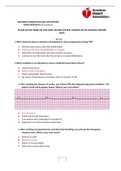
3. After verifying the absence of a pulse, you initiate CPR with adequate bag-mask ventilation. The
patient’s lead II ECG appears below. What is your next action?
A. IV or IO access
B. Endotracheal tube placement
C. Consultation with cardiology for possible PCI
D. Application of a transcutaneous pacemaker
4. After verifying unresponsiveness and abnormal breathing, you activate the emergency
response team. What is your next action?
A. Retrieve an AED.
B. Check for a pulse.
C. Deliver 2 rescue breaths.
D. Administer a precordial thump.
, 5. What is the recommendation on the use of cricoid pressure to prevent aspiration during cardiac
arrest?
A. Not recommended for routine use
B. Recommended during every resuscitation attempt
C. Recommended when the patient is vomiting
D. Recommended only for supraglottic airway insertion
6.What survival advantages does CPR provide to a patient in ventricular fibrillation?
A. Increases the defibrillation threshold
B. Directly restores an organized rhythm
C. Opposes the harmful effects of epinephrine
D. Produces a small amount of blood flow to the heart
7.What is the recommended compression rate for performing CPR?
A. 60 to 80 per minute
B. 80 to 100 per minute
C. About 100 per minute
D. At least 100 per minute
8. EMS personnel arrive to find a patient in cardiac arrest. Bystanders are performing CPR. After
attaching a cardiac monitor, the responder observes the following rhythm strip. What is the
most important early intervention?
A. Defibrillation
B. Endotracheal intubation
C. Epinephrine administration
D. Antiarrhythmic administration
9. A patient remains in ventricular fibrillation despite 1 shock and 2 minutes of continuous CPR.
The next intervention is to
A. administer amiodarone.
B. administer a second shock.
, C. administer epinephrine.
D. insert an advanced airway.
10.What is the recommended next step after a defibrillation attempt?
A. Open the patient’s airway.
B. Determine if a carotid pulse is present.
C. Check the ECG for evidence of a rhythm.
D. Begin CPR, starting with chest compressions.
11. Which of the following is the recommended first choice for establishing intravenous access
during the attempted resuscitation of a patient in cardiac arrest?
A. Subclavian vein
B. Antecubital vein
C. Intraosseous line
D. Internal jugular vein
12. What is the recommended first intravenous dose of amiodarone for a patient with refractory
ventricular fibrillation?
A. 1 mg
B. 1 mg/kg
C. 1 mEq/kg
D. 300 mg
13.IV/IO drug administration during CPR should be
A. given rapidly during compressions.
B. administered slowly during the pause for a pulse check.
C. given by infusion.
D. given before any defibrillation attempts.
14.How often should the team leader switch chest compressors during a resuscitation attempt?
A. Every minute
B. Every 2 minutes
C. Every 3 minutes
D. Every 4 minutes
15.Which finding is a sign of ineffective CPR?
A. PETCO2 <10 mm Hg
B. Patient temperature >32°C (89.6°F)
EXAM VERSION B (50 questions)
PLEASE DO NOT MARK ON THIS EXAM. RECORD THE BEST ANSWER ON THE SEPARATE ANSWER
SHEET.
ACLS
1.What should be done to minimize interruptions in chest compressions during CPR?
A. Perform pulse checks only after defibrillation.
B. Continue CPR while the defibrillator is charging.
C. Administer IV medications only when breaths are given.
D. Continue to use AED even after the arrival of a manual defibrillator.
2.Which condition is an indication to stop or withhold resuscitative efforts?
A. Unwitnessed arrest
B. Safety threat to providers
C. Patient age greater than 85 years
D. No return of spontaneous circulation after 10 minutes of CPR
3. After verifying the absence of a pulse, you initiate CPR with adequate bag-mask ventilation. The
patient’s lead II ECG appears below. What is your next action?
A. IV or IO access
B. Endotracheal tube placement
C. Consultation with cardiology for possible PCI
D. Application of a transcutaneous pacemaker
4. After verifying unresponsiveness and abnormal breathing, you activate the emergency
response team. What is your next action?
A. Retrieve an AED.
B. Check for a pulse.
C. Deliver 2 rescue breaths.
D. Administer a precordial thump.
, 5. What is the recommendation on the use of cricoid pressure to prevent aspiration during cardiac
arrest?
A. Not recommended for routine use
B. Recommended during every resuscitation attempt
C. Recommended when the patient is vomiting
D. Recommended only for supraglottic airway insertion
6.What survival advantages does CPR provide to a patient in ventricular fibrillation?
A. Increases the defibrillation threshold
B. Directly restores an organized rhythm
C. Opposes the harmful effects of epinephrine
D. Produces a small amount of blood flow to the heart
7.What is the recommended compression rate for performing CPR?
A. 60 to 80 per minute
B. 80 to 100 per minute
C. About 100 per minute
D. At least 100 per minute
8. EMS personnel arrive to find a patient in cardiac arrest. Bystanders are performing CPR. After
attaching a cardiac monitor, the responder observes the following rhythm strip. What is the
most important early intervention?
A. Defibrillation
B. Endotracheal intubation
C. Epinephrine administration
D. Antiarrhythmic administration
9. A patient remains in ventricular fibrillation despite 1 shock and 2 minutes of continuous CPR.
The next intervention is to
A. administer amiodarone.
B. administer a second shock.
, C. administer epinephrine.
D. insert an advanced airway.
10.What is the recommended next step after a defibrillation attempt?
A. Open the patient’s airway.
B. Determine if a carotid pulse is present.
C. Check the ECG for evidence of a rhythm.
D. Begin CPR, starting with chest compressions.
11. Which of the following is the recommended first choice for establishing intravenous access
during the attempted resuscitation of a patient in cardiac arrest?
A. Subclavian vein
B. Antecubital vein
C. Intraosseous line
D. Internal jugular vein
12. What is the recommended first intravenous dose of amiodarone for a patient with refractory
ventricular fibrillation?
A. 1 mg
B. 1 mg/kg
C. 1 mEq/kg
D. 300 mg
13.IV/IO drug administration during CPR should be
A. given rapidly during compressions.
B. administered slowly during the pause for a pulse check.
C. given by infusion.
D. given before any defibrillation attempts.
14.How often should the team leader switch chest compressors during a resuscitation attempt?
A. Every minute
B. Every 2 minutes
C. Every 3 minutes
D. Every 4 minutes
15.Which finding is a sign of ineffective CPR?
A. PETCO2 <10 mm Hg
B. Patient temperature >32°C (89.6°F)