PSYCHOPATHOLOGY 16 MARKERS
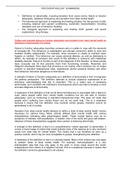
Definitions of abnormality, including deviation from social norms, failure to function
adequately, statistical infrequency and deviation from ideal mental health.
The behavioural approach to explaining and treating phobias: the two-process model,
including classical and operant conditioning; systematic desensitisation, including
relaxation and use of hierarchy; flooding.
The biological approach to explaining and treating OCD: genetic and neural
explanations; drug therapy.
Outline and evaluate failure to function adequately and deviation from ideal mental health as
definitions of abnormality [16 marks]
Failure to function adequately describes someone who is unable to cope with the demands
of everyday life. This behaviour is maladaptive and disrupts someone’s ability to work and
maintain healthy relationships. For example, when someone is unable to maintain basic
hygiene or nutrition. This behaviour can cause personal distress, as well as distressing to
others. An example of someone who would fit this definition is someone with intellectual
disability disorder. Failure to function is part of the diagnosis of this disorder, as these people
have unusually low IQ that prevents them from functioning normally. Rosenhan and
Seligman developed three signs that someone is not coping: when someone can no longer
conform to standard interpersonal roles, experiences severe personal distress and when
their behaviour becomes dangerous to themselves.
A strength of failure to function adequately as a definition of abnormality is that it recognises
the patients perspective. This definition attempts to include subjective experiences of an
individual, acknowledging that this is important. This is a useful way of assessing
abnormality, as it considers the individual’s circumstances which can help to develop a more
accurate diagnosis of abnormality.
A weakness of this definition is that not all abnormal behaviour is associated with a failure to
cope. Many people suffer from mental health conditions but are still able to function
adequately, such as conforming to standard interpersonal roles. This does not mean that
people aren’t suffering from mental illness and do not need help. This is a weakness
because it means that this definition may overlook certain people, therefore cannot be
generalised to all of society.
Deviation from ideal mental health attempts to define a state of ideal mental health, factors
necessary for optimal living. Marie Jahoda defined ideal mental health with various
characteristics indicating ideal psychological health. These include factors such as no
symptoms of distress, self-actualisation, a realistic view of the world and good self-esteem.
Absence of these characteristics suggests that a person is behaving abnormally.
A strength of this definition is that it is a comprehensive, holistic approach to abnormality. It
covers a broad range of criteria that would indicate most of the reasons as to why someone
would ever seek help for mental health. This means that it can therefore be seen as a
positive outlook, which may be more acceptable to people, strengthening the definition.
A weakness of the definition is that it is culturally biased. Many of the criteria may only apply
to western ideas of ideal mental health. For example, self-actualisation is a very
individualistic idea that may only apply to the west. In some areas around the world,
independence from others is a negative concept. This is a weakness because it means that
the definition cannot be generalised to all cultures.
, PSYCHOPATHOLOGY 16 MARKERS
Discuss statistical infrequency and deviation from social norms as definitions of abnormality
[16 marks]
Statistical infrequency is when someone is statistically rare, which is judged based on
normal distribution. For example, someone with an IQ lower than the average of 100 is
statistically rare. This means they may be diagnosed with intellectual disability disorder and
would be considered as ‘abnormal’ in comparison to statistical norms.
A strength of this definition is that it has practical applications. Identifying those who have a
lower than average IQ using this definition can lead to the diagnosis of disorders. This
includes those with intellectual disability disorders, as well as other mental health conditions
where someone’s behaviour deviates from the statistical norm. this can lead to the treatment
of disorders becoming more efficient, therefore benefiting society as a whole.
A weakness of this definition is that not all abnormal behaviour is statistically rare. Fr
example, 10% of the population will experience chronic depression at least once in their
lifetime. This is not statistically infrequent, however, those with depression should be
considered as abnormal and be given help. Therefore, this definition alone should not be
used for all mental disorders, as many people will miss out on vital treatments for disorders.
Deviation from social norms is where someone is unable to conform to their social role,
which is an unwritten rule about what is acceptable in society. For example, someone with
antisocial personality disorder, who acts impulsively, aggressively and irresponsibly,
therefore they fail to conform to ethical behaviours. A psychopath would also be considered
abnormal due to social judgement.
A strength of this definition is that it is a benefit to society. Factors such as being polite allow
society to function correctly and avoid conflict in different situations. As a result, if someone
deviates from the social norms and can be treated appropriately, it allows society to work
better, strengthening this definition.
A weakness of deviation from social norms is that it changes over time. What was once
considered unacceptable is now accepted by society. This means that the definition has low
temporal validity, for example, in the past, homophobia was a societal norm, yet now it is
unacceptable in society. Therefore, someone who is homosexual would be considered
abnormal by this definition, although this is now not the case. This reduces the ability for us
to apply this definition to our modern, and constantly changing society.
Outline and evaluate the behavioural explanations of phobias [16 marks]
The behavioural approach emphasises the role of learning in the acquisition of behaviour.
The two process model states that phobias are learnt through a bad experience. The object
that scared us then becomes associated with something that scares us so we fear this
object. We often are scared of similar objects to the phobic stimulus due to generalisation.
We then maintain the phobia throughout life due to operant conditioning. By avoiding the
phobic stimulus, we are negatively reinforced as we are being rewarded with no feelings of
anxiety. This means that the phobia is maintained as long as we avoid the phobic stimulus.
An example of this is Little Albert. We know that Albert’s fear was not due to biology, as he
was not afraid of the rat to begin with. He supports the idea that classical conditioning can
cause a phobia in an individual who had no previous phobias.
A strength for the behavioural approach to explaining phobias is that it has strong
explanatory power. The two-process model went beyond Watson and Rayners ideas about
classical conditioning, accounting for the fact that phobias are maintained. This is important
Definitions of abnormality, including deviation from social norms, failure to function
adequately, statistical infrequency and deviation from ideal mental health.
The behavioural approach to explaining and treating phobias: the two-process model,
including classical and operant conditioning; systematic desensitisation, including
relaxation and use of hierarchy; flooding.
The biological approach to explaining and treating OCD: genetic and neural
explanations; drug therapy.
Outline and evaluate failure to function adequately and deviation from ideal mental health as
definitions of abnormality [16 marks]
Failure to function adequately describes someone who is unable to cope with the demands
of everyday life. This behaviour is maladaptive and disrupts someone’s ability to work and
maintain healthy relationships. For example, when someone is unable to maintain basic
hygiene or nutrition. This behaviour can cause personal distress, as well as distressing to
others. An example of someone who would fit this definition is someone with intellectual
disability disorder. Failure to function is part of the diagnosis of this disorder, as these people
have unusually low IQ that prevents them from functioning normally. Rosenhan and
Seligman developed three signs that someone is not coping: when someone can no longer
conform to standard interpersonal roles, experiences severe personal distress and when
their behaviour becomes dangerous to themselves.
A strength of failure to function adequately as a definition of abnormality is that it recognises
the patients perspective. This definition attempts to include subjective experiences of an
individual, acknowledging that this is important. This is a useful way of assessing
abnormality, as it considers the individual’s circumstances which can help to develop a more
accurate diagnosis of abnormality.
A weakness of this definition is that not all abnormal behaviour is associated with a failure to
cope. Many people suffer from mental health conditions but are still able to function
adequately, such as conforming to standard interpersonal roles. This does not mean that
people aren’t suffering from mental illness and do not need help. This is a weakness
because it means that this definition may overlook certain people, therefore cannot be
generalised to all of society.
Deviation from ideal mental health attempts to define a state of ideal mental health, factors
necessary for optimal living. Marie Jahoda defined ideal mental health with various
characteristics indicating ideal psychological health. These include factors such as no
symptoms of distress, self-actualisation, a realistic view of the world and good self-esteem.
Absence of these characteristics suggests that a person is behaving abnormally.
A strength of this definition is that it is a comprehensive, holistic approach to abnormality. It
covers a broad range of criteria that would indicate most of the reasons as to why someone
would ever seek help for mental health. This means that it can therefore be seen as a
positive outlook, which may be more acceptable to people, strengthening the definition.
A weakness of the definition is that it is culturally biased. Many of the criteria may only apply
to western ideas of ideal mental health. For example, self-actualisation is a very
individualistic idea that may only apply to the west. In some areas around the world,
independence from others is a negative concept. This is a weakness because it means that
the definition cannot be generalised to all cultures.
, PSYCHOPATHOLOGY 16 MARKERS
Discuss statistical infrequency and deviation from social norms as definitions of abnormality
[16 marks]
Statistical infrequency is when someone is statistically rare, which is judged based on
normal distribution. For example, someone with an IQ lower than the average of 100 is
statistically rare. This means they may be diagnosed with intellectual disability disorder and
would be considered as ‘abnormal’ in comparison to statistical norms.
A strength of this definition is that it has practical applications. Identifying those who have a
lower than average IQ using this definition can lead to the diagnosis of disorders. This
includes those with intellectual disability disorders, as well as other mental health conditions
where someone’s behaviour deviates from the statistical norm. this can lead to the treatment
of disorders becoming more efficient, therefore benefiting society as a whole.
A weakness of this definition is that not all abnormal behaviour is statistically rare. Fr
example, 10% of the population will experience chronic depression at least once in their
lifetime. This is not statistically infrequent, however, those with depression should be
considered as abnormal and be given help. Therefore, this definition alone should not be
used for all mental disorders, as many people will miss out on vital treatments for disorders.
Deviation from social norms is where someone is unable to conform to their social role,
which is an unwritten rule about what is acceptable in society. For example, someone with
antisocial personality disorder, who acts impulsively, aggressively and irresponsibly,
therefore they fail to conform to ethical behaviours. A psychopath would also be considered
abnormal due to social judgement.
A strength of this definition is that it is a benefit to society. Factors such as being polite allow
society to function correctly and avoid conflict in different situations. As a result, if someone
deviates from the social norms and can be treated appropriately, it allows society to work
better, strengthening this definition.
A weakness of deviation from social norms is that it changes over time. What was once
considered unacceptable is now accepted by society. This means that the definition has low
temporal validity, for example, in the past, homophobia was a societal norm, yet now it is
unacceptable in society. Therefore, someone who is homosexual would be considered
abnormal by this definition, although this is now not the case. This reduces the ability for us
to apply this definition to our modern, and constantly changing society.
Outline and evaluate the behavioural explanations of phobias [16 marks]
The behavioural approach emphasises the role of learning in the acquisition of behaviour.
The two process model states that phobias are learnt through a bad experience. The object
that scared us then becomes associated with something that scares us so we fear this
object. We often are scared of similar objects to the phobic stimulus due to generalisation.
We then maintain the phobia throughout life due to operant conditioning. By avoiding the
phobic stimulus, we are negatively reinforced as we are being rewarded with no feelings of
anxiety. This means that the phobia is maintained as long as we avoid the phobic stimulus.
An example of this is Little Albert. We know that Albert’s fear was not due to biology, as he
was not afraid of the rat to begin with. He supports the idea that classical conditioning can
cause a phobia in an individual who had no previous phobias.
A strength for the behavioural approach to explaining phobias is that it has strong
explanatory power. The two-process model went beyond Watson and Rayners ideas about
classical conditioning, accounting for the fact that phobias are maintained. This is important