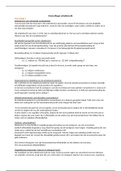
BMSZ (semi)
2021/2022
,Principles
cell
of
communication
,CELL Lt +2
COMMUNICATION
L1
How do cells communicate ?
1) Gap junctions
soluble signals
for
↳ small
Allows communication without membrane
needing to
negotiate with plasma
↳ .
2) Free diffusion
↳
for hydrophobic molecules
3) Pumps / transporters / ion channels / vesicle fusion/fission / indirect
↳
far hydrophilic molecules
How are
signals released ?
1) Exocytosis (constitutive evoked release) or
↳
proteins, peptides, aa
,
nucleotides
2) Channels r
transporters ¢ or
e)
↓ ↓
↳ ions passive gated
3) Free diffusion (c)
↳ steroids,
gases
Forms
of signalling
PARACRINE
AUTOCRINE
SYNAPTIC signals highly concentrated @ synapse receptors
low-aqim.ly
→
are : .
are
ENDOCRINE →
signals get diluted @ blood : -
receptors are
high-affinity
GASEOUS (can bypass plasma mem .
+ receptors to activate enzymes directly inside )
cell
, L2
4 major types of receptors
v.
fast IONOTROPIC -
flow of ions across membranes down
dveousiongr .
A membrane potential
nicotinic Alk R
e)
.
fast METABOTROPIC / G- PROTEIN -
LINKED -
generate new
signals inside cell
(2ⁿᵈ messengers) regulate activity of
muscarinic Ach R ↓ ↓ membrane-bound
eg
a
tht
.
7- transmembrane a P 8
opioid R 3 subunits :
, ,
" """
target protein
domain structure
/\/ -
(enzyme channels
""
to receptor
to membrane
config or ion
+
to
-
GDP
a④
Upon ar
:
GTP attached instead 1) activation a subunit
of
-
2) release /8 subunits to target protein
g p
termination hydrolysis of
signalling by a-subunit
ATP GDP
of
: →
=
fast KINASE
modify existing molecules to
generate signals (are enzymes usually) + can also control
-
new
gene transcription
autophosphorylation ↓
ligand binding FÑÑÑaÉ
mum
themselves enzyme activity
is inside the cell
creates additional interaction sites
for more recruitment o
phosphorylation
amplify their
signal via a series
of phosphorylation reactions
termination of phosphatases
signalling
:
=
ligand binding
required for can bind
NUCLEAR/
DNA
binding
without
ligand
↓ ↓
slow STEROID -
change expression of genes ( in
cytosol or in nucleus
)
steroid hormones,
thyroid hormones , retinoids ,
✓ it -
D
( aka meat, hyE signals) freely diffuse
membrane → bind to intracellular receptors this activation
regulates transcription of genes
across →
directly
activated within 30min
1° response =
specific genes
other activated
2° response genes
=
, Same have tors
divergent effects
signal can :
↓
their location have different
is
affinities
hey to the
physiological for ligands
response
L3
Difference in
fingerprints between identical twins . : one
piece of anatomy cannot be
determined
by a
b¥nt
kidney intermediate
mesenchyme
L >
embryonic origin metanephwgenic mesenchyme urelewc bud
:
+
↓ ↓ [branching]
nephron collecting duct
how this
branching
is
controlled ?
test this L
by looking for Hypothesis :
cells around UB
pins AND
mathers that ⇐ (mesenchymal cells) secrete
are in the
right place for this a
signalling substance
UB
I
④ UB grind to
express net & MM to express INF } Ret / ADNF
signalling
↓
antibody binding
to GDNF to
test to / GDNF
Ret
by interrupting
→
the prevent its binding
neay for branching regulation
see
if
is
signal to net
+
beads
agarose
soaked in
test to see
if Ret/ a DNF is
Ñt for branching regulation by introducing an ectopic signal
→
daooenentats
(replace ADNF)
and
placing
r
them in close
proximity to a v
early tube .
, by experimental
same
/ processes
Other discovered that communicate to UB where /when it should
signals elongate
:
"
BMP2
"
-
keep out
BMP 7
" "
go straight
-
BMP4
"
TGF,
"
elongate
-
,
~
How do branches not
tangle ?
(horrid )
i
hypothesised Self loathing
'
Égqg
-
: -
model :
UB secretes a substance whose cone .
directs
branching direction
(towards least [horrid])
Experimental model :
culture
kidneys aimed at one another before adding various test
drugs
I
BE found to be a
¥sne signal (made
from
U
B)
How do MM to waste cells ?
cells sense when MM condensates are
large enough to
fam a nephron or not be too large
↳ sÉsmgsystemw) Wnt
a
quorum -
Quorum →
4 autocrine
signal within
sensing
=
no MET
÷÷÷÷É;É÷
MM that
nurse : propagates
✗ -1 -
mass wntl,
mesenchymal aggregation
•
÷÷%%%
o o
7
•
; I
,
f
°
@nt 4] threshold reached
o
o
°
•
if
¥É¥¥ :
o o o o
o > > Control
8. % go
.
°
o
renal vesicle RV) starts to
(
differentiate into nephron .
°
J o
o
+
> Li
¥1
•
; .
too
gew Lit =
illusion
of Ñ[Wnt4]
cells
Emergence the presence
of properties
at
system level that not present at component level
-
-
are
(Eg branching tree not present in cells but
)
emerged during developing organ
,L4
Drug
a chemical that produces
biological effect when given to
living organism
~
a a
}
→ structure must be know
→
FDA definition
not a nutrient
Medicine contains its components
drugs as one
of
Drug action is selective +
specific
↳ absolute however
specificity is never
(drugs often interact with +9 protein targets side
effects)
-
k -
i receptors
LIGAND t RECEPTOR LIGAND / RECEPTOR COMPLEX
^
k +1
¥%
Equilibrium constant (k ) ,
=
quantifiable measure
of affinity measured
by ftp.?y?-
K
☒É
'
n
aˢˢʳiaHcnrate_
-
KD =
KI
=
dissociation rate
(lug )
scale
÷:;H
• that
receptors
k☐ =
KD 50% og receptors occupied
ligand
=
conc .
at which are
The
higher ligand (
the K →
the the the
smaller
, affinity of as
@my]
less is required
to
occupy
50% q receptors )
Beland.pe#eptor-cupan-oy-ofoeot-
Most
frequently it is the effect to a of
"
a
drug (Aao Nist)
that is
quantified and not
Cigand]
↳ "
guinea pig
-
ileum
,
receptors in
gut practical .
, drug Che
The effect to administration
of
a
functional response) is
usually
not
directly proportional
to receptor
occupancy
responses of the
aha same
occupancy
evokes
different drug .
eg .
Due to this :
the [agonist] at 50% response ≠ K,
The effective dose at which response =
50% of Max . (ED )
so
is nevertheless useful as it allows
comparison of the potency of duooerent drugs .
Efficacy ~
the
ability of agonist
to
an elicit an
effect once bound to receptor
Drug A efficacy Drug B
>
Antagonists
have
affinity and
zeweqgicacy (only agonists have
efficacy)
^ competitive reversible
antagonist
[
,
response
competitive , irreversible antagonist
.y
Allosteric modulators receptor fue
alters action
of agonist by binding to an site neutral
ve
accessory
-
-
on -
or
,
(
allosteric
modulation
no
effect in absence of
agonist
, NiiÑeptc
1) ligand-gated ion channel
(agonist binding allows rotation
of pore
-
lining region →
opening gate
Has 2
binding sites
both with
rely charged Glu Asp aa residues → interact with +ve trim
ethyl ammonium components
-
- +
Ach
of .
-
have polar residues → coordinate rest
of molecule these interactions
form basis of
affinity
not identical however
affinity
-
→ As in
Muscarinic Ach receptor
2) a protein -
coupled
its
binding site
is v.
different from (1) but still has high aqginity
-
D-mytargets #targets)
# RECEPTORS
- 10N CHANNELS (blockers
↓
or allosteric
modulators
local
ey anaesthetics
°Ñ ENZYMES (inhibitors , false sybstrates or
pro
-
drugs)
\
abnormal inactive -→ active
produce
reaction product
☒= TRANSPORTERS (inhibitors or
false substrates
(for non -
lipid hydrophilic )
, \
leads to accumulation
of
abnormal compound
, Body
Fluids
2021/2022
,Principles
cell
of
communication
,CELL Lt +2
COMMUNICATION
L1
How do cells communicate ?
1) Gap junctions
soluble signals
for
↳ small
Allows communication without membrane
needing to
negotiate with plasma
↳ .
2) Free diffusion
↳
for hydrophobic molecules
3) Pumps / transporters / ion channels / vesicle fusion/fission / indirect
↳
far hydrophilic molecules
How are
signals released ?
1) Exocytosis (constitutive evoked release) or
↳
proteins, peptides, aa
,
nucleotides
2) Channels r
transporters ¢ or
e)
↓ ↓
↳ ions passive gated
3) Free diffusion (c)
↳ steroids,
gases
Forms
of signalling
PARACRINE
AUTOCRINE
SYNAPTIC signals highly concentrated @ synapse receptors
low-aqim.ly
→
are : .
are
ENDOCRINE →
signals get diluted @ blood : -
receptors are
high-affinity
GASEOUS (can bypass plasma mem .
+ receptors to activate enzymes directly inside )
cell
, L2
4 major types of receptors
v.
fast IONOTROPIC -
flow of ions across membranes down
dveousiongr .
A membrane potential
nicotinic Alk R
e)
.
fast METABOTROPIC / G- PROTEIN -
LINKED -
generate new
signals inside cell
(2ⁿᵈ messengers) regulate activity of
muscarinic Ach R ↓ ↓ membrane-bound
eg
a
tht
.
7- transmembrane a P 8
opioid R 3 subunits :
, ,
" """
target protein
domain structure
/\/ -
(enzyme channels
""
to receptor
to membrane
config or ion
+
to
-
GDP
a④
Upon ar
:
GTP attached instead 1) activation a subunit
of
-
2) release /8 subunits to target protein
g p
termination hydrolysis of
signalling by a-subunit
ATP GDP
of
: →
=
fast KINASE
modify existing molecules to
generate signals (are enzymes usually) + can also control
-
new
gene transcription
autophosphorylation ↓
ligand binding FÑÑÑaÉ
mum
themselves enzyme activity
is inside the cell
creates additional interaction sites
for more recruitment o
phosphorylation
amplify their
signal via a series
of phosphorylation reactions
termination of phosphatases
signalling
:
=
ligand binding
required for can bind
NUCLEAR/
DNA
binding
without
ligand
↓ ↓
slow STEROID -
change expression of genes ( in
cytosol or in nucleus
)
steroid hormones,
thyroid hormones , retinoids ,
✓ it -
D
( aka meat, hyE signals) freely diffuse
membrane → bind to intracellular receptors this activation
regulates transcription of genes
across →
directly
activated within 30min
1° response =
specific genes
other activated
2° response genes
=
, Same have tors
divergent effects
signal can :
↓
their location have different
is
affinities
hey to the
physiological for ligands
response
L3
Difference in
fingerprints between identical twins . : one
piece of anatomy cannot be
determined
by a
b¥nt
kidney intermediate
mesenchyme
L >
embryonic origin metanephwgenic mesenchyme urelewc bud
:
+
↓ ↓ [branching]
nephron collecting duct
how this
branching
is
controlled ?
test this L
by looking for Hypothesis :
cells around UB
pins AND
mathers that ⇐ (mesenchymal cells) secrete
are in the
right place for this a
signalling substance
UB
I
④ UB grind to
express net & MM to express INF } Ret / ADNF
signalling
↓
antibody binding
to GDNF to
test to / GDNF
Ret
by interrupting
→
the prevent its binding
neay for branching regulation
see
if
is
signal to net
+
beads
agarose
soaked in
test to see
if Ret/ a DNF is
Ñt for branching regulation by introducing an ectopic signal
→
daooenentats
(replace ADNF)
and
placing
r
them in close
proximity to a v
early tube .
, by experimental
same
/ processes
Other discovered that communicate to UB where /when it should
signals elongate
:
"
BMP2
"
-
keep out
BMP 7
" "
go straight
-
BMP4
"
TGF,
"
elongate
-
,
~
How do branches not
tangle ?
(horrid )
i
hypothesised Self loathing
'
Égqg
-
: -
model :
UB secretes a substance whose cone .
directs
branching direction
(towards least [horrid])
Experimental model :
culture
kidneys aimed at one another before adding various test
drugs
I
BE found to be a
¥sne signal (made
from
U
B)
How do MM to waste cells ?
cells sense when MM condensates are
large enough to
fam a nephron or not be too large
↳ sÉsmgsystemw) Wnt
a
quorum -
Quorum →
4 autocrine
signal within
sensing
=
no MET
÷÷÷÷É;É÷
MM that
nurse : propagates
✗ -1 -
mass wntl,
mesenchymal aggregation
•
÷÷%%%
o o
7
•
; I
,
f
°
@nt 4] threshold reached
o
o
°
•
if
¥É¥¥ :
o o o o
o > > Control
8. % go
.
°
o
renal vesicle RV) starts to
(
differentiate into nephron .
°
J o
o
+
> Li
¥1
•
; .
too
gew Lit =
illusion
of Ñ[Wnt4]
cells
Emergence the presence
of properties
at
system level that not present at component level
-
-
are
(Eg branching tree not present in cells but
)
emerged during developing organ
,L4
Drug
a chemical that produces
biological effect when given to
living organism
~
a a
}
→ structure must be know
→
FDA definition
not a nutrient
Medicine contains its components
drugs as one
of
Drug action is selective +
specific
↳ absolute however
specificity is never
(drugs often interact with +9 protein targets side
effects)
-
k -
i receptors
LIGAND t RECEPTOR LIGAND / RECEPTOR COMPLEX
^
k +1
¥%
Equilibrium constant (k ) ,
=
quantifiable measure
of affinity measured
by ftp.?y?-
K
☒É
'
n
aˢˢʳiaHcnrate_
-
KD =
KI
=
dissociation rate
(lug )
scale
÷:;H
• that
receptors
k☐ =
KD 50% og receptors occupied
ligand
=
conc .
at which are
The
higher ligand (
the K →
the the the
smaller
, affinity of as
@my]
less is required
to
occupy
50% q receptors )
Beland.pe#eptor-cupan-oy-ofoeot-
Most
frequently it is the effect to a of
"
a
drug (Aao Nist)
that is
quantified and not
Cigand]
↳ "
guinea pig
-
ileum
,
receptors in
gut practical .
, drug Che
The effect to administration
of
a
functional response) is
usually
not
directly proportional
to receptor
occupancy
responses of the
aha same
occupancy
evokes
different drug .
eg .
Due to this :
the [agonist] at 50% response ≠ K,
The effective dose at which response =
50% of Max . (ED )
so
is nevertheless useful as it allows
comparison of the potency of duooerent drugs .
Efficacy ~
the
ability of agonist
to
an elicit an
effect once bound to receptor
Drug A efficacy Drug B
>
Antagonists
have
affinity and
zeweqgicacy (only agonists have
efficacy)
^ competitive reversible
antagonist
[
,
response
competitive , irreversible antagonist
.y
Allosteric modulators receptor fue
alters action
of agonist by binding to an site neutral
ve
accessory
-
-
on -
or
,
(
allosteric
modulation
no
effect in absence of
agonist
, NiiÑeptc
1) ligand-gated ion channel
(agonist binding allows rotation
of pore
-
lining region →
opening gate
Has 2
binding sites
both with
rely charged Glu Asp aa residues → interact with +ve trim
ethyl ammonium components
-
- +
Ach
of .
-
have polar residues → coordinate rest
of molecule these interactions
form basis of
affinity
not identical however
affinity
-
→ As in
Muscarinic Ach receptor
2) a protein -
coupled
its
binding site
is v.
different from (1) but still has high aqginity
-
D-mytargets #targets)
# RECEPTORS
- 10N CHANNELS (blockers
↓
or allosteric
modulators
local
ey anaesthetics
°Ñ ENZYMES (inhibitors , false sybstrates or
pro
-
drugs)
\
abnormal inactive -→ active
produce
reaction product
☒= TRANSPORTERS (inhibitors or
false substrates
(for non -
lipid hydrophilic )
, \
leads to accumulation
of
abnormal compound
, Body
Fluids