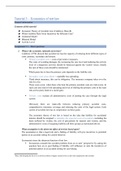
Tutorial 3 – Economics of tort law
General information
Contents of this tutorial
Economic Theory of Accident Law (Calabresi, Shavell)
Which Liability Rule Gives Incentives for Efficient Care?
Unilateral Model
Bilateral Model
Activity Level
Assignment 5.1 – Short questions
1. What is the economic rationale of tort law?
Calabresi (1970) showed that accident law has the capacity of reducing three different types of
costs: primary, secondary and tertiary.
Primary accident costs = costs of preventive measures.
The costs of avoiding damages (by increasing the care level and reducing the activity
level of a dangerous activity) should be balanced against the victims' losses. Ideally
the sum of these costs should be minimized.
Which party has to bear the primary costs depends on the liability rule.
Secondary costs of accidents = equitable loss spreading.
Think about insurance, this can be obligatory. The insurance company takes over the
risk for a fee.
These costs occur, when those who bear the primary accident costs are risk-averse. In
such case any kind of risk spreading and even of shifting the primary costs to the least
risk-averse party leads to a social gain;
Tertiary costs include all administrative costs of putting the case through the legal
system.
Obviously there are trade-offs between reducing primary accident costs,
comprehensive insurance coverage and reducing the costs of the legal system. Each
system of accident law has to compromise on these goals.
The economic theory of tort law is based on the idea that liability for accidental
injuries should be assigned to minimize the expected costs of accidents, including the
harm suffered by victims, the cost of precautions by injurers and victims, and the
administrative costs of assigning liability (all three groups as mentioned above).
What assumption is the deterrent effect of tort law based upon?
The assumption is that a legal rule and a finding of liability will give incentives to potential
parties in an accident setting for careful behavior.
Economists stress the deterrent function of tort law:
Economists consider the accident problem from an ex ante 1 perspective by asking the
question how an ex post finding of liability will influence ex ante the incentives of
potential parties in an accident setting for care-taking.
1
Busy with designing the law as to avoid the accidents to happen, instead of how to deal with compensation after accident.
, Advantage of this approach: the deterrent function and compensation goal are
carefully distinguished, so that the influence of various legal mechanisms that one
would choose can be evaluated both with respect to prevention and compensation.
Tort law serves as a means to internalize externalities: if you don’t have to pay for the
damage that you cause to others, you also won’t take the potential damages into
account when deciding on your behavior.
2. Explain the Learned Hand rule.
The hand rule provides a legal standard for determining when an injurer (or victim) is
negligent. The marginal version of the hand rule specifies a standard for care that coincides
with the efficient level of care.
B > P x L = no negligence
B < P x L = negligence: taking precautionary measures would have been less costly
B = burden of taking precautions. Because taking precautions is not costless. The first
precautions you take are relatively easy, think about wearing a seatbelt. But the further you go,
the more costly it becomes and the more difficult it gets to prevent accidents. So in the
beginning the burden is low, but it increases.
This you have to set off against the probability that the accident happens times the loss that
will occur if the accident happens.
Example: Ford Pinto case law
Because of the way the car was constructed, it had higher risk than other cars for explosion in
case of a collision from the back. Ford noticed this, and calculated that it cost them 11 dollars
per car to recall and refurbish the car. By doing this, they would save 118 dead people.
Amount of cars they would have to recall x 11 = 137 million US dollars. These 118
people’s families would have to be compensated. To calculate this compensation, Ford used
the value of a human live in dollars (taken form the national highway traffic safety
administration). This ended up 49,5 million dollars in compensation.
The compensation is obviously less than the 137 million dollars. So Ford decided that
the burden of taking precautions would be more costly than the probability the accident would
happen times the loss. Initially they thus decided to not recall the cars.
3. How is the optimum level2 of care defined in Law and Economics? What are the marginal
costs and marginal benefits of care taking?
Optimum level of care = steer people by legal rule towards that level that reaches optimal
care. We cannot avoid all accidents or take precautions to the maximum, but we try to reach
the optimum level of care. This is the level of care that minimizes total social costs. This
socially optimal level of care will reflect:
the costs of exercising care;
the reduction in accident risks that care would accomplish.
MC = MB -> marginal cost of care taking = marginal benefit in accident reduction
2
You did everything you could. You achieved the lowest social costs (costs of taking precautions and safety measures, and cost for society).
Then you’re not negligent/liable anymore. Otherwise it would be counterintuitive, to steer people to take the optimum level of care, but still
decide that they are negligent.
General information
Contents of this tutorial
Economic Theory of Accident Law (Calabresi, Shavell)
Which Liability Rule Gives Incentives for Efficient Care?
Unilateral Model
Bilateral Model
Activity Level
Assignment 5.1 – Short questions
1. What is the economic rationale of tort law?
Calabresi (1970) showed that accident law has the capacity of reducing three different types of
costs: primary, secondary and tertiary.
Primary accident costs = costs of preventive measures.
The costs of avoiding damages (by increasing the care level and reducing the activity
level of a dangerous activity) should be balanced against the victims' losses. Ideally
the sum of these costs should be minimized.
Which party has to bear the primary costs depends on the liability rule.
Secondary costs of accidents = equitable loss spreading.
Think about insurance, this can be obligatory. The insurance company takes over the
risk for a fee.
These costs occur, when those who bear the primary accident costs are risk-averse. In
such case any kind of risk spreading and even of shifting the primary costs to the least
risk-averse party leads to a social gain;
Tertiary costs include all administrative costs of putting the case through the legal
system.
Obviously there are trade-offs between reducing primary accident costs,
comprehensive insurance coverage and reducing the costs of the legal system. Each
system of accident law has to compromise on these goals.
The economic theory of tort law is based on the idea that liability for accidental
injuries should be assigned to minimize the expected costs of accidents, including the
harm suffered by victims, the cost of precautions by injurers and victims, and the
administrative costs of assigning liability (all three groups as mentioned above).
What assumption is the deterrent effect of tort law based upon?
The assumption is that a legal rule and a finding of liability will give incentives to potential
parties in an accident setting for careful behavior.
Economists stress the deterrent function of tort law:
Economists consider the accident problem from an ex ante 1 perspective by asking the
question how an ex post finding of liability will influence ex ante the incentives of
potential parties in an accident setting for care-taking.
1
Busy with designing the law as to avoid the accidents to happen, instead of how to deal with compensation after accident.
, Advantage of this approach: the deterrent function and compensation goal are
carefully distinguished, so that the influence of various legal mechanisms that one
would choose can be evaluated both with respect to prevention and compensation.
Tort law serves as a means to internalize externalities: if you don’t have to pay for the
damage that you cause to others, you also won’t take the potential damages into
account when deciding on your behavior.
2. Explain the Learned Hand rule.
The hand rule provides a legal standard for determining when an injurer (or victim) is
negligent. The marginal version of the hand rule specifies a standard for care that coincides
with the efficient level of care.
B > P x L = no negligence
B < P x L = negligence: taking precautionary measures would have been less costly
B = burden of taking precautions. Because taking precautions is not costless. The first
precautions you take are relatively easy, think about wearing a seatbelt. But the further you go,
the more costly it becomes and the more difficult it gets to prevent accidents. So in the
beginning the burden is low, but it increases.
This you have to set off against the probability that the accident happens times the loss that
will occur if the accident happens.
Example: Ford Pinto case law
Because of the way the car was constructed, it had higher risk than other cars for explosion in
case of a collision from the back. Ford noticed this, and calculated that it cost them 11 dollars
per car to recall and refurbish the car. By doing this, they would save 118 dead people.
Amount of cars they would have to recall x 11 = 137 million US dollars. These 118
people’s families would have to be compensated. To calculate this compensation, Ford used
the value of a human live in dollars (taken form the national highway traffic safety
administration). This ended up 49,5 million dollars in compensation.
The compensation is obviously less than the 137 million dollars. So Ford decided that
the burden of taking precautions would be more costly than the probability the accident would
happen times the loss. Initially they thus decided to not recall the cars.
3. How is the optimum level2 of care defined in Law and Economics? What are the marginal
costs and marginal benefits of care taking?
Optimum level of care = steer people by legal rule towards that level that reaches optimal
care. We cannot avoid all accidents or take precautions to the maximum, but we try to reach
the optimum level of care. This is the level of care that minimizes total social costs. This
socially optimal level of care will reflect:
the costs of exercising care;
the reduction in accident risks that care would accomplish.
MC = MB -> marginal cost of care taking = marginal benefit in accident reduction
2
You did everything you could. You achieved the lowest social costs (costs of taking precautions and safety measures, and cost for society).
Then you’re not negligent/liable anymore. Otherwise it would be counterintuitive, to steer people to take the optimum level of care, but still
decide that they are negligent.