COMPREHENSIVE 1
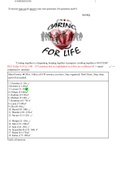
Everyone type out & answer your own questions (10 questions each!!)
nursing
✅→
“Coming together is a beginning; keeping together is progress; working together is SUCCESS”
DUE Friday 8/18 @ 1500 FYI numbers that are highlighted in yellow are confirmed ✓→ typed
completed w/ rationale
Main Priority ➔ 2016: Utilize all ATI resource you have. Stay organized. Don't Panic. Stop, drop
and roll as needed.
1. Christine (1-10)
2.Kristine (11-20)✓
✅
3. Lorena (21-30)✓
4. Chiugo (31-40)✓
5. Rukhsar (41-50)✓
6. Michael (51-60) ✅
7. Kourtney (61-70) ✓
9. Dio (81-90) ✅ ✅
8. Laura (71-80)✓
10. Daniel (91-100)
✅
11. Shaunte (101-110)✓
12. Navjot (111-120)
13. Philip(121-130) ✅
15. Sara (141-150) ✅
14. Julie (131-140)✓
16. Jacqueline H.(151-160) ✓
17. Brian(161-170)✓
18. Robin (171-180)✓
Verify all answers:
, COMPREHENSIVE 2
Ryan, Paul & Jackie → 1-90 Camille, Kate & Jo → 91-180
1. Missing
2. A nursing planning care for a school-age child who is 4 hrs. postoperative following perforated
appendicitis. Which of the following actions should the nurse include in the plan of care?
a. Offer small amounts of clear liquids 6 hrs. following surgery (assess for gag reflex first)
b. Give cromolyn nebulizer solution every 6 hrs. (for asthma)
c. Apply a warm compress to the operative site every 4 hrs.
d. Administer analgesics on a scheduled basis for the first 24 hrs.
Rationale Fundamentals ATI PDF p229: Managing acute severe pain with short‑term (24 to 48 hrs.)
around‑the‑clock administration of opioids is preferable to following a PRN schedule.
ATI PEDS 144 Maintain NPO. Administer IV fluids and antibiotics as prescribed. NO cromolyn
nebulizer stated on ATI.
3. A nurse is receiving change-of-shift report for a group of clients. Which of the following clients should
the nurse plan to assess first?
a. A client who has sinus arrhythmia and is receiving cardiac monitoring
b. A client who has diabetes mellitus and a hemoglobin A1C of 6.8%
c. A client who has epidural analgesia and weakness in the lower extremities
d. A client who has a hip fracture and a new onset of tachypnea
Rationale Med Surg ATI PDF p457: s/s of fat embolism (dyspnea, increased RR, decreased O2,
headache, decreased LOC r/t low O2 levels, respiratory distress, tachycardia, confusion, chest pain), Hip
and pelvis fractures are common causes, can occur after injury usually within 12-48 hrs.
4. A nurse is preparing to apply a transdermal nicotine patch for a client. Which of the following actions
should the nurse take?
a. Shave hairy areas of skin prior to application (apply to hairless, clean & dry areas to promote
absorption; avoid oily or broken skin)
b. Wear gloves to apply the patch to the client’s skin
c. Apply the patch within 1 hr. of removing it from the protective pouch (apply immediately)
d. Remove the previous patch and place it in a tissue (fold patch in half with sticky sides pressed
together)
Rationale https://medlineplus.gov/druginfo/meds/a601084.html: How to apply patch
Rationale ATI Skills Module Medication Administration: Topical medications include lotions, creams,
ointments, patches, and paste. Because topical medications are absorbed by the skin, wear gloves when
applying them to protect yourself against accidental exposure
Shaving may cause skin irritation and change the absorption of the drug.
, COMPREHENSIVE 3
5. A nurse has just received change-of-shift report for four clients. Which of the following clients should the
nurse assess first?
a. A client who was just given a glass of orange juice for a low blood glucose level
b. A client who is schedule for a procedure in 1 hr. (can wait)
c. A client who has 100 mL fluid remaining in his IV bag (can wait)
d. A client who received a pain medication 30 min ago for postoperative pain
Rationale Med Surg ATI PDF p529: assess for improvement or worsening of hypoglycemia. Repeat the
administration of carbohydrates if not within normal limits, and recheck blood glucose in 15 min. Risk
for seizure & coma if condition worsens.
6. A nurse is caring for a client who is receiving intermittent enteral tube feedings. Which of the following
places the client at risk for aspiration?
a. A history of gastroesophageal reflux disease
b. Receiving a high osmolarity formula
c. Sitting in a high-Fowler’s position during the feeding
d. A residual of 65 mL 1hr postprandial
Rationale ATI MS p309: Complications: Aspiration of gastric secretion Causes: Reflux of gastric fluids
into the esophagus can be aspirated into the trachea.
7. A nurse is reviewing the laboratory results for a client who has Cushing’s disease. The nurse should
expect the client to have an INCREASED in which of the following laboratory values?
a. Serum glucose level- increased
b. Serum calcium level-decreased
c. Lymphocyte count- decreased immune system.
d. Serum potassium level- decreased
Rationale ATI MS PDF p518: Cushing disease→ everything is UP except Potassium & Calcium:
DECREASED.
8. A nurse is caring for a client who has severe preeclampsia and is receiving magnesium sulfate
intravenously. The nurse discontinues the magnesium sulfate after the client displaces toxicity. Which of the
following actions should the nurse take? P . 235 pharm Ch. 30
a. Position the client supine
b. Prepare an IV bolus of dextrose 5% in water
c. Administer methylergonovine IM
d. Administer calcium gluconate IV
Rationale ATI PHARM PDF p398: Calcium gluconate is given for magnesium sulfate toxicity. Always
have an injectable form of calcium gluconate available when administering magnesium sulfate by IV.
9. A charge nurse is teaching new staff members about factors that increase a client’s risk to become violent.
Which of the following risk factors should the nurse include as the best predictor of future violence?
, COMPREHENSIVE 4
a. Experiencing delusions
b. Male gender
c. Previous violent behavior
d. A history of being in prison
Rationale ATI MH p185: Risk factors also include: history of aggression, poor impulse control, and
violence. Comorbidity that leads to acts of violence (psychotic delusions, command hallucinations,
violent angry reactions with cognitive disorders).
Rationale ATI COMMUNITY p50: Individual Assessment for Violence
10. A nurse is preparing to perform a sterile dressing change. Which of the following actions should the nurse
take when setting up the sterile field?
a. Place the cap from the solution sterile side up on clean surface
b. Open the outermost flap of the sterile kit toward the body→ flap AWAY from the body's first
c. Place the sterile dressing within 1.25 cm (0.5in) of the edge of the sterile field → 2.5 cm (1-inch)
border around any sterile drape or wrap that is considered contaminated.
d. Set up the sterile field 5 cm (2 in) below waist level→ it says BELOW waist level; should be
ABOVE waist level
Rationale POTTER & PERRY SKILLS & TECH p187: Remove sterile seal and cap from bottle in
upward motion.
11. A nurse is providing teaching to an older adult client about methods to promote nighttime sleep. Which of
the following instructions should the nurse include?
a. Eat a light snack before bedtime
b. Stay in bed at least 1 hr. if unable to fall asleep
c. Take a 1 hr. nap during the day
d. Perform exercises prior to bedtime
12. A home health nurse is preparing for an initial visit with an older adult client who lives alone. Which of the
following actions should the nurse take first?
a. Educate the client about current medical diagnosis
b. Refer the client to a meal delivery program
c. Identify environmental hazards in the home
d. Arrange for client transportation to follow-up appointments
Rationale Priority: Assess first.
13. A nurse is assessing the remote memory of an older adult client who has mild dementia. Which of the
following questions should the nurse ask the client?
a. “Can you tell me who visited you today?”
b. “What high school did you graduate from?”
c. “Can you list your current medications?”
Everyone type out & answer your own questions (10 questions each!!)
nursing
✅→
“Coming together is a beginning; keeping together is progress; working together is SUCCESS”
DUE Friday 8/18 @ 1500 FYI numbers that are highlighted in yellow are confirmed ✓→ typed
completed w/ rationale
Main Priority ➔ 2016: Utilize all ATI resource you have. Stay organized. Don't Panic. Stop, drop
and roll as needed.
1. Christine (1-10)
2.Kristine (11-20)✓
✅
3. Lorena (21-30)✓
4. Chiugo (31-40)✓
5. Rukhsar (41-50)✓
6. Michael (51-60) ✅
7. Kourtney (61-70) ✓
9. Dio (81-90) ✅ ✅
8. Laura (71-80)✓
10. Daniel (91-100)
✅
11. Shaunte (101-110)✓
12. Navjot (111-120)
13. Philip(121-130) ✅
15. Sara (141-150) ✅
14. Julie (131-140)✓
16. Jacqueline H.(151-160) ✓
17. Brian(161-170)✓
18. Robin (171-180)✓
Verify all answers:
, COMPREHENSIVE 2
Ryan, Paul & Jackie → 1-90 Camille, Kate & Jo → 91-180
1. Missing
2. A nursing planning care for a school-age child who is 4 hrs. postoperative following perforated
appendicitis. Which of the following actions should the nurse include in the plan of care?
a. Offer small amounts of clear liquids 6 hrs. following surgery (assess for gag reflex first)
b. Give cromolyn nebulizer solution every 6 hrs. (for asthma)
c. Apply a warm compress to the operative site every 4 hrs.
d. Administer analgesics on a scheduled basis for the first 24 hrs.
Rationale Fundamentals ATI PDF p229: Managing acute severe pain with short‑term (24 to 48 hrs.)
around‑the‑clock administration of opioids is preferable to following a PRN schedule.
ATI PEDS 144 Maintain NPO. Administer IV fluids and antibiotics as prescribed. NO cromolyn
nebulizer stated on ATI.
3. A nurse is receiving change-of-shift report for a group of clients. Which of the following clients should
the nurse plan to assess first?
a. A client who has sinus arrhythmia and is receiving cardiac monitoring
b. A client who has diabetes mellitus and a hemoglobin A1C of 6.8%
c. A client who has epidural analgesia and weakness in the lower extremities
d. A client who has a hip fracture and a new onset of tachypnea
Rationale Med Surg ATI PDF p457: s/s of fat embolism (dyspnea, increased RR, decreased O2,
headache, decreased LOC r/t low O2 levels, respiratory distress, tachycardia, confusion, chest pain), Hip
and pelvis fractures are common causes, can occur after injury usually within 12-48 hrs.
4. A nurse is preparing to apply a transdermal nicotine patch for a client. Which of the following actions
should the nurse take?
a. Shave hairy areas of skin prior to application (apply to hairless, clean & dry areas to promote
absorption; avoid oily or broken skin)
b. Wear gloves to apply the patch to the client’s skin
c. Apply the patch within 1 hr. of removing it from the protective pouch (apply immediately)
d. Remove the previous patch and place it in a tissue (fold patch in half with sticky sides pressed
together)
Rationale https://medlineplus.gov/druginfo/meds/a601084.html: How to apply patch
Rationale ATI Skills Module Medication Administration: Topical medications include lotions, creams,
ointments, patches, and paste. Because topical medications are absorbed by the skin, wear gloves when
applying them to protect yourself against accidental exposure
Shaving may cause skin irritation and change the absorption of the drug.
, COMPREHENSIVE 3
5. A nurse has just received change-of-shift report for four clients. Which of the following clients should the
nurse assess first?
a. A client who was just given a glass of orange juice for a low blood glucose level
b. A client who is schedule for a procedure in 1 hr. (can wait)
c. A client who has 100 mL fluid remaining in his IV bag (can wait)
d. A client who received a pain medication 30 min ago for postoperative pain
Rationale Med Surg ATI PDF p529: assess for improvement or worsening of hypoglycemia. Repeat the
administration of carbohydrates if not within normal limits, and recheck blood glucose in 15 min. Risk
for seizure & coma if condition worsens.
6. A nurse is caring for a client who is receiving intermittent enteral tube feedings. Which of the following
places the client at risk for aspiration?
a. A history of gastroesophageal reflux disease
b. Receiving a high osmolarity formula
c. Sitting in a high-Fowler’s position during the feeding
d. A residual of 65 mL 1hr postprandial
Rationale ATI MS p309: Complications: Aspiration of gastric secretion Causes: Reflux of gastric fluids
into the esophagus can be aspirated into the trachea.
7. A nurse is reviewing the laboratory results for a client who has Cushing’s disease. The nurse should
expect the client to have an INCREASED in which of the following laboratory values?
a. Serum glucose level- increased
b. Serum calcium level-decreased
c. Lymphocyte count- decreased immune system.
d. Serum potassium level- decreased
Rationale ATI MS PDF p518: Cushing disease→ everything is UP except Potassium & Calcium:
DECREASED.
8. A nurse is caring for a client who has severe preeclampsia and is receiving magnesium sulfate
intravenously. The nurse discontinues the magnesium sulfate after the client displaces toxicity. Which of the
following actions should the nurse take? P . 235 pharm Ch. 30
a. Position the client supine
b. Prepare an IV bolus of dextrose 5% in water
c. Administer methylergonovine IM
d. Administer calcium gluconate IV
Rationale ATI PHARM PDF p398: Calcium gluconate is given for magnesium sulfate toxicity. Always
have an injectable form of calcium gluconate available when administering magnesium sulfate by IV.
9. A charge nurse is teaching new staff members about factors that increase a client’s risk to become violent.
Which of the following risk factors should the nurse include as the best predictor of future violence?
, COMPREHENSIVE 4
a. Experiencing delusions
b. Male gender
c. Previous violent behavior
d. A history of being in prison
Rationale ATI MH p185: Risk factors also include: history of aggression, poor impulse control, and
violence. Comorbidity that leads to acts of violence (psychotic delusions, command hallucinations,
violent angry reactions with cognitive disorders).
Rationale ATI COMMUNITY p50: Individual Assessment for Violence
10. A nurse is preparing to perform a sterile dressing change. Which of the following actions should the nurse
take when setting up the sterile field?
a. Place the cap from the solution sterile side up on clean surface
b. Open the outermost flap of the sterile kit toward the body→ flap AWAY from the body's first
c. Place the sterile dressing within 1.25 cm (0.5in) of the edge of the sterile field → 2.5 cm (1-inch)
border around any sterile drape or wrap that is considered contaminated.
d. Set up the sterile field 5 cm (2 in) below waist level→ it says BELOW waist level; should be
ABOVE waist level
Rationale POTTER & PERRY SKILLS & TECH p187: Remove sterile seal and cap from bottle in
upward motion.
11. A nurse is providing teaching to an older adult client about methods to promote nighttime sleep. Which of
the following instructions should the nurse include?
a. Eat a light snack before bedtime
b. Stay in bed at least 1 hr. if unable to fall asleep
c. Take a 1 hr. nap during the day
d. Perform exercises prior to bedtime
12. A home health nurse is preparing for an initial visit with an older adult client who lives alone. Which of the
following actions should the nurse take first?
a. Educate the client about current medical diagnosis
b. Refer the client to a meal delivery program
c. Identify environmental hazards in the home
d. Arrange for client transportation to follow-up appointments
Rationale Priority: Assess first.
13. A nurse is assessing the remote memory of an older adult client who has mild dementia. Which of the
following questions should the nurse ask the client?
a. “Can you tell me who visited you today?”
b. “What high school did you graduate from?”
c. “Can you list your current medications?”