Panorama science and society
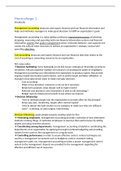
summary
Week 1 promises
Society expects science to fix problems and teach new things investment
If society supports us, we scientists promise to provide solutions and make discoveries
But: society not always approves what we scientists do
Sometimes scientists promise more than they can do/achieve
Pushing: funders, passion, fame, carrier pressure, journal pressure
Referencing to sources used in the scientific work
Intellectual property
Verification likelihood/ truthiness of the promises made
So: correctly referencing in your work increases its value
FICR:
Fraud in your education: you get someone else’s grade
Intellectual property right: you take what is not yours
Credibility of your information for your reader
Recognition for the original work (academic standard)
The work of a scientist, can be summarized in “the credibility cycle”:
Money: recognized scientists show that they can
turn the money obtained from funding into valuable
knowledge (make the promises true)
Staff and equipment: from this money, a scientist
can acquire well-informed staff and suitable, high
quality equipment
Data: this staff and equipment helps the scientist to
perform research and acquire quality, useful data of
the experiments
Arguments: by interpreting this acquired data,
arguments can be done and defended about the
likelihood/truthiness/usefulness/etc. about the research prove that the promises are
made true
Articles: when conclusions and arguments are made about the research, the researcher can
write articles about his research and have it published in journals
Recognition: if an article is published in an (scientific) journal, the scientist gets recognition
for his work and the cycle starts again
Articles: publishing in international, peer reviewed scientific journals increase reliability
Research reported in articles specific language and conventions
Sent to journal editor send to anonymous professionals (one/double blind) for
peer review do recommendations and post commends
Editor combines commends verdict: rejection or return revise resubmit
= system of impartial review of knowledge
, Peer review system not universal procedure differs per journal
Points of debate concerning peer review peer review is not perfect
Blind or double blind? avoid bias reviewers being less critical / avoid scientist
for being ashamed of low quality/ mistakes in their paper
Should journals publish research plans and results?
How much errors remain? how to trace these and what to do about it?
Which journals are trustworthy?
“replication crises”: lot of non-replicable peer reviewed research
Peer review is constantly developing
Typical scientific academic carrier:
1. Research masters
2. PhD student (in Dutch: ‘aio’, promovendi)
3. Post-doctoral posiLon, ‘Post-doc’
4. Lecturer (US: Assistant professor, NL: universitair docent)
5. Senior lecturer (US: Associate professor, univ. hoofddocent)
6. (Full) professor
Carrier in research outside academia/ something completely different also possible
Recognition: science’s reward system scientists get thus also paid in fame
Prizes
Publishing
Citations
Naming a discovery: eponymy (e.g. Planck’s constant)
Membership of boards, committees, academies
Funding
But who should be funded and who not? As quantity is not per definition an indicator of
quality research hot debate
Scientific rewards are informal and also monetary
Money and funding
1st money stream: basic financing
2nd money stream: project financing
3rd money stream: companies + non-profit organisations
Funding channels importance of the expectation for ‘research impact’ difficult balance
between ‘fundamental research’ and ‘applicability’
summary
Week 1 promises
Society expects science to fix problems and teach new things investment
If society supports us, we scientists promise to provide solutions and make discoveries
But: society not always approves what we scientists do
Sometimes scientists promise more than they can do/achieve
Pushing: funders, passion, fame, carrier pressure, journal pressure
Referencing to sources used in the scientific work
Intellectual property
Verification likelihood/ truthiness of the promises made
So: correctly referencing in your work increases its value
FICR:
Fraud in your education: you get someone else’s grade
Intellectual property right: you take what is not yours
Credibility of your information for your reader
Recognition for the original work (academic standard)
The work of a scientist, can be summarized in “the credibility cycle”:
Money: recognized scientists show that they can
turn the money obtained from funding into valuable
knowledge (make the promises true)
Staff and equipment: from this money, a scientist
can acquire well-informed staff and suitable, high
quality equipment
Data: this staff and equipment helps the scientist to
perform research and acquire quality, useful data of
the experiments
Arguments: by interpreting this acquired data,
arguments can be done and defended about the
likelihood/truthiness/usefulness/etc. about the research prove that the promises are
made true
Articles: when conclusions and arguments are made about the research, the researcher can
write articles about his research and have it published in journals
Recognition: if an article is published in an (scientific) journal, the scientist gets recognition
for his work and the cycle starts again
Articles: publishing in international, peer reviewed scientific journals increase reliability
Research reported in articles specific language and conventions
Sent to journal editor send to anonymous professionals (one/double blind) for
peer review do recommendations and post commends
Editor combines commends verdict: rejection or return revise resubmit
= system of impartial review of knowledge
, Peer review system not universal procedure differs per journal
Points of debate concerning peer review peer review is not perfect
Blind or double blind? avoid bias reviewers being less critical / avoid scientist
for being ashamed of low quality/ mistakes in their paper
Should journals publish research plans and results?
How much errors remain? how to trace these and what to do about it?
Which journals are trustworthy?
“replication crises”: lot of non-replicable peer reviewed research
Peer review is constantly developing
Typical scientific academic carrier:
1. Research masters
2. PhD student (in Dutch: ‘aio’, promovendi)
3. Post-doctoral posiLon, ‘Post-doc’
4. Lecturer (US: Assistant professor, NL: universitair docent)
5. Senior lecturer (US: Associate professor, univ. hoofddocent)
6. (Full) professor
Carrier in research outside academia/ something completely different also possible
Recognition: science’s reward system scientists get thus also paid in fame
Prizes
Publishing
Citations
Naming a discovery: eponymy (e.g. Planck’s constant)
Membership of boards, committees, academies
Funding
But who should be funded and who not? As quantity is not per definition an indicator of
quality research hot debate
Scientific rewards are informal and also monetary
Money and funding
1st money stream: basic financing
2nd money stream: project financing
3rd money stream: companies + non-profit organisations
Funding channels importance of the expectation for ‘research impact’ difficult balance
between ‘fundamental research’ and ‘applicability’