HESI MED SURG
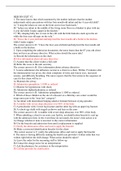
The nurse is providing care to a client after a percutaneous transluminal coronary angioplasty (PTCA).
What actions will the nurse include in the client's plan of care? (Select all that apply.)
A. Frequent vital signs.
B. Determine if the client is allergic to aspirin.
D. Offer fluids of choice.
F. Monitor infusion of IV nitroglycerine.
In assessing a client diagnosed with primary aldosteronism, the nurse expects the laboratory test results
to indicate a decreased serum level of which substance?
C. Potassium
Clients with primary aldosteronism exhibit a profound decline in serum levels of potassium;
hypokalemia; hypertension is the most prominent and universal sign.
The nurse is providing care for a client diagnosed with trigeminal neuralgia (tic douloureux). Which
symptoms will the nurse be looking for in the focused assessment related to this condition? (Select all
that apply.)
A. Facial muscle spasms
B. Sudden facial pain
Trigeminal neuralgia is characterized by paroxysms of pain, similar to an electric shock, in the area
innervated by one or more branches of the trigeminal nerve (cranial V).
A 74-year-old male client is admitted to the intensive care unit (ICU) with a diagnosis of respiratory
failure secondary to pneumonia. Currently, the client is ventilator-dependent, with settings of tidal
volume (VT) of 750 mL and an intermittent mandatory ventilation (IMV) rate of 10 breaths/min. Arterial
blood gas (ABG) results are as follows: pH, 7.48; PaCO2, 30 mm Hg; PaO2, 64 mm Hg; HCO3, 25 mEq/L;
and FiO2, 0.80. Which action should the nurse take first?
D. Add 5 cm positive end-expiratory pressure (PEEP)
Adding PEEP helps improve oxygenation while reducing FiO2 to a less toxic level
, The clinic nurse is providing post-operative teaching for a client scheduled for a myringoplasty. Which
client statements indicate to the nurse that the teaching has been effective? (Select all that apply.)
B."I will avoid forceful and deep coughing until my post-op checkup.
C."I must lay flat on my non-operative side for the first 12 hours after surgery."
D. "My hearing may be less or muffled until the packing comes out."
The client must keep the ear bandage clean and dry until the packing is removed. Showering and hair
washing is discouraged.
During the shift report, the charge nurse informs a nurse of a reassignment to another unit for the day.
The nurse begins to sigh deeply and tosses about her belongings when preparing to leave. What is the
best immediate action for the charge nurse to take?
A.
Continue with the shift report and talk to the nurse about the incident at a later time.
Continuing with the shift report is the best immediate action because it allows the nurse who was
floated some cooling off time. At a later time (after the nurse has cooled off) the charge nurse should
discuss the conduct of the nurse in private.
The nurse is completing an admission interview for a client with Parkinson disease. Which question will
provide additional information about manifestations that the client is likely to experience?
C."Have you ever been frozen in one spot, unable to move?"
Clients with Parkinson disease frequently experience difficulty in initiating, maintaining, and performing
motor activities. They may even experience being rooted to the spot and unable to move.
The nurse teaches a client with type 2 diabetes nutritional strategies to decrease obesity. Which food
items chosen by the client indicate understanding of the teaching? (Select all that apply.)
B.Salmon
C.Broccoli
E.Banana
Options B, C, and E provide fresh fruits, lean meats and fish, vegetables, whole grains, and low-fat dairy
products. All are recommended by the American Diabetes Association (ADA) and are a part of the My
Plate guidelines recommended by the U.S. Department of Agriculture (USDA).
Which nursing action would be appropriate for a client who is newly diagnosed with Cushing syndrome?
The nurse is providing care to a client after a percutaneous transluminal coronary angioplasty (PTCA).
What actions will the nurse include in the client's plan of care? (Select all that apply.)
A. Frequent vital signs.
B. Determine if the client is allergic to aspirin.
D. Offer fluids of choice.
F. Monitor infusion of IV nitroglycerine.
In assessing a client diagnosed with primary aldosteronism, the nurse expects the laboratory test results
to indicate a decreased serum level of which substance?
C. Potassium
Clients with primary aldosteronism exhibit a profound decline in serum levels of potassium;
hypokalemia; hypertension is the most prominent and universal sign.
The nurse is providing care for a client diagnosed with trigeminal neuralgia (tic douloureux). Which
symptoms will the nurse be looking for in the focused assessment related to this condition? (Select all
that apply.)
A. Facial muscle spasms
B. Sudden facial pain
Trigeminal neuralgia is characterized by paroxysms of pain, similar to an electric shock, in the area
innervated by one or more branches of the trigeminal nerve (cranial V).
A 74-year-old male client is admitted to the intensive care unit (ICU) with a diagnosis of respiratory
failure secondary to pneumonia. Currently, the client is ventilator-dependent, with settings of tidal
volume (VT) of 750 mL and an intermittent mandatory ventilation (IMV) rate of 10 breaths/min. Arterial
blood gas (ABG) results are as follows: pH, 7.48; PaCO2, 30 mm Hg; PaO2, 64 mm Hg; HCO3, 25 mEq/L;
and FiO2, 0.80. Which action should the nurse take first?
D. Add 5 cm positive end-expiratory pressure (PEEP)
Adding PEEP helps improve oxygenation while reducing FiO2 to a less toxic level
, The clinic nurse is providing post-operative teaching for a client scheduled for a myringoplasty. Which
client statements indicate to the nurse that the teaching has been effective? (Select all that apply.)
B."I will avoid forceful and deep coughing until my post-op checkup.
C."I must lay flat on my non-operative side for the first 12 hours after surgery."
D. "My hearing may be less or muffled until the packing comes out."
The client must keep the ear bandage clean and dry until the packing is removed. Showering and hair
washing is discouraged.
During the shift report, the charge nurse informs a nurse of a reassignment to another unit for the day.
The nurse begins to sigh deeply and tosses about her belongings when preparing to leave. What is the
best immediate action for the charge nurse to take?
A.
Continue with the shift report and talk to the nurse about the incident at a later time.
Continuing with the shift report is the best immediate action because it allows the nurse who was
floated some cooling off time. At a later time (after the nurse has cooled off) the charge nurse should
discuss the conduct of the nurse in private.
The nurse is completing an admission interview for a client with Parkinson disease. Which question will
provide additional information about manifestations that the client is likely to experience?
C."Have you ever been frozen in one spot, unable to move?"
Clients with Parkinson disease frequently experience difficulty in initiating, maintaining, and performing
motor activities. They may even experience being rooted to the spot and unable to move.
The nurse teaches a client with type 2 diabetes nutritional strategies to decrease obesity. Which food
items chosen by the client indicate understanding of the teaching? (Select all that apply.)
B.Salmon
C.Broccoli
E.Banana
Options B, C, and E provide fresh fruits, lean meats and fish, vegetables, whole grains, and low-fat dairy
products. All are recommended by the American Diabetes Association (ADA) and are a part of the My
Plate guidelines recommended by the U.S. Department of Agriculture (USDA).
Which nursing action would be appropriate for a client who is newly diagnosed with Cushing syndrome?