Exchange
Digestion
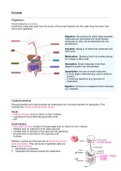
Food moves by peristalsis.
Small food molecules pass from the lumen of the small intestine into the cells lining the ileum then
into blood capillaries.
Digestion: the process by which large insoluble
molecules are hydrolysed into small soluble
molecules so they can be absorbed into the
bloodstream.
Ingestion: taking in of solid food molecules into
the mouth.
Mastication: Breaking food into smaller pieces
for a larger surface area
Absorption: Small molecules move from
digestive system into bloodstream
Assimilation: the use of small molecules…
• to form larger molecules (e.g. amino acids for
protein)
• In chemical reactions (e.g. glucose for
respiration)
Egestion: removal of undigested food molecules
e.g. cellulose
Carbohydrates
Polysaccharides and disaccharides are hydrolysed into monosaccharides for absorption. This
involves the hydrolysis of glycosidic bonds.
Mouth:
• Salivary amylase acts on starch to form maltose
• hydrolysis of every alternate glycosidic bond
• pH7
Small intestine:
• Pancreatic amylase (made in the pancreas) acts on starch to form maltose
• Maltase acts on maltose to form alpha glucose
• Lactase acts on lactose to form glucose and galactose
• Sucrase acts on sucrose to form glucose and
fructose
Maltase, Lactase and Sucrase are all membrane bound
disaccharidases. They are found in epithelial cells and
have a dual function:
1. Hydrolyses a substrate
2. Transports the product across the membrane
, Proteins
Hydrolysed by proteases/peptidases which hydrolyse peptide bonds to form amino acids.
Endopeptidases:
• Found in the stomach
• Work on middle of peptide chains
• Hydrolyse some of the peptide bonds within the protein
producing shorter peptide chains
Exopeptidases:
• Produced in pancreas and work in the small intestine
• Work at the ends of peptide chains producing single amino
acids and dipeptides
Dipeptidases:
• Located in epithelial cells of ileum
• Break down dipeptides into single amino acids.
• Also have a dual function, and are known as membrane-bound
dipeptidases
Lipids
Stomach:
• Large lipid droplets are turned into small lipid droplets. The stomach forms chyme which moves
into the small intestine
Small intestine:
• Bile added (made in liver, stored in gall bladder), which acts as an emulsifying agent and
maintains the small lipid droplets. The lipid droplets have a large
SA:V ratio which makes hydrolysis faster…
• lipase hydrolyses the lipid into fatty acids and
monoglycerides.
Micelles: the fatty acids and monoglycerides are insoluble in
water and so wont get close enough to the villi (which are
surrounded by water) for absorption. They form micelles
which move the fatty acids and monoglycerides close enough to
the villi. The micelle bursts and they can move across the
phospholipid bilayer.
Absorption of glucose and amino acids
1. Sodium ions are actively transported out of the epithelial cell into the blood
by the sodium potassium pump. (and potassium ions move into the cell) This
means that sodium ion concentration is lower inside the cell compared to the
ileum.
2. Sodium ions diffuse into the cell through a co-transport protein.
3. Energy is released and this allows glucose/amino acids to be carried by the
co-transport protein against its concentration gradient.
4. The glucose/amino acids move into the blood via facilitated diffusion using
specific protein carriers
Digestion
Food moves by peristalsis.
Small food molecules pass from the lumen of the small intestine into the cells lining the ileum then
into blood capillaries.
Digestion: the process by which large insoluble
molecules are hydrolysed into small soluble
molecules so they can be absorbed into the
bloodstream.
Ingestion: taking in of solid food molecules into
the mouth.
Mastication: Breaking food into smaller pieces
for a larger surface area
Absorption: Small molecules move from
digestive system into bloodstream
Assimilation: the use of small molecules…
• to form larger molecules (e.g. amino acids for
protein)
• In chemical reactions (e.g. glucose for
respiration)
Egestion: removal of undigested food molecules
e.g. cellulose
Carbohydrates
Polysaccharides and disaccharides are hydrolysed into monosaccharides for absorption. This
involves the hydrolysis of glycosidic bonds.
Mouth:
• Salivary amylase acts on starch to form maltose
• hydrolysis of every alternate glycosidic bond
• pH7
Small intestine:
• Pancreatic amylase (made in the pancreas) acts on starch to form maltose
• Maltase acts on maltose to form alpha glucose
• Lactase acts on lactose to form glucose and galactose
• Sucrase acts on sucrose to form glucose and
fructose
Maltase, Lactase and Sucrase are all membrane bound
disaccharidases. They are found in epithelial cells and
have a dual function:
1. Hydrolyses a substrate
2. Transports the product across the membrane
, Proteins
Hydrolysed by proteases/peptidases which hydrolyse peptide bonds to form amino acids.
Endopeptidases:
• Found in the stomach
• Work on middle of peptide chains
• Hydrolyse some of the peptide bonds within the protein
producing shorter peptide chains
Exopeptidases:
• Produced in pancreas and work in the small intestine
• Work at the ends of peptide chains producing single amino
acids and dipeptides
Dipeptidases:
• Located in epithelial cells of ileum
• Break down dipeptides into single amino acids.
• Also have a dual function, and are known as membrane-bound
dipeptidases
Lipids
Stomach:
• Large lipid droplets are turned into small lipid droplets. The stomach forms chyme which moves
into the small intestine
Small intestine:
• Bile added (made in liver, stored in gall bladder), which acts as an emulsifying agent and
maintains the small lipid droplets. The lipid droplets have a large
SA:V ratio which makes hydrolysis faster…
• lipase hydrolyses the lipid into fatty acids and
monoglycerides.
Micelles: the fatty acids and monoglycerides are insoluble in
water and so wont get close enough to the villi (which are
surrounded by water) for absorption. They form micelles
which move the fatty acids and monoglycerides close enough to
the villi. The micelle bursts and they can move across the
phospholipid bilayer.
Absorption of glucose and amino acids
1. Sodium ions are actively transported out of the epithelial cell into the blood
by the sodium potassium pump. (and potassium ions move into the cell) This
means that sodium ion concentration is lower inside the cell compared to the
ileum.
2. Sodium ions diffuse into the cell through a co-transport protein.
3. Energy is released and this allows glucose/amino acids to be carried by the
co-transport protein against its concentration gradient.
4. The glucose/amino acids move into the blood via facilitated diffusion using
specific protein carriers