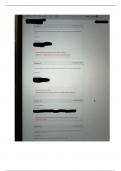
Question 1
1 out of 1 points
A 25-year-old female has a heavy menses during which she loses a profuse
amount of blood. Which of the following adaptations should the nurse
expect?
Selected d.
Answer:
Peripheral
vasoconstriction
Correct d.
Answer:
Peripheral
vasoconstriction
Question 2
1 out of 1 points
A 58-year-old female presents in the clinic presenting with fatigue, weight
loss, and tingling in her fingers. Laboratory findings show low hemoglobin
and hematocrit, a high mean corpuscular volume, and normal plasma iron.
These assessment findings are consistent with which type of anemia?
Selected b.
Answer:
Pernicious
anemia
Correct b.
Answer:
Pernicious
anemia
Question 3
1 out of 1 points
A newborn is diagnosed with congenital intrinsic factor deficiency. Which of
the following types of anemia will the nurse see documented on the chart?
Selected b.
Answer:
Pernicious
anemia
Correct b.
Answer:
Pernicious
anemia
Question 4
1 out of 1 points
A group of cells isolated in the laboratory have membrane-bound granules
in their cytoplasm and they show phagocytic activity. Which of the
following cells is most similar?
Selected d.
Answer:
Eosinoph
ils
Correct d.
, Answer: Eosinoph
ils
Question 5
1 out of 1 points
A nurse is caring for a patient who cannot clot. Which end product of the
clotting cascade is this patient unable to make?
Selected d.
Answer:
Fibri
n
Correct d.
Answer:
Fibri
n
Question 6
1 out of 1 points
A 40-year-old male vegetarian is diagnosed with folate deficiency anemia.
He reports that he is an alcoholic. Which of the following factors put him at
greatest risk for developing his disease?
Selected b.
Answer:
Being
alcoholic
Correct b.
Answer:
Being
alcoholic
Question 7
1 out of 1 points
A 21-year-old female was recently diagnosed with iron deficiency anemia.
In addition to fatigue and weakness, which of the following clinical signs
and symptoms would she most likely exhibit?
Selected b.
Answer:
Spoon-shaped
nails
Correct b.
Answer:
Spoon-shaped
nails
Question 8
1 out of 1 points
A 60-year-old female emphysema patient experiences a rapid and
pounding heart, dizziness, and fatigue with exertion. Which of the following
respiratory assessment findings indicate the respiratory system is
compensating for the increased oxygen demand?
Selected b.
Answer:
, Increased rate and depth of
breathing
Correct b.
Answer:
Increased rate and depth of
breathing
Question 9
1 out of 1 points
A 34-year-old male presents in the emergency room with extreme fatigue
and shortness of breath. His skin and sclera appear to have a yellowish
discoloration. These assessment findings are consistent with which type of
anemia?
Selected d.
Answer:
Hemolytic
anemia
Correct d.
Answer:
Hemolytic
anemia
Question 10
1 out of 1 points
A 10-year-old male is diagnosed with leukemia. The nurse assesses for
which other condition that could be associated with his disease?
Selected a.
Answer:
Down
syndrome
Correct a.
Answer:
Down
syndrome
Question 11
1 out of 1 points
Which of the following individuals should the nurse assess first for a
vitamin B12 deficiency anemia?
Selected c.
Answer:
47-year-old male who had a gastrectomy procedure (removal
of the stomach)
Correct c.
Answer:
47-year-old male who had a gastrectomy procedure (removal
of the stomach)
Question 12
1 out of 1 points
A 5-year-old female is diagnosed with acute leukemia. The nurse will most
likely treat this patient with:
, Selected c.
Answer:
Chemother
apy
Correct c.
Answer:
Chemother
apy
Question 13
0 out of 1 points
A staff member wants to know where the greatest proportion of iron is
located. How should the nurse respond? The greatest proportion of total
body iron is located in the:
Selected c.
Answer:
Bone
marrow
Correct a.
Answer:
Erythrocyt
es
Question 14
1 out of 1 points
A 5-year-old male was diagnosed with normocytic-normochromic anemia.
Which of the following anemias does the nurse suspect the patient has?
Selected b.
Answer:
Hemolytic
anemia
Correct b.
Answer:
Hemolytic
anemia
Question 15
1 out of 1 points
While checking lab results, the nurse remembers the normal leukocyte
count is:
Selected b.
Answer:
5,000-
10,000/mm3
Correct b.
Answer:
5,000-
10,000/mm3
Question 16
1 out of 1 points
A 62-year-old female tells her health care provider she has been
experiencing regular night sweats that cause her to wake up drenched.
She also remarks that she has been unintentionally losing weight. Physical
1 out of 1 points
A 25-year-old female has a heavy menses during which she loses a profuse
amount of blood. Which of the following adaptations should the nurse
expect?
Selected d.
Answer:
Peripheral
vasoconstriction
Correct d.
Answer:
Peripheral
vasoconstriction
Question 2
1 out of 1 points
A 58-year-old female presents in the clinic presenting with fatigue, weight
loss, and tingling in her fingers. Laboratory findings show low hemoglobin
and hematocrit, a high mean corpuscular volume, and normal plasma iron.
These assessment findings are consistent with which type of anemia?
Selected b.
Answer:
Pernicious
anemia
Correct b.
Answer:
Pernicious
anemia
Question 3
1 out of 1 points
A newborn is diagnosed with congenital intrinsic factor deficiency. Which of
the following types of anemia will the nurse see documented on the chart?
Selected b.
Answer:
Pernicious
anemia
Correct b.
Answer:
Pernicious
anemia
Question 4
1 out of 1 points
A group of cells isolated in the laboratory have membrane-bound granules
in their cytoplasm and they show phagocytic activity. Which of the
following cells is most similar?
Selected d.
Answer:
Eosinoph
ils
Correct d.
, Answer: Eosinoph
ils
Question 5
1 out of 1 points
A nurse is caring for a patient who cannot clot. Which end product of the
clotting cascade is this patient unable to make?
Selected d.
Answer:
Fibri
n
Correct d.
Answer:
Fibri
n
Question 6
1 out of 1 points
A 40-year-old male vegetarian is diagnosed with folate deficiency anemia.
He reports that he is an alcoholic. Which of the following factors put him at
greatest risk for developing his disease?
Selected b.
Answer:
Being
alcoholic
Correct b.
Answer:
Being
alcoholic
Question 7
1 out of 1 points
A 21-year-old female was recently diagnosed with iron deficiency anemia.
In addition to fatigue and weakness, which of the following clinical signs
and symptoms would she most likely exhibit?
Selected b.
Answer:
Spoon-shaped
nails
Correct b.
Answer:
Spoon-shaped
nails
Question 8
1 out of 1 points
A 60-year-old female emphysema patient experiences a rapid and
pounding heart, dizziness, and fatigue with exertion. Which of the following
respiratory assessment findings indicate the respiratory system is
compensating for the increased oxygen demand?
Selected b.
Answer:
, Increased rate and depth of
breathing
Correct b.
Answer:
Increased rate and depth of
breathing
Question 9
1 out of 1 points
A 34-year-old male presents in the emergency room with extreme fatigue
and shortness of breath. His skin and sclera appear to have a yellowish
discoloration. These assessment findings are consistent with which type of
anemia?
Selected d.
Answer:
Hemolytic
anemia
Correct d.
Answer:
Hemolytic
anemia
Question 10
1 out of 1 points
A 10-year-old male is diagnosed with leukemia. The nurse assesses for
which other condition that could be associated with his disease?
Selected a.
Answer:
Down
syndrome
Correct a.
Answer:
Down
syndrome
Question 11
1 out of 1 points
Which of the following individuals should the nurse assess first for a
vitamin B12 deficiency anemia?
Selected c.
Answer:
47-year-old male who had a gastrectomy procedure (removal
of the stomach)
Correct c.
Answer:
47-year-old male who had a gastrectomy procedure (removal
of the stomach)
Question 12
1 out of 1 points
A 5-year-old female is diagnosed with acute leukemia. The nurse will most
likely treat this patient with:
, Selected c.
Answer:
Chemother
apy
Correct c.
Answer:
Chemother
apy
Question 13
0 out of 1 points
A staff member wants to know where the greatest proportion of iron is
located. How should the nurse respond? The greatest proportion of total
body iron is located in the:
Selected c.
Answer:
Bone
marrow
Correct a.
Answer:
Erythrocyt
es
Question 14
1 out of 1 points
A 5-year-old male was diagnosed with normocytic-normochromic anemia.
Which of the following anemias does the nurse suspect the patient has?
Selected b.
Answer:
Hemolytic
anemia
Correct b.
Answer:
Hemolytic
anemia
Question 15
1 out of 1 points
While checking lab results, the nurse remembers the normal leukocyte
count is:
Selected b.
Answer:
5,000-
10,000/mm3
Correct b.
Answer:
5,000-
10,000/mm3
Question 16
1 out of 1 points
A 62-year-old female tells her health care provider she has been
experiencing regular night sweats that cause her to wake up drenched.
She also remarks that she has been unintentionally losing weight. Physical