Chapter 6: Nutritional Support Test Bank
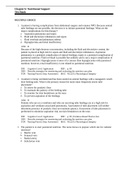
1. A patient is having complications from abdominal surgery and remains NPO. Because enteral tube feedings are not possible, the decision is to initiate parenteral feedings. What are the major complications for this therapy? a. Aspiration pneumonia and sepsis b. Fluid and electrolyte imbalances and sepsis c. Fluid overload and pulmonary edema d. Hypoglycemia and renal insufficiency ANS: B Because of the high dextrose concentration, including the fluid and electrolyte content, the patient is placed at high risk for sepsis and fluid and electrolyte imbalances. Aspiration pneumonia is a potential complication of enteral feedings; sepsis is a potential complication of parenteral nutrition. Fluid overload is possible but unlikely and is not a major complication of parenteral nutrition. Hyperglycemia is more of a concern than hypoglycemia with parenteral nutrition; however, renal insufficiency is not related to parenteral nutrition. DIF: Cognitive Level: Application REF: p. 89 OBJ: Describe strategies for monitoring and evaluating the nutrition care plan. TOP: Nursing Process Step: Assessment MSC: NCLEX: Physiological Integrity 2. A patient is being ventilated and has been started on enteral feedings with a nasogastric smallbore feeding t
Escuela, estudio y materia
- Institución
- Minnesota School Of Business
- Grado
- NURSING 303
Información del documento
- Subido en
- 16 de marzo de 2022
- Número de páginas
- 10
- Escrito en
- 2021/2022
- Tipo
- Examen
- Contiene
- Preguntas y respuestas
Temas
-
nursing 303
-
critical care nursing ch 6

Documento también disponible en un lote