1
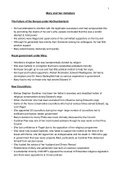
Mary and her ministers
The Failure of the Devyse under Northumberland:
- He had attempted to interfere with the legitimate succession and had compounded this
by promoting the claims of his son’s wife- people concluded that this was a sordid
attempt to hold power
- His actions were illegal and upset some of his committed supporters on the Council
- Although he generated less enmity than Somerset among his colleagues, he had little
positive support
- Mary acted bravely, decisively and quickly
Royal government under Mary:
- Inherited a kingdom that was fundamentally divided by religion
- She was Catholic in a kingdom that had a substantial protestant minority
- Not been brought up to rule and had little political instinct to help her cope
- Her loyal and trusted supporters, Robert Rochester, Edward Waldegrave, Sir Henry
Jerningham and Sir Henry Bedingfield had no serious experience in government
- Mary had to rely on those who had served Edward VI
New Councillors:
- Bishop Stephen Gardiner- had been her father’s secretary and steadfast holder of
religious conservatism during Edward’s reign
- Other churchmen who had been excluded from influence during Edward’s reign
- Some of the more conservative councillors who had at various times served Edward, eg.
Lord Paget
- She appointed 50 councillors during her reign- large number of councillors led to
inefficient and faction ridden government
- Mary’s decision to marry Philip was never formally discussed by the Council
- Cardinal Pole was one of her most trusted advisers though he was never on the Privy
Council
- She lost confidence in Paget due to his opposition of her religious programme
- She never fully trusted Gardiner, who failed to support her mother at the time of the
break with Rome- she did regard him as indispensable and his death in 1555 left a gap
in government that was never properly filled, particularly as Cardinal Pole distanced
himself from secular issues
- She trusted the advice of her husband and Simon Renard
- Relationship of Mary and parliament was built on cautious cooperation
- A substantial minority of 80 MP’s opposed the reversal of Edwardian religious legislation
and there were oppositions to Crown policies
Mary and her ministers
The Failure of the Devyse under Northumberland:
- He had attempted to interfere with the legitimate succession and had compounded this
by promoting the claims of his son’s wife- people concluded that this was a sordid
attempt to hold power
- His actions were illegal and upset some of his committed supporters on the Council
- Although he generated less enmity than Somerset among his colleagues, he had little
positive support
- Mary acted bravely, decisively and quickly
Royal government under Mary:
- Inherited a kingdom that was fundamentally divided by religion
- She was Catholic in a kingdom that had a substantial protestant minority
- Not been brought up to rule and had little political instinct to help her cope
- Her loyal and trusted supporters, Robert Rochester, Edward Waldegrave, Sir Henry
Jerningham and Sir Henry Bedingfield had no serious experience in government
- Mary had to rely on those who had served Edward VI
New Councillors:
- Bishop Stephen Gardiner- had been her father’s secretary and steadfast holder of
religious conservatism during Edward’s reign
- Other churchmen who had been excluded from influence during Edward’s reign
- Some of the more conservative councillors who had at various times served Edward, eg.
Lord Paget
- She appointed 50 councillors during her reign- large number of councillors led to
inefficient and faction ridden government
- Mary’s decision to marry Philip was never formally discussed by the Council
- Cardinal Pole was one of her most trusted advisers though he was never on the Privy
Council
- She lost confidence in Paget due to his opposition of her religious programme
- She never fully trusted Gardiner, who failed to support her mother at the time of the
break with Rome- she did regard him as indispensable and his death in 1555 left a gap
in government that was never properly filled, particularly as Cardinal Pole distanced
himself from secular issues
- She trusted the advice of her husband and Simon Renard
- Relationship of Mary and parliament was built on cautious cooperation
- A substantial minority of 80 MP’s opposed the reversal of Edwardian religious legislation
and there were oppositions to Crown policies