ARTERIAL PATHOLOGY
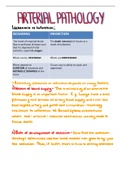
Schaemia vs Infarction
Resulting is chaemia or infarction depends on many factors
1 Nature of blood
supply The availability of an alternative
blood supply is an important factor E g Lungs have a dual
pulmonary and bronchial artery blood supply and Liver has
dual hepaticartery and portal vein circulation relatively
resistant to infarction VS Renal 1Splenic circulations
where end arterial vascular obstruction
usually leads to
tissue death
2 Rate
of developement of occlusion How fast the occlusion
develops determines whether blood vessels can grow to by pass
the occlusion Thus if SLOW there is time to develop alternative
, perfusionpathways collateral circulations
3 Vulnerability of tissue to hypoxia Different cells have
different vulnerability to deprivation of blood flow
Neurones irrevers able damage after 3 4 minutes
Myocardial cells die after 20 30 minutes of ischaemia
Fibroblasts many hours
4 Oxygen content of blood In an anaemia pt there is T
susceptibility to hypoxia as the blood carries less O2
Examples of infarction
Cerebral Liquefactivenecrosis results in the
transfo mation
of the tissue into a liquid viscous mass Occurs
in CNS due to lack of structural framework in neural tissue
Ml Coagulative necrosis Protein denaturation is
predominant necrotic process as enzyme degradationonly
plays a small role tissues may remain preserved for days
Schaemia vs Infarction
Resulting is chaemia or infarction depends on many factors
1 Nature of blood
supply The availability of an alternative
blood supply is an important factor E g Lungs have a dual
pulmonary and bronchial artery blood supply and Liver has
dual hepaticartery and portal vein circulation relatively
resistant to infarction VS Renal 1Splenic circulations
where end arterial vascular obstruction
usually leads to
tissue death
2 Rate
of developement of occlusion How fast the occlusion
develops determines whether blood vessels can grow to by pass
the occlusion Thus if SLOW there is time to develop alternative
, perfusionpathways collateral circulations
3 Vulnerability of tissue to hypoxia Different cells have
different vulnerability to deprivation of blood flow
Neurones irrevers able damage after 3 4 minutes
Myocardial cells die after 20 30 minutes of ischaemia
Fibroblasts many hours
4 Oxygen content of blood In an anaemia pt there is T
susceptibility to hypoxia as the blood carries less O2
Examples of infarction
Cerebral Liquefactivenecrosis results in the
transfo mation
of the tissue into a liquid viscous mass Occurs
in CNS due to lack of structural framework in neural tissue
Ml Coagulative necrosis Protein denaturation is
predominant necrotic process as enzyme degradationonly
plays a small role tissues may remain preserved for days