Overview of the “Litigation Process”
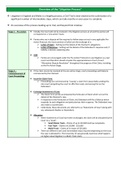
❖ Litigation in England and Wales is a lengthy process; a Civil Trial is best viewed as the culmination of a
significant number of intermediate steps, which can take months or even years to complete.
❖ An overview of the process leading up to trial, and beyond trial is below:
Stage 1 – Pre-Action ❖ Initially, the Court will not be involved in the litigation process at all and the parties will
correspond on a “pre-action” basis.
❖ Parties who are in dispute will be required to follow steps set out in any applicable Pre-
Action Protocol, the most common of which are the exchange of a:
➢ Letter of Claim – Setting out the details of the Claimant’s allegations.
➢ Letter of Response – Setting out the details of the Defendant’s response and, if
liability is denied, explaining why.
❖ ADR:
➢ Parties are encouraged under the Pre-Action Protocols to use litigation as a last
resort and therefore should consider the appropriateness of out of court
“Alternative Dispute Resolution” throughout the progress of the Claim, including
at the Pre-Action Stage.
Stage 2 – ❖ If the claim cannot be resolved at the pre-action stage, court proceedings will likely be
Commencement of commenced by the Claimant.
Court Proceedings
❖ Issue the Claim Form:
➢ Proceedings are commenced by “issuing” a claim form (essentially sending this
into court and getting the court to affix their seal), and serving this on the
Defendant.
❖ Exchange Statements of Case:
➢ The Claim Form will be accompanied by Particulars of Claim which set out the
details of the Claimant’s case.
➢ In response to the Particulars of Claim, the Defendant will file a Defence which
responds to each allegation and particularises their response. The Defendant may
also make a counterclaim.
➢ Collectively, these documents are referred to as “Statements of Case” (along with
any subsequent Replies or Rejoinders).
❖ Allocation
➢ When Statements of Case have been exchanged, the claim will be allocated by the
Court to a “track”:
▪ Small Claims Track – Claims of up to £10,000 and low complexity.
▪ Fast Track – Claims of £10,000 - £25,000
▪ Multi-Track – Claims of in excess of £25,000.
➢ There are different rules and intermediate steps required depending on the track
the case is allocated to. The University of Law generally examines what happens
on higher value litigation in a Multi-Track claim.
,Stage 3 – Interim ❖ CCMC / Directions
Matters ➢ When a track has been allocated, the Court will manage the claim and will give
the parties Directions at an initial hearing, known as the Costs and Case
Management Conference or CCMC.
➢ The Directions will include the trial window, and specify the steps to be taken to
prepare for trial in the intermediate period such as:
▪ Disclosure and Inspection of Documents
• The parties list documents in their possession (disclosure) and
their opponent will have the right to inspect non privileged
documents.
▪ Exchange of Expert Evidence
▪ Exchange of Witness Statements
➢ For Multi-Track Litigation, the Court will generally undertake Costs Management
whereby each party files and exchange a Costs Budget (Precedent H), which the
Court will approve. The budget will limit the extent of a parties’ litigation costs at
each “stage” of the litigation that they will be able to recover from their
opponent.
❖ The parties may also apply for specific interim orders at this point which may be required
e.g. applications for extensions of time, Strike Out, Summary Judgment etc.
Stage 4 - Trial ❖ When all of the Directions have been completed, if the parties cannot resolve the dispute
by ADR, they will proceed to trial where witnesses will be subject to cross-examination
and the court will provide judgment on all issues of liability and quantum.
❖ On completion of the trial, the Court may decide that one party will pay the other’s costs
(the rule of thumb is that the loser will pay the winner’s legal costs) and, if so, how much.
❖ The Court may make a Summary Assessment of Costs (deciding how much should be paid
on a “broad brush” basis) or may refer the matter to Detailed Assessment where the Court
will scrutinise a parties’ costs in more detail, generally on a “line by line” basis.
Stage 5 – Post Trial ❖ Detailed Assessment will take place, if ordered.
❖ A party may decide to appeal the judgment.
❖ Enforcement.
, Civil Case Analysis
❖ We are expected to conduct an analysis of a case presented to us, considering:
➢ Liability i.e. The relevant cause of action
➢ Viability i.e. Considering commercial risks and the potential strategy, and accounting for their
client’s objectives, and
➢ Quantum i.e. how much is the client likely to obtain in the event they are successful.
❖ Follow the below structure if a question comes up in the exam:
Overview ❖ Identify who your client is.
❖ Identify who the opponent is.
❖ Consider “Liability, Viability, Quantum”:
Liability ❖ Identify the cause of action and explain its constituent elements:
➢ Either be Breach of Contract or Negligence.
Civil ➢ See below for breakdown of these causes of action.
Litigation ➢ Establish the legal elements which must be proved for the claim to be
2.5 successful.
➢ Identify any evidence available, or required to be obtained, in respect of
those elements.
❖ Explain the Burden of Proof.
➢ Burden of proof is on the claimant to show, on the balance of probabilities,
that what he is claiming is true.
➢ Balance of probabilities = it is more likely than not – over 50%
➢ This is ALWAYS WORTH A MARK. Always mention this.
❖ Consider any Limitation issues:
➢ The Limitation Act 1980 prescribes fixed periods of time for bringing a claim:
Contract Tort Latent Damage
6 years from the date 6 years from the Where damage is not evident at the
of breach - In a date the claimant date of the cause of action.
contract for the sale suffers damage (s2
of goods, the date of Limitation Act 3 years from the date of the Claimant’s
breach will usually 1980) knowledge, if this is later than the date
be the date of on which loss was suffered (s14A
delivery (s5 Limitation Act 1980)
Limitation Act 1980).
, Viability ❖ If there is a legal basis for the claim, we need to consider whether there are any
practical issues affecting the viability of a claim against the defendant.
Civil
Litigation ❖ Consider:
2.6
➢ Financial prospects –
❖ Who is the prospective defendant?
❖ Are they solvent?
❖ Are their assets traceable? Where are their assets located?
❖ How much are the assets worth?
❖ No point litigating if the defendant has no money.
❖ Can the client afford to pay?
❖ Consider funding options e.g. CGA, DBA, LEI / ATE, Public Funding
(see notes on Funding Options).
➢ How much time/resources will the client have to commit to pursue the claim?
❖ Is this desirable taking into account the litigation risk?
❖ Are there alternative, less costly remedies available?
❖ Consider ADR options (see notes on ADR Options).
Quantum ❖ How much is the client likely to obtain?
❖ What evidence do they have of their losses e.g. invoices?
Civil ❖ Consider any issues which may reduce the damages awarded i.e.:
Litigation, ➢ Remoteness
2.5.4 ➢ Mitigation
➢ Contributory negligence
❖ Do we need to preserve any evidence?
❖ Is there any evidence that can’t be preserved? If so, we may need to act quickly to
test / examine this.
❖ Overall, consider whether the amount recoverable is worth the client taking on the
risk of litigation?
❖ Litigation in England and Wales is a lengthy process; a Civil Trial is best viewed as the culmination of a
significant number of intermediate steps, which can take months or even years to complete.
❖ An overview of the process leading up to trial, and beyond trial is below:
Stage 1 – Pre-Action ❖ Initially, the Court will not be involved in the litigation process at all and the parties will
correspond on a “pre-action” basis.
❖ Parties who are in dispute will be required to follow steps set out in any applicable Pre-
Action Protocol, the most common of which are the exchange of a:
➢ Letter of Claim – Setting out the details of the Claimant’s allegations.
➢ Letter of Response – Setting out the details of the Defendant’s response and, if
liability is denied, explaining why.
❖ ADR:
➢ Parties are encouraged under the Pre-Action Protocols to use litigation as a last
resort and therefore should consider the appropriateness of out of court
“Alternative Dispute Resolution” throughout the progress of the Claim, including
at the Pre-Action Stage.
Stage 2 – ❖ If the claim cannot be resolved at the pre-action stage, court proceedings will likely be
Commencement of commenced by the Claimant.
Court Proceedings
❖ Issue the Claim Form:
➢ Proceedings are commenced by “issuing” a claim form (essentially sending this
into court and getting the court to affix their seal), and serving this on the
Defendant.
❖ Exchange Statements of Case:
➢ The Claim Form will be accompanied by Particulars of Claim which set out the
details of the Claimant’s case.
➢ In response to the Particulars of Claim, the Defendant will file a Defence which
responds to each allegation and particularises their response. The Defendant may
also make a counterclaim.
➢ Collectively, these documents are referred to as “Statements of Case” (along with
any subsequent Replies or Rejoinders).
❖ Allocation
➢ When Statements of Case have been exchanged, the claim will be allocated by the
Court to a “track”:
▪ Small Claims Track – Claims of up to £10,000 and low complexity.
▪ Fast Track – Claims of £10,000 - £25,000
▪ Multi-Track – Claims of in excess of £25,000.
➢ There are different rules and intermediate steps required depending on the track
the case is allocated to. The University of Law generally examines what happens
on higher value litigation in a Multi-Track claim.
,Stage 3 – Interim ❖ CCMC / Directions
Matters ➢ When a track has been allocated, the Court will manage the claim and will give
the parties Directions at an initial hearing, known as the Costs and Case
Management Conference or CCMC.
➢ The Directions will include the trial window, and specify the steps to be taken to
prepare for trial in the intermediate period such as:
▪ Disclosure and Inspection of Documents
• The parties list documents in their possession (disclosure) and
their opponent will have the right to inspect non privileged
documents.
▪ Exchange of Expert Evidence
▪ Exchange of Witness Statements
➢ For Multi-Track Litigation, the Court will generally undertake Costs Management
whereby each party files and exchange a Costs Budget (Precedent H), which the
Court will approve. The budget will limit the extent of a parties’ litigation costs at
each “stage” of the litigation that they will be able to recover from their
opponent.
❖ The parties may also apply for specific interim orders at this point which may be required
e.g. applications for extensions of time, Strike Out, Summary Judgment etc.
Stage 4 - Trial ❖ When all of the Directions have been completed, if the parties cannot resolve the dispute
by ADR, they will proceed to trial where witnesses will be subject to cross-examination
and the court will provide judgment on all issues of liability and quantum.
❖ On completion of the trial, the Court may decide that one party will pay the other’s costs
(the rule of thumb is that the loser will pay the winner’s legal costs) and, if so, how much.
❖ The Court may make a Summary Assessment of Costs (deciding how much should be paid
on a “broad brush” basis) or may refer the matter to Detailed Assessment where the Court
will scrutinise a parties’ costs in more detail, generally on a “line by line” basis.
Stage 5 – Post Trial ❖ Detailed Assessment will take place, if ordered.
❖ A party may decide to appeal the judgment.
❖ Enforcement.
, Civil Case Analysis
❖ We are expected to conduct an analysis of a case presented to us, considering:
➢ Liability i.e. The relevant cause of action
➢ Viability i.e. Considering commercial risks and the potential strategy, and accounting for their
client’s objectives, and
➢ Quantum i.e. how much is the client likely to obtain in the event they are successful.
❖ Follow the below structure if a question comes up in the exam:
Overview ❖ Identify who your client is.
❖ Identify who the opponent is.
❖ Consider “Liability, Viability, Quantum”:
Liability ❖ Identify the cause of action and explain its constituent elements:
➢ Either be Breach of Contract or Negligence.
Civil ➢ See below for breakdown of these causes of action.
Litigation ➢ Establish the legal elements which must be proved for the claim to be
2.5 successful.
➢ Identify any evidence available, or required to be obtained, in respect of
those elements.
❖ Explain the Burden of Proof.
➢ Burden of proof is on the claimant to show, on the balance of probabilities,
that what he is claiming is true.
➢ Balance of probabilities = it is more likely than not – over 50%
➢ This is ALWAYS WORTH A MARK. Always mention this.
❖ Consider any Limitation issues:
➢ The Limitation Act 1980 prescribes fixed periods of time for bringing a claim:
Contract Tort Latent Damage
6 years from the date 6 years from the Where damage is not evident at the
of breach - In a date the claimant date of the cause of action.
contract for the sale suffers damage (s2
of goods, the date of Limitation Act 3 years from the date of the Claimant’s
breach will usually 1980) knowledge, if this is later than the date
be the date of on which loss was suffered (s14A
delivery (s5 Limitation Act 1980)
Limitation Act 1980).
, Viability ❖ If there is a legal basis for the claim, we need to consider whether there are any
practical issues affecting the viability of a claim against the defendant.
Civil
Litigation ❖ Consider:
2.6
➢ Financial prospects –
❖ Who is the prospective defendant?
❖ Are they solvent?
❖ Are their assets traceable? Where are their assets located?
❖ How much are the assets worth?
❖ No point litigating if the defendant has no money.
❖ Can the client afford to pay?
❖ Consider funding options e.g. CGA, DBA, LEI / ATE, Public Funding
(see notes on Funding Options).
➢ How much time/resources will the client have to commit to pursue the claim?
❖ Is this desirable taking into account the litigation risk?
❖ Are there alternative, less costly remedies available?
❖ Consider ADR options (see notes on ADR Options).
Quantum ❖ How much is the client likely to obtain?
❖ What evidence do they have of their losses e.g. invoices?
Civil ❖ Consider any issues which may reduce the damages awarded i.e.:
Litigation, ➢ Remoteness
2.5.4 ➢ Mitigation
➢ Contributory negligence
❖ Do we need to preserve any evidence?
❖ Is there any evidence that can’t be preserved? If so, we may need to act quickly to
test / examine this.
❖ Overall, consider whether the amount recoverable is worth the client taking on the
risk of litigation?