Actus Reus and Mens Rea Criminal Law Ikrah Naveed
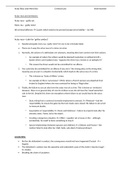
Actus reus and omissions:
Actus reus – guilty act
Mens rea – guilty mind
All criminal offences 2 parts which need to be proved (except strict liability – no MR)
Actus reus = Latin for ‘guilty conduct’
• Needed alongside mens rea, ‘guilty mind’ for one to be criminally liable
• There are 3 ways the actus reus of a crime can arise:
1. Normally, the actions of a defendant are voluntary, meaning they have control over their actions.
• An example of where the actions would be deemed involuntary is outlined in Hill v
Baxter where Lord Goddard said, “suppose the driver has a stroke or an epileptic fit”
• This means the driver would not be committed for an offence
2. You could also be committed for an offence if you are in ‘the wrong place at the wrong time’,
meaning you are put in a situation involuntarily which leads to the actus reus of a crime.
• This is known as ‘State of Affairs’ crimes
• An example of this is ‘Larsonneur’ (1933), where a French woman was deported from
Ireland to England where she was convicted for being as ‘illegal alien’.
3. Finally, the failure to act can also form the actus reus of a crime. This is known as ‘omissions’.
However, there is no general duty of care for civilians as we do not have the ‘Good Samaritan’
rule in the UK. Despite this, there are exceptions where failure to act would lead to the actus
reus.
• Duty arising from a contract (normally employment contract). R v Pittwood = had the
responsibility to ensure the gates by the train tracks were closed. His failure to do so led
to innocent deaths.
• Assumption of responsibility. R v Stone and Dobinson = failure to properly look after his
anorexic sister, Fanny, led to her death.
• Creating a dangerous situation. R v Miller = squatter set a house on fire – although
accidentally, he could’ve done something to stop it.
• Special relationships (between spouses and children). R v Gibbons and Proctor = the
mother failed to look after her child, Nelly, who died of malnourishment.
CAUSATION:
But for the defendant’s conduct, the consequence would not have happened (Factual – R v
Pagett).
The defendant’s conduct was the operative and substantial cause of the victim’s injuries (Legal –
R v Smith).
Breaking the chain of causation:
, Actus Reus and Mens Rea Criminal Law Ikrah Naveed
o Thin skulls rule: R v Blaue – Jehovah’s Witness refused a blood transfusion (pre-existing
belief)/R v Hayward – wife chased by husband collapsed (pre-existing condition).
o Victim’s own act/escape: R v Roberts – her actions of escape (jumped out of moving car)
were both reasonable and proportional to the threat posed by the d/ R v Williams –
hitchhiker jumped out of moving car, actions were unreasonable and disproportional to
the threat.
o Natural disaster
o Life support machine – persistent vegetative state
o Medical negligence: R v Jordan
AR:
Positive act – voluntary = D must have control over what they do (act) or fail to do (omission)
Lord Denning (Bratty 1963) = “no act is punishable if it is done involuntarily”
Involuntary = no AR
Hill v Baxter (1958) – involuntary acts include where a driver lost control of his/her vehicle
because he was stung by bees
Has to be total loss of control
Mitchell (1983)
Good Samaritan Rule:
No such rule in the UK
In countries like France
A duty of easy rescue
Criminal liability if fail to act or do something e.g. someone was drowning, and you walk past
but don’t do anything
Blackboard lecture for and against
Open up floodgates
At what point do u commit the AR for this
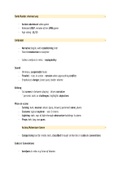
Omissions:
Failure to act
D must be under a duty to act
These duties include:
Statutory: s4 road traffic act
Contractual:
Adomako – anaesthetist
Pittwood – left gate open at train tracks
Singh – landlord to tenant
Special relationship: –
Gibbons and Proctor – neglect of child (this can also go under statutory duty).
Smith – husband failed to do anything for wife during childbirth
Actus reus and omissions:
Actus reus – guilty act
Mens rea – guilty mind
All criminal offences 2 parts which need to be proved (except strict liability – no MR)
Actus reus = Latin for ‘guilty conduct’
• Needed alongside mens rea, ‘guilty mind’ for one to be criminally liable
• There are 3 ways the actus reus of a crime can arise:
1. Normally, the actions of a defendant are voluntary, meaning they have control over their actions.
• An example of where the actions would be deemed involuntary is outlined in Hill v
Baxter where Lord Goddard said, “suppose the driver has a stroke or an epileptic fit”
• This means the driver would not be committed for an offence
2. You could also be committed for an offence if you are in ‘the wrong place at the wrong time’,
meaning you are put in a situation involuntarily which leads to the actus reus of a crime.
• This is known as ‘State of Affairs’ crimes
• An example of this is ‘Larsonneur’ (1933), where a French woman was deported from
Ireland to England where she was convicted for being as ‘illegal alien’.
3. Finally, the failure to act can also form the actus reus of a crime. This is known as ‘omissions’.
However, there is no general duty of care for civilians as we do not have the ‘Good Samaritan’
rule in the UK. Despite this, there are exceptions where failure to act would lead to the actus
reus.
• Duty arising from a contract (normally employment contract). R v Pittwood = had the
responsibility to ensure the gates by the train tracks were closed. His failure to do so led
to innocent deaths.
• Assumption of responsibility. R v Stone and Dobinson = failure to properly look after his
anorexic sister, Fanny, led to her death.
• Creating a dangerous situation. R v Miller = squatter set a house on fire – although
accidentally, he could’ve done something to stop it.
• Special relationships (between spouses and children). R v Gibbons and Proctor = the
mother failed to look after her child, Nelly, who died of malnourishment.
CAUSATION:
But for the defendant’s conduct, the consequence would not have happened (Factual – R v
Pagett).
The defendant’s conduct was the operative and substantial cause of the victim’s injuries (Legal –
R v Smith).
Breaking the chain of causation:
, Actus Reus and Mens Rea Criminal Law Ikrah Naveed
o Thin skulls rule: R v Blaue – Jehovah’s Witness refused a blood transfusion (pre-existing
belief)/R v Hayward – wife chased by husband collapsed (pre-existing condition).
o Victim’s own act/escape: R v Roberts – her actions of escape (jumped out of moving car)
were both reasonable and proportional to the threat posed by the d/ R v Williams –
hitchhiker jumped out of moving car, actions were unreasonable and disproportional to
the threat.
o Natural disaster
o Life support machine – persistent vegetative state
o Medical negligence: R v Jordan
AR:
Positive act – voluntary = D must have control over what they do (act) or fail to do (omission)
Lord Denning (Bratty 1963) = “no act is punishable if it is done involuntarily”
Involuntary = no AR
Hill v Baxter (1958) – involuntary acts include where a driver lost control of his/her vehicle
because he was stung by bees
Has to be total loss of control
Mitchell (1983)
Good Samaritan Rule:
No such rule in the UK
In countries like France
A duty of easy rescue
Criminal liability if fail to act or do something e.g. someone was drowning, and you walk past
but don’t do anything
Blackboard lecture for and against
Open up floodgates
At what point do u commit the AR for this
Omissions:
Failure to act
D must be under a duty to act
These duties include:
Statutory: s4 road traffic act
Contractual:
Adomako – anaesthetist
Pittwood – left gate open at train tracks
Singh – landlord to tenant
Special relationship: –
Gibbons and Proctor – neglect of child (this can also go under statutory duty).
Smith – husband failed to do anything for wife during childbirth