QUESTION 1
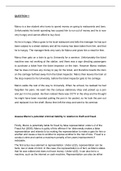
Marco is a law student who loves to spend money on going to restaurants and bars.
Unfortunately his lavish spending has caused him to run out of money and he is now
very hungry and cannot afford to buy food.
As he is hungry, Marco goes to his local restaurant and tells the manager he has just
been subject to a street robbery and all his money has been taken from him, and that
he is hungry. The manager feels very sorry for Marco and gives him a meal for free.
Marco then gets on a train to go to University for a seminar. Unfortunately the ticket
machine was not working at the station, and there was a sign directing passengers
to purchase a ticket from the ticket inspector on the train. However Marco realises
that he does not have any money to pay for the ticket, and therefore boards the train
on the carriage furthest away from the ticket inspector. Marco then leaves the train at
the stop nearest to his University, before the ticket inspector gets to his carriage.
Marco walks the rest of the way to University. When he arrived, he realised he had
forgotten his pens. He went into the campus stationary shop and picked up a pen
and put it in his pocket. He then noticed there was CCTV in the shop and he thought
he might have been recorded putting the pen in his pocket, so he took the pen out
and replaced it on the shelf. Marco then left the shop and went to his seminar.
Assess Marco’s potential criminal liability in relation to theft and fraud.
Firstly, Marco is potentially liable for fraud by false representation under s.2 of the
Fraud Act (2006). Marco is guilty of this offence if he ‘dishonestly makes a false
representation and intends to by making the representation to make a gain for him or
another and cause a loss to another to expose another to the risk of loss.’ Fraud is a
conduct crime and carries a maximum penalty of ten years imprisonment if
indictable.
The first actus reus element is representation. Under s2(3), representation can be
facts, law or state of mind. In this case, the representation is of fact, as Marco states
that he was robbed and does not have money. Under s2(5), it can also be to a
machine, such as the internet or cash machine. Representation can also be either
, expressed or implied. Implied representation is the defendant’s own actions and
conduct, such as exceeding credit card limit (Lambie 1981). In the case of Barnard
(1837), he posed as an Oxford University student by wearing a cap and gown
(implied) and said he was a student (expressed). Expressed representations are
clearly given, and can be written, spoken or posted on a website such as using a
false identity, false reference or excessive quotations (Silverman 1987). In Hamilton
(2008), the defendant claimed that payment was owed, when the victim’s son had
already made full payment. In this scenario, there was expressed representation as
Marco clearly stated that someone had robbed him and taken all his money from
him, leading the manager to give him a free meal. Later false representation is also
sufficient, as in the case of DPP v Ray, where the defendants ran out of the
restaurant without paying for the meal. Continuing representation is also sufficient
(Rai 2000). Although the mentioned cases occurred before the Act, they are still
used as examples.
The second actus reus element is ‘false.’ ‘False’ is defined as untrue or
misleading.an untrue statement made in the honest belief that it is in fact true, would
not suffice. It is a matter of fact whether something is true or not. In Fraud Law:
Government Response to Consultation (2004), it was stated that a representation
was misleading if it was ‘less than wholly true and capable of interpretation to the
detriment of the victim.’ In this scenario, Marco knew that what he was doing might
be untrue or misleading, as he was not subject to a street robbery, he had simply
spent it all. It does not matter if anyone believes the lie, and if the defendant actually
gains the advantage. In this scenario, the manager believed Marco’s lie and gains a
free meal. In Idrees (2011), an unidentified imposter presented himself to take a
driving test in the defendant’s name. It could be inferred that the defendant was
complicit in any false representation made by that person as a way of gaining a pass
certificate in his name.
The first mens rea element is gain or loss, which can be permanent or temporary. In
this scenario, Marco intended to make a gain, a free meal, and cause a loss to the
manager, who was not paid for the meal. S5 states that this could be money, other
property (real of personal) including things in action and other intangible things. A
‘gain’ is defined as ‘keeping what one has or getting what one does not have’ a loss
has been defined as ‘not getting what one might get, or parting with what one has.’
Marco got what he does not have, which is a free meal, and the manager did not get
what he might get, which is money.
As dishonesty is not defined in the Act, is it assumed that the Ivey test is applied.
This is the recent test, which replaced the old Ghosh test. The two vital questions to
establish dishonesty as laid down by the Supreme Court are: what was the
defendant’s knowledge or belief as to the facts (subjective test)? And was the
defendant’s conduct honest or dishonest applying the objective standards of ordinary
decent people (objective test)? In this scenario, Marco knew that he was being
dishonest, as he created the lie of him being robbed and not having any money in
order to get a free meal. This would be deemed dishonest by the objective standards
of ordinary decent people, as it is wrong to lie in order to get a free meal.
Marco is a law student who loves to spend money on going to restaurants and bars.
Unfortunately his lavish spending has caused him to run out of money and he is now
very hungry and cannot afford to buy food.
As he is hungry, Marco goes to his local restaurant and tells the manager he has just
been subject to a street robbery and all his money has been taken from him, and that
he is hungry. The manager feels very sorry for Marco and gives him a meal for free.
Marco then gets on a train to go to University for a seminar. Unfortunately the ticket
machine was not working at the station, and there was a sign directing passengers
to purchase a ticket from the ticket inspector on the train. However Marco realises
that he does not have any money to pay for the ticket, and therefore boards the train
on the carriage furthest away from the ticket inspector. Marco then leaves the train at
the stop nearest to his University, before the ticket inspector gets to his carriage.
Marco walks the rest of the way to University. When he arrived, he realised he had
forgotten his pens. He went into the campus stationary shop and picked up a pen
and put it in his pocket. He then noticed there was CCTV in the shop and he thought
he might have been recorded putting the pen in his pocket, so he took the pen out
and replaced it on the shelf. Marco then left the shop and went to his seminar.
Assess Marco’s potential criminal liability in relation to theft and fraud.
Firstly, Marco is potentially liable for fraud by false representation under s.2 of the
Fraud Act (2006). Marco is guilty of this offence if he ‘dishonestly makes a false
representation and intends to by making the representation to make a gain for him or
another and cause a loss to another to expose another to the risk of loss.’ Fraud is a
conduct crime and carries a maximum penalty of ten years imprisonment if
indictable.
The first actus reus element is representation. Under s2(3), representation can be
facts, law or state of mind. In this case, the representation is of fact, as Marco states
that he was robbed and does not have money. Under s2(5), it can also be to a
machine, such as the internet or cash machine. Representation can also be either
, expressed or implied. Implied representation is the defendant’s own actions and
conduct, such as exceeding credit card limit (Lambie 1981). In the case of Barnard
(1837), he posed as an Oxford University student by wearing a cap and gown
(implied) and said he was a student (expressed). Expressed representations are
clearly given, and can be written, spoken or posted on a website such as using a
false identity, false reference or excessive quotations (Silverman 1987). In Hamilton
(2008), the defendant claimed that payment was owed, when the victim’s son had
already made full payment. In this scenario, there was expressed representation as
Marco clearly stated that someone had robbed him and taken all his money from
him, leading the manager to give him a free meal. Later false representation is also
sufficient, as in the case of DPP v Ray, where the defendants ran out of the
restaurant without paying for the meal. Continuing representation is also sufficient
(Rai 2000). Although the mentioned cases occurred before the Act, they are still
used as examples.
The second actus reus element is ‘false.’ ‘False’ is defined as untrue or
misleading.an untrue statement made in the honest belief that it is in fact true, would
not suffice. It is a matter of fact whether something is true or not. In Fraud Law:
Government Response to Consultation (2004), it was stated that a representation
was misleading if it was ‘less than wholly true and capable of interpretation to the
detriment of the victim.’ In this scenario, Marco knew that what he was doing might
be untrue or misleading, as he was not subject to a street robbery, he had simply
spent it all. It does not matter if anyone believes the lie, and if the defendant actually
gains the advantage. In this scenario, the manager believed Marco’s lie and gains a
free meal. In Idrees (2011), an unidentified imposter presented himself to take a
driving test in the defendant’s name. It could be inferred that the defendant was
complicit in any false representation made by that person as a way of gaining a pass
certificate in his name.
The first mens rea element is gain or loss, which can be permanent or temporary. In
this scenario, Marco intended to make a gain, a free meal, and cause a loss to the
manager, who was not paid for the meal. S5 states that this could be money, other
property (real of personal) including things in action and other intangible things. A
‘gain’ is defined as ‘keeping what one has or getting what one does not have’ a loss
has been defined as ‘not getting what one might get, or parting with what one has.’
Marco got what he does not have, which is a free meal, and the manager did not get
what he might get, which is money.
As dishonesty is not defined in the Act, is it assumed that the Ivey test is applied.
This is the recent test, which replaced the old Ghosh test. The two vital questions to
establish dishonesty as laid down by the Supreme Court are: what was the
defendant’s knowledge or belief as to the facts (subjective test)? And was the
defendant’s conduct honest or dishonest applying the objective standards of ordinary
decent people (objective test)? In this scenario, Marco knew that he was being
dishonest, as he created the lie of him being robbed and not having any money in
order to get a free meal. This would be deemed dishonest by the objective standards
of ordinary decent people, as it is wrong to lie in order to get a free meal.