Genetic engineering: immunotechniques
Antibodies
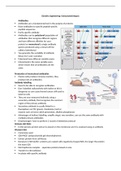
Antibodies are a fundamental tool in the analysis of proteins
Raise antibodies to specific peptide specific
peptide sequences
Purify specific antibody
Antibodies can be polyclonal (population of
antibodies that recognise different regions
and have different affinities for your
protein) or monoclonal (a single antibody
species produced using a clonal cell line
called a hybridoma)
You generate the variability of antibody
library by V and J variation
Polyclonal have different variable exons
Monoclonal is the same variable exon,
which means that all antibodies are the
same
Production of monoclonal antibodies
Plasma cells produce immune reaction, they
produce lots of antibodies
Antibody labelling
Need to be able to recognize antibodies
Don’t labelled radioactively with iodine as this is
dangerous as can cause thyroid cancer still used to
label fat cells
They are now measured indirectly using a
secondary antibody that recognises the constant
region of the primary antibody.
Secondary antibody is usually linked to a
fluorophore as FITC (green), rhodamine (red) or
enzyme such as horse radish peroxidase, alkaline phosphatase
Advantages of indirect labelling- amplify singal, very sensitive, can use the same antibody with
multiple primary antibodies
Disadvantages- have to perform 2 rounds of detection protocol
Immune dot blots
In this process protein extract is placed on the membrane and it is analysed using an antibody
Western blot
Commonly used
SDS-PAGE- polyacrylamide gel electrohphoresis
Extract protein from cell/tissue
Denature in SDS buffer- proteins are coated with negatively charged SDS, the larger the protein
the more SDS
Electrophorese samples - seperates proteins based on size
Transfer to nitrocellulose
Incubate with specific antibody
, Visualise antibody- usually on secondary antibody linked to horse radish peroxidase
You can detect the location of the antibody using enzyme assay
Secondary antibodies are often conjugated ti HRP
HRP catalyses the release of light upon reaction with luminol/H2O2
This can show where the antibody is bound
Immunoprecipitation
Protein G- cell wall protein isolated from type G streptococci
Protein A- derived from staph A
Protein A and G bind the constant region of immunoglobulin with high affinity
Cause of this binding ability they can be used to facilitate purification and recovery of either
polyclonal or monoclonal immunoglobulins
Protein A and G can be linked to agarose, maganetic beds or solid supports
Uses of immunoprecipitation
Look at proteins expressed at low levels
Post translational modifications
Identify components of protein complexes
To see if two proteins interact
Co-immunoprecipitation
, To identify proteins in complexes
To determine how proteins interact
chromatin immunoprecipitation
Determines the DNA sequences that are bound by specific proteins or modified histones
Uses primers against a specific gene in the PCR reaction to determine if that region is bound by
the protein of interest
ChIP products can be analysed in a number of ways
PCR- does the protein bind
qPCR- quantifies the level of protein binding
microarray- determines if the protein binds to a large number of different sequences and its
relative affinity
ChIPSeq- determines all sequences bound by protein
Immunocytochemistry/immunohistochemistry
Fix cells using formaldehyde- crosslinks proteins and preserves structure
Permeablise cells using detergent- such as TritonX-100 or methanol/acetone, puts holes in
membrane wall allowing antibody into cell
Visualise using secondary antibody with fluorescence or enzyme reaction- determines which
cells express the protein, where the protein is in the cell
Measuring rate of synthesis/degradation of protein
Incubate cells with 35S Met for set time (pulse)
Incubate cell with excess unlabelled Met (chase)
Make protein extracts at several time points
Immunoprecipitated with antibody
Run on SDS-PAGE (electrophoresis)
Quantify 35S label in protein
In vitro protein synthesis
Uses wheat germ cells or reticulocytes
Lyse cells (breakdown)
Spin to remove nuclei, mitochondria and plastids
Use or purify further
GST pull down assays: detect protein-protein interactions in
, PCR- quantitative aspects and biomedical applications
30 cycles should be sufficient to be enough DNA
Acid denaturation
Tm= melting temperature- at which 50% remain double strand and 50% are double strand
Want to design primers with similar melting temperatures
Nucleic acid hybridisation
High salt stabilises hybrids
Low salt destabilises mismatched hybrids
Formamide- disrupts H-bonds and so its presence lowers the Tm allowing hybridization
experiments at lower temps
Calculating Tm
Simple rule- 2+4 = Tm=(2x A+T) + (4xG+C)
Amplification and hybridisation methods
We can analyse RNA and DNA
All PCR reactions are based of DNA
Can analyse RNA by making a DNA copy using reverse transcriptase
We can start with low amounts of starting material sensitive and quantitative systems
Rapid and can analyse multiple samples
Can analyse each sample with multiple primers
Antibodies
Antibodies are a fundamental tool in the analysis of proteins
Raise antibodies to specific peptide specific
peptide sequences
Purify specific antibody
Antibodies can be polyclonal (population of
antibodies that recognise different regions
and have different affinities for your
protein) or monoclonal (a single antibody
species produced using a clonal cell line
called a hybridoma)
You generate the variability of antibody
library by V and J variation
Polyclonal have different variable exons
Monoclonal is the same variable exon,
which means that all antibodies are the
same
Production of monoclonal antibodies
Plasma cells produce immune reaction, they
produce lots of antibodies
Antibody labelling
Need to be able to recognize antibodies
Don’t labelled radioactively with iodine as this is
dangerous as can cause thyroid cancer still used to
label fat cells
They are now measured indirectly using a
secondary antibody that recognises the constant
region of the primary antibody.
Secondary antibody is usually linked to a
fluorophore as FITC (green), rhodamine (red) or
enzyme such as horse radish peroxidase, alkaline phosphatase
Advantages of indirect labelling- amplify singal, very sensitive, can use the same antibody with
multiple primary antibodies
Disadvantages- have to perform 2 rounds of detection protocol
Immune dot blots
In this process protein extract is placed on the membrane and it is analysed using an antibody
Western blot
Commonly used
SDS-PAGE- polyacrylamide gel electrohphoresis
Extract protein from cell/tissue
Denature in SDS buffer- proteins are coated with negatively charged SDS, the larger the protein
the more SDS
Electrophorese samples - seperates proteins based on size
Transfer to nitrocellulose
Incubate with specific antibody
, Visualise antibody- usually on secondary antibody linked to horse radish peroxidase
You can detect the location of the antibody using enzyme assay
Secondary antibodies are often conjugated ti HRP
HRP catalyses the release of light upon reaction with luminol/H2O2
This can show where the antibody is bound
Immunoprecipitation
Protein G- cell wall protein isolated from type G streptococci
Protein A- derived from staph A
Protein A and G bind the constant region of immunoglobulin with high affinity
Cause of this binding ability they can be used to facilitate purification and recovery of either
polyclonal or monoclonal immunoglobulins
Protein A and G can be linked to agarose, maganetic beds or solid supports
Uses of immunoprecipitation
Look at proteins expressed at low levels
Post translational modifications
Identify components of protein complexes
To see if two proteins interact
Co-immunoprecipitation
, To identify proteins in complexes
To determine how proteins interact
chromatin immunoprecipitation
Determines the DNA sequences that are bound by specific proteins or modified histones
Uses primers against a specific gene in the PCR reaction to determine if that region is bound by
the protein of interest
ChIP products can be analysed in a number of ways
PCR- does the protein bind
qPCR- quantifies the level of protein binding
microarray- determines if the protein binds to a large number of different sequences and its
relative affinity
ChIPSeq- determines all sequences bound by protein
Immunocytochemistry/immunohistochemistry
Fix cells using formaldehyde- crosslinks proteins and preserves structure
Permeablise cells using detergent- such as TritonX-100 or methanol/acetone, puts holes in
membrane wall allowing antibody into cell
Visualise using secondary antibody with fluorescence or enzyme reaction- determines which
cells express the protein, where the protein is in the cell
Measuring rate of synthesis/degradation of protein
Incubate cells with 35S Met for set time (pulse)
Incubate cell with excess unlabelled Met (chase)
Make protein extracts at several time points
Immunoprecipitated with antibody
Run on SDS-PAGE (electrophoresis)
Quantify 35S label in protein
In vitro protein synthesis
Uses wheat germ cells or reticulocytes
Lyse cells (breakdown)
Spin to remove nuclei, mitochondria and plastids
Use or purify further
GST pull down assays: detect protein-protein interactions in
, PCR- quantitative aspects and biomedical applications
30 cycles should be sufficient to be enough DNA
Acid denaturation
Tm= melting temperature- at which 50% remain double strand and 50% are double strand
Want to design primers with similar melting temperatures
Nucleic acid hybridisation
High salt stabilises hybrids
Low salt destabilises mismatched hybrids
Formamide- disrupts H-bonds and so its presence lowers the Tm allowing hybridization
experiments at lower temps
Calculating Tm
Simple rule- 2+4 = Tm=(2x A+T) + (4xG+C)
Amplification and hybridisation methods
We can analyse RNA and DNA
All PCR reactions are based of DNA
Can analyse RNA by making a DNA copy using reverse transcriptase
We can start with low amounts of starting material sensitive and quantitative systems
Rapid and can analyse multiple samples
Can analyse each sample with multiple primers