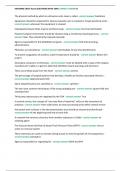
CFM1 PHASE 1 SOURCE TABLE
Source Summary
1 University of St. Augustine For Health Sciences. (2020, June 08). What is the Nurse Executive Responsibilities
role of a nurse executive? Retrieved December 22, 2020, from Manage teams
https://www.usa.edu/blog/nurse-executive-role/ Handle finances
Create new policies
Represent the HCO
Where Do Nurse Executives Work?
Nurse executives work in a variety of
healthcare settings, including:
Hospitals
Healthcare clinics
Home health agencies
Nursing schools
Rehabilitation centers
Nursing homes
Consulting firms
How Do I Become a Nurse Executive?
Nurse executives need clinical care experience
as well as skills in leadership and
management. In order to become a nurse
executive, candidates must first receive
advanced education and certification.
Education Requirements
The following educational path is ideal, but
other paths are possible.
Earn a Bachelor of Science in Nursing
(BSN) (4 years).
Pass the NCLEX-RN and work as a
1
, registered nurse for 1–2 years.
Earn a Master of Science in
Nursing (MSN), a Master of Health
Administration (MHA), or a Master of
Business Administration (2 years).
Alternatively, earn a Doctor of Nursing
Practice (DNP) (2–3+ years, depending
on prior degree earned). Some MSN and
DNP programs offer a Nurse Executive
specialty.
Obtain a certification, such as
the Certified in Executive Nursing
Practice (CENP) certification, the Nurse
Executive Certification (NE-BC), or
the Nurse Executive, Advanced
Certification (NEA-BC) credential.
Take continuing education courses to
stay on top of nursing trends, research,
and technologies.
Competencies and Qualities
The American Organization of Student
Nurses (AONE) has identified five core
competencies that successful nurse executives
must develop.
Communication and relationship
management
Knowledge of healthcare and
environment
Leadership
Professionalism
Business skills and principles
2 Bernard, N. (2014). Who's next? Developing high potential nurse leaders for Nurse Executive Roles & Qualities:
2
Source Summary
1 University of St. Augustine For Health Sciences. (2020, June 08). What is the Nurse Executive Responsibilities
role of a nurse executive? Retrieved December 22, 2020, from Manage teams
https://www.usa.edu/blog/nurse-executive-role/ Handle finances
Create new policies
Represent the HCO
Where Do Nurse Executives Work?
Nurse executives work in a variety of
healthcare settings, including:
Hospitals
Healthcare clinics
Home health agencies
Nursing schools
Rehabilitation centers
Nursing homes
Consulting firms
How Do I Become a Nurse Executive?
Nurse executives need clinical care experience
as well as skills in leadership and
management. In order to become a nurse
executive, candidates must first receive
advanced education and certification.
Education Requirements
The following educational path is ideal, but
other paths are possible.
Earn a Bachelor of Science in Nursing
(BSN) (4 years).
Pass the NCLEX-RN and work as a
1
, registered nurse for 1–2 years.
Earn a Master of Science in
Nursing (MSN), a Master of Health
Administration (MHA), or a Master of
Business Administration (2 years).
Alternatively, earn a Doctor of Nursing
Practice (DNP) (2–3+ years, depending
on prior degree earned). Some MSN and
DNP programs offer a Nurse Executive
specialty.
Obtain a certification, such as
the Certified in Executive Nursing
Practice (CENP) certification, the Nurse
Executive Certification (NE-BC), or
the Nurse Executive, Advanced
Certification (NEA-BC) credential.
Take continuing education courses to
stay on top of nursing trends, research,
and technologies.
Competencies and Qualities
The American Organization of Student
Nurses (AONE) has identified five core
competencies that successful nurse executives
must develop.
Communication and relationship
management
Knowledge of healthcare and
environment
Leadership
Professionalism
Business skills and principles
2 Bernard, N. (2014). Who's next? Developing high potential nurse leaders for Nurse Executive Roles & Qualities:
2