TEAS 6 Science Anatomy and Physiology Guide.
ANATOMY AND PHYSIOLOGY
Endocrine System
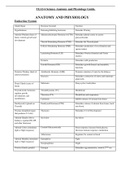
Gland/Organ Hormone Secreted Function
Hypothalamus Releasing/Inhibiting hormones Stimulate Pituitary
Anterior Pituitary (base of Adrenocorticotropic Hormone (ACTH) Stimulate adrenal cortex to secrete
brain; controls growth and glucocorticoids
development
Thyroid Stimulating Hormone (TSH) Stimulate the Thyroid gland
Follicle Stimulating Hormone (FSH) Stimulates production of ova (females) and
sperm (males)
Luteinizing Hormone (LH) Stimulates Ovaries (females) and Testes
(males)
Prolactin Stimulates milk production
Growth Hormone (GH) Stimulates growth (bones) and metabolic
functions
Posterior Pituitary (back of Antidiuretic Hormone (ADH) Promotes retention of water by the kidneys
anterior pituitary)
Oxytocin Stimulates contraction of uterus and mammary
gland cells
Pineal Gland (center of Melatonin Sleep cycles; biorhythms
brain)
Thyroid (neck; hormones Triiodothyronine (T3) Metabolism
regulate growth,
Thyroxine (T4) Metabolism and temperature
development, and
metabolism) Calcitonin Inhibits release of Calcium from bones
Parathyroid (4 glands on Parathyroid Hormone (PTH) Stimulates release of calcium from bones, back
Thyroid) into blood.
Thymus (lymphoid organ Thymosin Stimulates T-Cell Development
that produces T-Cells)
Adrenal Glands (Above See below See below
Kidneys; regulate HR, BP,
and other functions)
Adrenal Cortex (stimulates Cortisol/Glucocorticoids Stress response; Increase blood glucose,
fight or flight response) Decrease immune response; metabolism
Aldosterone Regulates Na content in blood
Adrenal Medulla (stimulates Epinephrine Fight
fight or flight response)
Norepinephrine Flight
Ovaries (female gonads) Estrogen Stimulates egg maturation, controls 2ndary sex
,TEAS 6 Science
characteristics
Progesterone Prepares uterus to receive fertilized egg
Testes (male gonads) Testosterone Regulates sperm production and 2ndary sex
characteristics
Kidneys Erythropoietin Response to cellular hypoxia
Renin Promotes production of Angiotensin
Liver Angiotensin II Vasoconstriction, Increase BP
Pancreas Glucagon (Alpha Cells) Increase blood glucose
Insulin (Beta Cells) Decrease blood glucose
Stomach Gastrin Response to food; stimulates production of
gastric juices
Intestine Secretin Response to acidity in small intestine;
stimulates secretion by liver and pancreas
Cholecystokinin Production of Bile Salts
Heart Atrial Natriuretic Peptide (ANP) Increase renal Na excretion, decrease ECF
Gastrointestinal System
Enzyme Production site Release site
Carbs Salivary Amylase Salivary Glands Mouth
Pancreatic Amylase Pancreas Small Intestine
Maltase Small Intestine Small Intestine
Protein Pepsin Chief Cells (gastric gland) Stomach
Trypsin Pancreas Small Intestine
, TEAS 6 Science
Peptidases Small Intestine Small Intestine
Nucleic Acids Nuclease Pancreas Small Intestine
Nucleosidase Pancreas Small Intestine
Lipids Lipase Pancreas Small Intestine
Bile Salt Liver→Gallbladder Small Intestine
*Bile is technically not an enzyme, but a salt that emulsifies lipid into fatty droplets.
Chief Cells: Covert pepsinogen to pepsin
Goblet Cells: Mucus secretions
Parietal Cells: HCl production
Peyer's Patches: Lymphatic Tissue found in Ileum to protect GI tract from pathogens
Integumentary System
Epidermis: Most superficial layer of skin; entirely epithelial cells
● Does NOT contain blood vessels
● 5 layers
o Stratum Corneum: "Top Layer"- Dead keratinocytes
o Stratum Lucidum: "Clear Layer"- Colorless protein eleidin
o Stratum Granulosum: "Thin Layer"- granular layer
o Stratum Spinosum: "Spiny Layer"- Thickest layer, keratinocytes, immune dendritic
cells, sensory cells
o Stratum Basale: "Basal Layer"- Bottom layer; contains melanocytes.
Dermis: Directly below epidermis; mostly connective tissue
● Contains blood vessels
● Sensory receptors
● Hair follicles
● Sebaceous glands
● Sweat glands
● Elastin and Collagen fibers
Hypodermis/SubQ: Connective tissue
● Binds the skin to underlying muscle
● Fat deposits cushion and insulate the body
Glands
Exocrine: Secrete substances into ducts
● Holocrine: secretory products; whole cells; connected to hair follicle
o Sebaceous Glands: secrete sebum: an oily mixture of lipids and proteins;
waterproofs skin, protects from pathogens
● Eccrine: Not connected to hair follicle, activated by high body temperature, located
throughout the body. A type of sweat gland (sudoriferous gland) in thermoregulation.
o Secrete a salty solution of electrolytes and water
▪ NaCl
▪ KHCO3
ANATOMY AND PHYSIOLOGY
Endocrine System
Gland/Organ Hormone Secreted Function
Hypothalamus Releasing/Inhibiting hormones Stimulate Pituitary
Anterior Pituitary (base of Adrenocorticotropic Hormone (ACTH) Stimulate adrenal cortex to secrete
brain; controls growth and glucocorticoids
development
Thyroid Stimulating Hormone (TSH) Stimulate the Thyroid gland
Follicle Stimulating Hormone (FSH) Stimulates production of ova (females) and
sperm (males)
Luteinizing Hormone (LH) Stimulates Ovaries (females) and Testes
(males)
Prolactin Stimulates milk production
Growth Hormone (GH) Stimulates growth (bones) and metabolic
functions
Posterior Pituitary (back of Antidiuretic Hormone (ADH) Promotes retention of water by the kidneys
anterior pituitary)
Oxytocin Stimulates contraction of uterus and mammary
gland cells
Pineal Gland (center of Melatonin Sleep cycles; biorhythms
brain)
Thyroid (neck; hormones Triiodothyronine (T3) Metabolism
regulate growth,
Thyroxine (T4) Metabolism and temperature
development, and
metabolism) Calcitonin Inhibits release of Calcium from bones
Parathyroid (4 glands on Parathyroid Hormone (PTH) Stimulates release of calcium from bones, back
Thyroid) into blood.
Thymus (lymphoid organ Thymosin Stimulates T-Cell Development
that produces T-Cells)
Adrenal Glands (Above See below See below
Kidneys; regulate HR, BP,
and other functions)
Adrenal Cortex (stimulates Cortisol/Glucocorticoids Stress response; Increase blood glucose,
fight or flight response) Decrease immune response; metabolism
Aldosterone Regulates Na content in blood
Adrenal Medulla (stimulates Epinephrine Fight
fight or flight response)
Norepinephrine Flight
Ovaries (female gonads) Estrogen Stimulates egg maturation, controls 2ndary sex
,TEAS 6 Science
characteristics
Progesterone Prepares uterus to receive fertilized egg
Testes (male gonads) Testosterone Regulates sperm production and 2ndary sex
characteristics
Kidneys Erythropoietin Response to cellular hypoxia
Renin Promotes production of Angiotensin
Liver Angiotensin II Vasoconstriction, Increase BP
Pancreas Glucagon (Alpha Cells) Increase blood glucose
Insulin (Beta Cells) Decrease blood glucose
Stomach Gastrin Response to food; stimulates production of
gastric juices
Intestine Secretin Response to acidity in small intestine;
stimulates secretion by liver and pancreas
Cholecystokinin Production of Bile Salts
Heart Atrial Natriuretic Peptide (ANP) Increase renal Na excretion, decrease ECF
Gastrointestinal System
Enzyme Production site Release site
Carbs Salivary Amylase Salivary Glands Mouth
Pancreatic Amylase Pancreas Small Intestine
Maltase Small Intestine Small Intestine
Protein Pepsin Chief Cells (gastric gland) Stomach
Trypsin Pancreas Small Intestine
, TEAS 6 Science
Peptidases Small Intestine Small Intestine
Nucleic Acids Nuclease Pancreas Small Intestine
Nucleosidase Pancreas Small Intestine
Lipids Lipase Pancreas Small Intestine
Bile Salt Liver→Gallbladder Small Intestine
*Bile is technically not an enzyme, but a salt that emulsifies lipid into fatty droplets.
Chief Cells: Covert pepsinogen to pepsin
Goblet Cells: Mucus secretions
Parietal Cells: HCl production
Peyer's Patches: Lymphatic Tissue found in Ileum to protect GI tract from pathogens
Integumentary System
Epidermis: Most superficial layer of skin; entirely epithelial cells
● Does NOT contain blood vessels
● 5 layers
o Stratum Corneum: "Top Layer"- Dead keratinocytes
o Stratum Lucidum: "Clear Layer"- Colorless protein eleidin
o Stratum Granulosum: "Thin Layer"- granular layer
o Stratum Spinosum: "Spiny Layer"- Thickest layer, keratinocytes, immune dendritic
cells, sensory cells
o Stratum Basale: "Basal Layer"- Bottom layer; contains melanocytes.
Dermis: Directly below epidermis; mostly connective tissue
● Contains blood vessels
● Sensory receptors
● Hair follicles
● Sebaceous glands
● Sweat glands
● Elastin and Collagen fibers
Hypodermis/SubQ: Connective tissue
● Binds the skin to underlying muscle
● Fat deposits cushion and insulate the body
Glands
Exocrine: Secrete substances into ducts
● Holocrine: secretory products; whole cells; connected to hair follicle
o Sebaceous Glands: secrete sebum: an oily mixture of lipids and proteins;
waterproofs skin, protects from pathogens
● Eccrine: Not connected to hair follicle, activated by high body temperature, located
throughout the body. A type of sweat gland (sudoriferous gland) in thermoregulation.
o Secrete a salty solution of electrolytes and water
▪ NaCl
▪ KHCO3