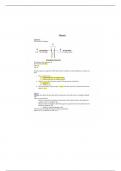
TRANSFORMATION OF FORMS
DIMENSIONAL ADDITIVE
TRANSFORMATION TRANSFORMATION
Altering one or more of its dimensions and still By the addition of elements to its volume. Tthe
retain its identity as a member of a family of forms. nature of the additive process and the number and
relative sizes of the elements being attached
determine whether the identity of the initial form is
altered or retained.
SUBTRACTIVE 3. SPACIAL TENSION
TRANSFORMATION
Relies on the close proximity of the
Subtracting a portion of its volume.
forms or their sharing of a common
Create recessed entrances, positive courtyard visual trait such as color, shape or
spaces, or window openings shaded by the vertical and material.
horizontal surfaces of the recess.
4. EDGE TO EDGE CONTACT
The forms share a common edge and
can pivot about that edge.
DIMENSIONAL ADDITIVE
TRANSFORMATION TRANSFORMATION
Altering one or more of its dimensions and still By the addition of elements to its volume. Tthe
retain its identity as a member of a family of forms. nature of the additive process and the number and
relative sizes of the elements being attached
determine whether the identity of the initial form is
altered or retained.
SUBTRACTIVE 3. SPACIAL TENSION
TRANSFORMATION
Relies on the close proximity of the
Subtracting a portion of its volume.
forms or their sharing of a common
Create recessed entrances, positive courtyard visual trait such as color, shape or
spaces, or window openings shaded by the vertical and material.
horizontal surfaces of the recess.
4. EDGE TO EDGE CONTACT
The forms share a common edge and
can pivot about that edge.