MORAL LIMITS OF MARKETS
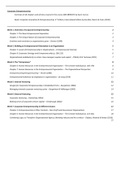
INDEX
Lecture 1 1
Chapter 24 of Modern Principles of Economics 1
Article: Policies Designed for Self-Interested Citizens May Undermine “The Moral Sentiments”: Evidence
from Economic Experiments (Bowles) 2
Article: Morals and Markets (Falk & Szech) 3
Article: Economics within a Pluralist Ethical Tradition (Wight) 4
Lecture 2 5
Editorial: Nudge, not sludge (Thaler) 5
Article: Why some things should not be for sale (Satz) 5
Video: Why we shouldn’t trust markets with our civic life (Sandel) 7
Lecture 3 7
Chapter 21 of Modern Principles of Economics 7
Article: Poverty impedes cognitive function (Mani et al.) 9
Article: the capability approach: a theoretical survey (Robeyns) 11
Article: The moral limits of markets: the case of human kidneys (Satz) 14
Lecture 4 15
Chapter 22 of Modern Principles of Economics 15
Article: Should governments invest more in nudging? (Benartzi et al.) 17
Article: Value maximization, stakeholder theory, and the corporate objective function (Jensen) 19
Article: Justice: What’s the right thing to do? (Sandel) 22
LECTURE 1
Chapter 24 of Modern Principles of Economics
Asymmetric information = when one party to an exchange has more or better information than the other party.
Principal-agent problem = how can a principal incentivize an agent to work in the principal’s interest even
when the agent has information that the principal does not? e.g. employers and employees
In extreme cases, asymmetric information can mean that markets fail to exist.
Moral hazard = when an agent tries to exploit an information advantage in a dishonest or undesirable way.
Solutions:
1) Provide more information reducing the asymmetry
E.g. reviews of sellers on Amazon. This makes it easier to avoid shady sellers and increases the
cost to sellers of exploiting their information advantage.
But these reviews/ratings may be fake! third-party organizations can give independent advice
(= public good)
Free rider = a person that consumes but does not pay.
2) Reduce the incentive for the knowledgeable party to exploit their information advantage
E.g. reputation
1
, Instead of trying to eliminate a seller’s incentives, anther method of reducing moral hazard is to
better align the buyer’s and the seller’s incentives.
Adverse selection occurs when an offer conveys negative information about the product being offered.
A credible promise is one that the promisor has an incentive to keep.
Health insurance: if only the sick buy insurance, the company has to raise its rates to reflect the higher
costs this makes the health insurance an even worse deal for healthy individuals, pushing them out of
the market rates rise etcetera
Solutions:
1) Inspections or checkups
2) Group plans = an insurance company can emphasize sales to groups
3) Conscientiousness: some people simply value insurance more than others
A signal is an expensive action that is taken to reveal information.
Completing a degree signals to employers that you are likely to have the kinds of qualities that employers
are willing to pay for. “sheepskin effect”
Signaling creates benefits by generating information, but in most signaling models there is some
inefficiency.
Article: Policies Designed for Self-Interested Citizens May Undermine “The Moral Sentiments”: Evidence from
Economic Experiments (Bowles)
Economics has devised ways that incentives can be structured to induce self-regarding individuals to act in
the common interest when market competition alone would fail to accomplish this e.g. taxes.
But policies designed to harness self-interest to public interest may be counterproductive. There is a
possibility that economics incentives may diminish ethical or other reasons for complying with social norms
and contributing to the common good e.g. a fine for being late in a day-care centre.
Assumption of separability = the effects of material interests and ‘moral sentiments’ on behavior are
additive rather than interactive.
External effects/spillovers = the effects of one’s actions on others. Market failures would be avoided if
people were held liable for the cost that their actions inflict on others complete contracts.
If contracts are complete, “morality has no application to market interaction under the condition of perfect
competition”. – David Gauthier.
Contracts are rarely complete because information about the amount and quality of the good/service
provided is either asymmetric or nonverifiable.
o A principal (the employer or the lender) wishes to induce the agent (the employee or the
borrower) to act in a way beneficial to the principal, but the conflict of interest between the two
cannot be resolved by specifying the terms of a complete and enforceable contract.
Behavioral experiments that model the voluntary provision of public goods and relationships between
principals and agents show that substantial fractions of most populations adhere to moral rules, willingly
give to others, and punish those who offend standards of appropriate behavior, even at a cost to
themselves and with no expectation of material reward. However, recent advances in experimental
economics provide convincing evidence that the separability assumption commonly fails. Because:
o Framing: incentives may frame a decision problem and thereby suggest self-interest as the
appropriate behavior.
o Endogenous preferences: incentives may affect the long-term development of preferences.
o Overdetermination: incentives may compromise the individual’s sense of autonomy.
o The information content of incentives: incentives may convey information affecting behavior.
Even if incentives reduce the total gains associated with a project, their use may give the principal a
sufficiently larger slice of the smaller pie to motivate the principal to use them. One of the reasons agents
respond negatively to incentives—that they benefit the principal at the agent’s expense—also explains
2
INDEX
Lecture 1 1
Chapter 24 of Modern Principles of Economics 1
Article: Policies Designed for Self-Interested Citizens May Undermine “The Moral Sentiments”: Evidence
from Economic Experiments (Bowles) 2
Article: Morals and Markets (Falk & Szech) 3
Article: Economics within a Pluralist Ethical Tradition (Wight) 4
Lecture 2 5
Editorial: Nudge, not sludge (Thaler) 5
Article: Why some things should not be for sale (Satz) 5
Video: Why we shouldn’t trust markets with our civic life (Sandel) 7
Lecture 3 7
Chapter 21 of Modern Principles of Economics 7
Article: Poverty impedes cognitive function (Mani et al.) 9
Article: the capability approach: a theoretical survey (Robeyns) 11
Article: The moral limits of markets: the case of human kidneys (Satz) 14
Lecture 4 15
Chapter 22 of Modern Principles of Economics 15
Article: Should governments invest more in nudging? (Benartzi et al.) 17
Article: Value maximization, stakeholder theory, and the corporate objective function (Jensen) 19
Article: Justice: What’s the right thing to do? (Sandel) 22
LECTURE 1
Chapter 24 of Modern Principles of Economics
Asymmetric information = when one party to an exchange has more or better information than the other party.
Principal-agent problem = how can a principal incentivize an agent to work in the principal’s interest even
when the agent has information that the principal does not? e.g. employers and employees
In extreme cases, asymmetric information can mean that markets fail to exist.
Moral hazard = when an agent tries to exploit an information advantage in a dishonest or undesirable way.
Solutions:
1) Provide more information reducing the asymmetry
E.g. reviews of sellers on Amazon. This makes it easier to avoid shady sellers and increases the
cost to sellers of exploiting their information advantage.
But these reviews/ratings may be fake! third-party organizations can give independent advice
(= public good)
Free rider = a person that consumes but does not pay.
2) Reduce the incentive for the knowledgeable party to exploit their information advantage
E.g. reputation
1
, Instead of trying to eliminate a seller’s incentives, anther method of reducing moral hazard is to
better align the buyer’s and the seller’s incentives.
Adverse selection occurs when an offer conveys negative information about the product being offered.
A credible promise is one that the promisor has an incentive to keep.
Health insurance: if only the sick buy insurance, the company has to raise its rates to reflect the higher
costs this makes the health insurance an even worse deal for healthy individuals, pushing them out of
the market rates rise etcetera
Solutions:
1) Inspections or checkups
2) Group plans = an insurance company can emphasize sales to groups
3) Conscientiousness: some people simply value insurance more than others
A signal is an expensive action that is taken to reveal information.
Completing a degree signals to employers that you are likely to have the kinds of qualities that employers
are willing to pay for. “sheepskin effect”
Signaling creates benefits by generating information, but in most signaling models there is some
inefficiency.
Article: Policies Designed for Self-Interested Citizens May Undermine “The Moral Sentiments”: Evidence from
Economic Experiments (Bowles)
Economics has devised ways that incentives can be structured to induce self-regarding individuals to act in
the common interest when market competition alone would fail to accomplish this e.g. taxes.
But policies designed to harness self-interest to public interest may be counterproductive. There is a
possibility that economics incentives may diminish ethical or other reasons for complying with social norms
and contributing to the common good e.g. a fine for being late in a day-care centre.
Assumption of separability = the effects of material interests and ‘moral sentiments’ on behavior are
additive rather than interactive.
External effects/spillovers = the effects of one’s actions on others. Market failures would be avoided if
people were held liable for the cost that their actions inflict on others complete contracts.
If contracts are complete, “morality has no application to market interaction under the condition of perfect
competition”. – David Gauthier.
Contracts are rarely complete because information about the amount and quality of the good/service
provided is either asymmetric or nonverifiable.
o A principal (the employer or the lender) wishes to induce the agent (the employee or the
borrower) to act in a way beneficial to the principal, but the conflict of interest between the two
cannot be resolved by specifying the terms of a complete and enforceable contract.
Behavioral experiments that model the voluntary provision of public goods and relationships between
principals and agents show that substantial fractions of most populations adhere to moral rules, willingly
give to others, and punish those who offend standards of appropriate behavior, even at a cost to
themselves and with no expectation of material reward. However, recent advances in experimental
economics provide convincing evidence that the separability assumption commonly fails. Because:
o Framing: incentives may frame a decision problem and thereby suggest self-interest as the
appropriate behavior.
o Endogenous preferences: incentives may affect the long-term development of preferences.
o Overdetermination: incentives may compromise the individual’s sense of autonomy.
o The information content of incentives: incentives may convey information affecting behavior.
Even if incentives reduce the total gains associated with a project, their use may give the principal a
sufficiently larger slice of the smaller pie to motivate the principal to use them. One of the reasons agents
respond negatively to incentives—that they benefit the principal at the agent’s expense—also explains
2