NURS 3462 Psychology Final Exam study Guide 2020 | Psych Final Exam Study Guide
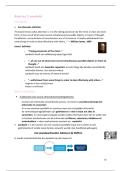
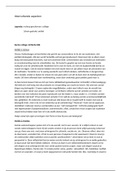
NURS 3462 Psychology Final Exam 2020 Psych Final Exam Study Guide Ch. 13 – Personality Disorders -Personality Disorders -an enduring pattern of inner experience and behavior that deviates markedly from the expectations of the individual’s culture manifested in 2 or more of the following areas: -cognition(ways of perceiving), affectivity(appropriateness of emotional response), interpersonal functioning, impulse control -enduring pattern is inflexible and pervasive across a broad range of personal and social situations -enduring pattern leads to clinically significant distress or impairment in social, occupational, or other important areas of functioning -pattern is stable and of long duration, and its onset can be traced back at least to adolescence or early adulthood -enduring pattern is not better accounted for as a manifestation or consequence of another mental disorder -enduring pattern is not due to the direct physiologic effects of a substance or a general medical condition -Personality Traits -behaviors, patterns of perceiving, relating to others, and thinking about the environment and oneself that are exhibited in a wide range of social and personal contexts -trait disordersadaptive or maladaptive, depending on whether the trait is inflexible or causes significant functional impairment or subjective distress -Axis IIPersonality Disorders -Cluster format as follows: -cluster A: paranoid, schizoid, and schizotypical make up the odd or eccentric cluster, more likely to be co-occurring -cluster B: antisocial, borderline, histrionic, and narcissistic constitute the dramatic and emotional cluster, often co-occurring with affective disorders -cluster C: avoidant, dependent, and obsessive-compulsive compose the anxious and fearful cluster, often associated with anxiety disorders Historic and Theoretic Perspectives -Freudian Theories -oraltraits associated with successful completion of this stage include the ability to relate to others without excessive dependency or jealousy -trust begins to develop, and with trust comes a sense of self-reliance and trust of self -difficulty with this stage often lack trust and are self-centered, dependent, and jealous -analability to manage ambivalence(uncertainty) by making decisions without shame or self-doubt -show a sense of autonomy and independence -difficulty with this stage, unable to make decisions, withholds friendships or cannot share with others, is full of rage, is stubborn, and may have sadomasochistic tendencies -phallicsuccessful, masters their internal processes and impulses and gains a beginning sense of relating to other people in the environment -unable to resolve the conflict can experience multiple psychiatric disorders, particularly those that involves the superego function of guilt -antisocial, borderline, histrionic, and narcissistic personality disorders involve individuals who experience problems identifying with their sexual identity during the critical phallic stage -latencyfurther development of the ego in an effort to gain control over instinctual impulses -the child with a sense of industry is able to delay gratification, which helps in areas of learning, work and relating to others -issues with this stage result in people who have too much or too little inner control -lack ofdifficulty relating to others -too muchisolated their emotions and are more regulated -genitalopportunity to rework earlier issues that the individual has not resolved -individuals establish goals and values within the context of their own unique personal identities -Object Relations -difficultycompromise their sense of self, unable to attain their identified goals or form values- - - -
Escuela, estudio y materia
- Institución
- North Carolina State University
- Grado
- Psychology (NURS3462)
Información del documento
- Subido en
- 26 de enero de 2022
- Número de páginas
- 94
- Escrito en
- 2021/2022
- Tipo
- Otro
- Personaje
- Desconocido
Temas
-
ch 13 – personality disorders personality disorders an enduring pattern of inner experience and behavior that deviates markedly from the expectations of the individual’s culture manifested in 2 or