SECTION: Eyewitness Testimony - Anxiety
TOPIC: Memory
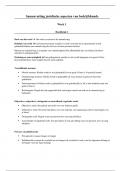
SUMMARY OF KEY IDEAS (K/U)
1. Anxiety – the state of emotional arousal where there is a feeling or experience of apprehension brought about by a
real or anticipated threat. Anxiety can either HELP or HINDER eyewitness accounts.
2. Negative = arousal can prevent individuals from paying attention to important details, recall is hindered.
This can be explained through the ‘Weapon Focus Effect’ :
Weapon focus effect: When weapons are present EWT recall of other details become limited as attention is automatically
drawn to the weapon (the main threat.) Detail may fail to be encoded; the central detail is remembered but other factors
are not = TUNNEL THEORY.
EVIDENCE: Johnson + Scott = participants were asked to stay in a waiting room ready for a study to begin. Condition 1 had
p’s hear a strong argument and witnessed a man walking out with a pen covered in grease. Condition 2 heard the same
argument but with breaking glass and a man ran out with a bloody knife (high anxiety.)
Participants were less accurate when identifying the man from the second condition (knife) than the first (pen.) This
suggests that those exposed to higher levels of anxiety were more likely to have a poor/inaccurate eyewitness account.
- It has been criticised for lacking ecological validity. P’s may have anticipated that something was going to happen
as they knew they were waiting to take part in an experiment, this could’ve affected their anxiety level or their
honest participation within the experiment.
- Some have argued weapon focus was only due to ‘shock factor’ not the ‘anxiety factor’ as another researcher
found the same focus was given to a stick of celery than it was to a knife.
3. Positive = arousal can make people more alert and allow stronger recall, fight or flight can be triggered causing
attention to detail.
EVIDENCE: Yuille + Cutshall = interviewed real witnesses of a real crime. An armed robbery was witnessed by 21 people,
13 of these agreed to the research interview. They were asked about the degree of stress they experienced at the time on
a 7-point scale. Results showed the witnesses remained accurate in their recall, some gave specific details, despite high
levels of stress, suggesting, anxiety doesn’t inhibit alertness but can increase it.
- The study has higher reliability as accounts could be compared across witnesses - but a small, one off case
- It is difficult to measure stress levels and the event was a field study lacks internal validity
Yerkes – Dodson Law
Through experiments they found an increase of arousal improves recall/performance but only up to a certain point,
once a moderate level is reached performance declines as arousal continues to grow.
TOPIC: Memory
SUMMARY OF KEY IDEAS (K/U)
1. Anxiety – the state of emotional arousal where there is a feeling or experience of apprehension brought about by a
real or anticipated threat. Anxiety can either HELP or HINDER eyewitness accounts.
2. Negative = arousal can prevent individuals from paying attention to important details, recall is hindered.
This can be explained through the ‘Weapon Focus Effect’ :
Weapon focus effect: When weapons are present EWT recall of other details become limited as attention is automatically
drawn to the weapon (the main threat.) Detail may fail to be encoded; the central detail is remembered but other factors
are not = TUNNEL THEORY.
EVIDENCE: Johnson + Scott = participants were asked to stay in a waiting room ready for a study to begin. Condition 1 had
p’s hear a strong argument and witnessed a man walking out with a pen covered in grease. Condition 2 heard the same
argument but with breaking glass and a man ran out with a bloody knife (high anxiety.)
Participants were less accurate when identifying the man from the second condition (knife) than the first (pen.) This
suggests that those exposed to higher levels of anxiety were more likely to have a poor/inaccurate eyewitness account.
- It has been criticised for lacking ecological validity. P’s may have anticipated that something was going to happen
as they knew they were waiting to take part in an experiment, this could’ve affected their anxiety level or their
honest participation within the experiment.
- Some have argued weapon focus was only due to ‘shock factor’ not the ‘anxiety factor’ as another researcher
found the same focus was given to a stick of celery than it was to a knife.
3. Positive = arousal can make people more alert and allow stronger recall, fight or flight can be triggered causing
attention to detail.
EVIDENCE: Yuille + Cutshall = interviewed real witnesses of a real crime. An armed robbery was witnessed by 21 people,
13 of these agreed to the research interview. They were asked about the degree of stress they experienced at the time on
a 7-point scale. Results showed the witnesses remained accurate in their recall, some gave specific details, despite high
levels of stress, suggesting, anxiety doesn’t inhibit alertness but can increase it.
- The study has higher reliability as accounts could be compared across witnesses - but a small, one off case
- It is difficult to measure stress levels and the event was a field study lacks internal validity
Yerkes – Dodson Law
Through experiments they found an increase of arousal improves recall/performance but only up to a certain point,
once a moderate level is reached performance declines as arousal continues to grow.