SECTION: Depression – explanations and treatments
TOPIC: Psychopathology
KEY IDEAS (K/U)
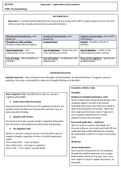
Depression = A mental disorder defined by low mood and low energy levels, DSM 5 explains depression can vary from
mild to severe (for example premenstrual to persistent disorder.)
Behavioural Characteristics: ways Emotional Characteristics: ways Cognitive Characteristics: ways people
people act people feel think/believe
Disruption to daily activities – Lowered Mood Suicidal – thoughts of death or
sleeping, eating and poor hygiene attempts
Social Impairment – poor Loss of enjoyment – things that used Lack of attention – unable to stay
relationships or loss of previous to be enjoyed are no more concentrated and poor memory
Loss of energy – lack motivation or Low self-esteem – worthlessness and Focus on the negatives – ignoring any
inactivity hopelessness possible positive
Explaining Depression
Cognitive approach – how mental processes (thoughts and perceptions) can impact behaviour. It suggests a person’s
cognitions can create a vulnerability to depressive thoughts/feelings and disorders.
Evaluation of Becks Triad:
Strengths:
Beck’s Negative Triad - Identified three parts to a person’s
cognitive vulnerability: Evidence for Negative Distortions, 1976
Group of depressed undergraduate females were
1. Faulty Information Processing
compared against a female control group.
Depressed individuals will focus on the negatives and ignore any Presented with a short story they were asked to
positives, blow situations out of proportion and have a way of share their perspective on the plot. Those who
black and white thinking. were depressed had more errors in logic and a
more negative outlook than the control.
2. Negative Self Schema (Supports Faulty info processing.)
The framework of idea around oneself is negatively interpreted, Real world application – treatment
low self-esteem and worthlessness often leads to depression. CBT now works to reduce vulnerability and
3. The Negative Triad increase resilience, one study found both CBT and
medication had an 81% effectiveness, showing
Based on a person’s schema a person may have three types of the explanation is valid if it is used to successfully
negative thoughts, regardless of what is actually happening in treat.
reality.
View of the world – ‘cold, hard place’ Weakness:
View of the future – lack hope or aspiration
View of self – ‘I am a failure’ and self-doubt Unclear Explanations
Some aspects of depression are not explained
through the cognitive approach such as anger,
hallucinations and burst of energy. Also, some
early stages of research suggest depression can
be genetic.
TOPIC: Psychopathology
KEY IDEAS (K/U)
Depression = A mental disorder defined by low mood and low energy levels, DSM 5 explains depression can vary from
mild to severe (for example premenstrual to persistent disorder.)
Behavioural Characteristics: ways Emotional Characteristics: ways Cognitive Characteristics: ways people
people act people feel think/believe
Disruption to daily activities – Lowered Mood Suicidal – thoughts of death or
sleeping, eating and poor hygiene attempts
Social Impairment – poor Loss of enjoyment – things that used Lack of attention – unable to stay
relationships or loss of previous to be enjoyed are no more concentrated and poor memory
Loss of energy – lack motivation or Low self-esteem – worthlessness and Focus on the negatives – ignoring any
inactivity hopelessness possible positive
Explaining Depression
Cognitive approach – how mental processes (thoughts and perceptions) can impact behaviour. It suggests a person’s
cognitions can create a vulnerability to depressive thoughts/feelings and disorders.
Evaluation of Becks Triad:
Strengths:
Beck’s Negative Triad - Identified three parts to a person’s
cognitive vulnerability: Evidence for Negative Distortions, 1976
Group of depressed undergraduate females were
1. Faulty Information Processing
compared against a female control group.
Depressed individuals will focus on the negatives and ignore any Presented with a short story they were asked to
positives, blow situations out of proportion and have a way of share their perspective on the plot. Those who
black and white thinking. were depressed had more errors in logic and a
more negative outlook than the control.
2. Negative Self Schema (Supports Faulty info processing.)
The framework of idea around oneself is negatively interpreted, Real world application – treatment
low self-esteem and worthlessness often leads to depression. CBT now works to reduce vulnerability and
3. The Negative Triad increase resilience, one study found both CBT and
medication had an 81% effectiveness, showing
Based on a person’s schema a person may have three types of the explanation is valid if it is used to successfully
negative thoughts, regardless of what is actually happening in treat.
reality.
View of the world – ‘cold, hard place’ Weakness:
View of the future – lack hope or aspiration
View of self – ‘I am a failure’ and self-doubt Unclear Explanations
Some aspects of depression are not explained
through the cognitive approach such as anger,
hallucinations and burst of energy. Also, some
early stages of research suggest depression can
be genetic.