DNA profiling
Friday, 08 February 2019 10:06
DNA profiling
What is a DNA Profile ?
- Genetic fingerprinting
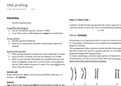
A pattern of dark bands representing the unique sequence of
Using DNA technology to that are shown on an X-ray. This is a complicated procedure
Ø Extract and identify specific sections of DNA in a lab
Ø From these make a DNA fingerprint unique to an individual
Making a Karyotype :
Can be used to
Ø Identity specific individuals A karyotype is an organized profile of a person's chromosom
Ø Show close relationships between relationships (paternity In a karyotype, chromosomes are arranged and numbered by
testing) largest to smallest.
This arrangement helps scientists quickly identify chromosom
Based on the fact that alterations that may result in a genetic disorder or to do DNA
Ø DNA coding (sequence of bases) for every individual is unique fingerprinting/genetic fingerprinting
Ø Every somatic cell (body cell) has an individual set of DNA To make a karyotype, scientists take a picture of someone's
Ø DNA is a non-reactive chemically inert (stable) molecule that chromosomes, cut them out and match them up using size, b
does not degrade easily (can’t use hair from an investigation pattern and centromere position as guides.
site for DNA analysis because it is dead. You need follicle cells,
with a little bit of tissue)
Somatic cell :
Body cell that has a full set of chromosomes/DNA molecule ie. In
humans = 46 (diploid)
Gamete :
Egg or sperm cell - these have half the chromosome number ie. 23+
Friday, 08 February 2019 10:06
DNA profiling
What is a DNA Profile ?
- Genetic fingerprinting
A pattern of dark bands representing the unique sequence of
Using DNA technology to that are shown on an X-ray. This is a complicated procedure
Ø Extract and identify specific sections of DNA in a lab
Ø From these make a DNA fingerprint unique to an individual
Making a Karyotype :
Can be used to
Ø Identity specific individuals A karyotype is an organized profile of a person's chromosom
Ø Show close relationships between relationships (paternity In a karyotype, chromosomes are arranged and numbered by
testing) largest to smallest.
This arrangement helps scientists quickly identify chromosom
Based on the fact that alterations that may result in a genetic disorder or to do DNA
Ø DNA coding (sequence of bases) for every individual is unique fingerprinting/genetic fingerprinting
Ø Every somatic cell (body cell) has an individual set of DNA To make a karyotype, scientists take a picture of someone's
Ø DNA is a non-reactive chemically inert (stable) molecule that chromosomes, cut them out and match them up using size, b
does not degrade easily (can’t use hair from an investigation pattern and centromere position as guides.
site for DNA analysis because it is dead. You need follicle cells,
with a little bit of tissue)
Somatic cell :
Body cell that has a full set of chromosomes/DNA molecule ie. In
humans = 46 (diploid)
Gamete :
Egg or sperm cell - these have half the chromosome number ie. 23+