Summary
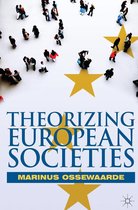
Theorizing European Societies
&
Chapter 10 of Strangers no More
By Thomas Kroon
,1. The idea of Europe: Past and Present
• The idea of Europe has changed. What first was thought of the perfect Europe, seems now far
from perfect.
1.1 Europe in crisis
• Sociologists suggest that Europe now is being destroyed, based on what was meant with
Europe, a social order has been hit:
o The one shaped by post-Cold War global capitalism
• The present crisis is not perceived to be a structural problem of global capitalism, but as an
unfortunate breakdown that can be fixed → financial crisis → global capitalism
• In the meantime, the amount of power holds (including EU member states), are increasingly
violating European values
1.2 A crisis of European values
• In the past years, protests against the power holders have been frequent
o Link between these practices and European values is not often made
o The resistance to the hegemony of financial corporations, supported by governments
keen to satisfy financial markets, is not always coined in terms of the distortion of the
European values of democracy, rule of law and reason
• Pre-crisis EU society: Europeans were not fully aware what drove them to resists certain
forces
• Post-crisis EU society: European ethos and self-understanding is threatening to disappear
• What is needed, in order to bind Europeans with shared European values, which is not the case
now, or starting to disappear, is a distinctive democratic quality of mind:
o “The sociological imagination”
▪ Such a sociological imagination enables the conception of alternative futures
• The meaning and implications of the current crisis could be grasped better if we know what
Europe and the European identity actually mean
1.3 Ideas of Europe
• The question of ‘What is Europe?’ has been the subject of vivid debates for some 2500 years
o Could refer to a continent
o Could refer to an idea that can be understood in different ways by various people
• Classical idea: “all race and all territory that has been successively Romanized, Christianized
and submitted, as far as the mind is concerned, to the discipline of the Greeks, is absolutely
European”
o Acquiring ancient Greek, Roman and Christian cultural traits
• Key European values
o Reason
o Democracy
• The idea of Europe is ancient, however, the European identity is more recent, fragile, mortal
and dependent on specific political forms
• Is it generally agreed that Europeans are not simply born with the self-consciousness of being
European, and that the idea of Europe is neither just springs up in their minds nor
straightforwardly determines their self-understandings
1.4 The concept of European society
• The consciousness of a ‘European society’ developed after the French Revolution
o To be part of a European society meant being part of a particular way of life
▪ Organized society
o A set of basic values in common, which are inherited from classical antiquity, and
even more from Christianity
, • The idea of Europe becomes a real (concrete) European society when people are enabled to
live freely, without being oppressed by despotic forces that make free become an aspect of
daily life, eventually creating a lasting slavish attitude
• Despotism is fundamentally anti-European: cannot be reconciled with the idea of Europe and
European values → destroys Europe
• According to Ash Amin, the classical idea of Europe may actually come to inspire despotic
acts
o The classical idea of Europe has become increasingly inappropriate in a contemporary
European society that is now inhabited by millions of people from non-European
backgrounds
o This idea would exclude strangers who cannot invoke their European origin, Amin
fears for exclusion
o In his view, a new idea of Europe has to include a different picture of Asia, a renewed
appreciation of cultural, religious and ethnic differences, and unconditional hospitality
towards the strangers in European society, such as migrants, dissidents, Roma and
Sinti, exiles and refugees.
1.5 The diversity of European societies
• European society refers to a unity or a common cultural complex, and yet it does not exclude
diversities or a variety of European identities
• If there is a European society at all, it is an entity that consists of a variety of European
societies
• European society refers not so much to an overarching unity, as to a common, shared way of
life, which can be called ‘European’ or expresses some ‘Europeanness’
• European in different ways:
o European antiquity: a Hellenized culture and Romanized society, in contrast to the
non-European, the ‘barbarian’
o Christian Europe: Europe and Christendom became almost equivalent, whereby
Europe’s ‘other’ was non-Christian
o Modern Europe: A civilization project, vis-à-vis the so-called barbarous Middle Ages
• Different meanings of Europe per country (France, UK, Spain, etc.)
• European society consists of dynamic and overlapping cultural zones that transcend
geographical or national boundaries, can be distinguished in different criteria
1.6 The diversity of Eastern and Western European societies
• Claus Offe stresses that the use of the concept ‘European society’ is not without its dangers,
due to the difference between Western European and European society
o Distinction between West European and East European
o Identities have deep historical roots
▪ Roman empire
▪ Christianity in Europe
• Western Europeans have tended to identify Eastern European societies, as culturally inferior to
Western Europe
• Since 1989, the Eastern European states have struggles to cope with the burden of their
totalitarian past, in the same sense that, in the era of global capitalism, they have thus far not
really succeeded in democratizing, establishing the rule of law and introducing free market
economy
1.7 Formal European institutions
• According to Monsterrat Guibernau, ‘Europe is often conflated with the EU, and although
some non-EU countries claim their European credentials, the EU seems to monopolize the
idea of Europe as a project, which still remains largely unidentified’
• The Maastricht Treaty established the legal requirements for the future entry of the so-called
‘post-communist’ states in the E
, • The Copenhagen Treaty defined the entry criteria of the new member states in terms of
European values
o To be European, as positively formulated in the treaties, is to embrace the European
values that are constitutional
• In the Declaration Concerning European Identity (1973), the EEC formulated a shared
cultural unity and European heritage, which was adopted by the nine member states
o Framework for criteria
• The countries of Switzerland, Norway, Monaco, Andorra and Liechtenstein did not join the
EU, but make them not less European: ideas of Europe and European identities can also be
represented outside the EU
• The Council of Europe (CoE) is another European community that explicitly embraces the
idea of Europe, which it understands to be expressed in the values of human rights, democracy
and the rule of law
o The values that the CoE considers to be constitutive of the European identity
determine its definition, perception and conception of European social problems
o No member state has ever joined the EU without first becoming a member of the CoE
Theorizing European Societies
&
Chapter 10 of Strangers no More
By Thomas Kroon
,1. The idea of Europe: Past and Present
• The idea of Europe has changed. What first was thought of the perfect Europe, seems now far
from perfect.
1.1 Europe in crisis
• Sociologists suggest that Europe now is being destroyed, based on what was meant with
Europe, a social order has been hit:
o The one shaped by post-Cold War global capitalism
• The present crisis is not perceived to be a structural problem of global capitalism, but as an
unfortunate breakdown that can be fixed → financial crisis → global capitalism
• In the meantime, the amount of power holds (including EU member states), are increasingly
violating European values
1.2 A crisis of European values
• In the past years, protests against the power holders have been frequent
o Link between these practices and European values is not often made
o The resistance to the hegemony of financial corporations, supported by governments
keen to satisfy financial markets, is not always coined in terms of the distortion of the
European values of democracy, rule of law and reason
• Pre-crisis EU society: Europeans were not fully aware what drove them to resists certain
forces
• Post-crisis EU society: European ethos and self-understanding is threatening to disappear
• What is needed, in order to bind Europeans with shared European values, which is not the case
now, or starting to disappear, is a distinctive democratic quality of mind:
o “The sociological imagination”
▪ Such a sociological imagination enables the conception of alternative futures
• The meaning and implications of the current crisis could be grasped better if we know what
Europe and the European identity actually mean
1.3 Ideas of Europe
• The question of ‘What is Europe?’ has been the subject of vivid debates for some 2500 years
o Could refer to a continent
o Could refer to an idea that can be understood in different ways by various people
• Classical idea: “all race and all territory that has been successively Romanized, Christianized
and submitted, as far as the mind is concerned, to the discipline of the Greeks, is absolutely
European”
o Acquiring ancient Greek, Roman and Christian cultural traits
• Key European values
o Reason
o Democracy
• The idea of Europe is ancient, however, the European identity is more recent, fragile, mortal
and dependent on specific political forms
• Is it generally agreed that Europeans are not simply born with the self-consciousness of being
European, and that the idea of Europe is neither just springs up in their minds nor
straightforwardly determines their self-understandings
1.4 The concept of European society
• The consciousness of a ‘European society’ developed after the French Revolution
o To be part of a European society meant being part of a particular way of life
▪ Organized society
o A set of basic values in common, which are inherited from classical antiquity, and
even more from Christianity
, • The idea of Europe becomes a real (concrete) European society when people are enabled to
live freely, without being oppressed by despotic forces that make free become an aspect of
daily life, eventually creating a lasting slavish attitude
• Despotism is fundamentally anti-European: cannot be reconciled with the idea of Europe and
European values → destroys Europe
• According to Ash Amin, the classical idea of Europe may actually come to inspire despotic
acts
o The classical idea of Europe has become increasingly inappropriate in a contemporary
European society that is now inhabited by millions of people from non-European
backgrounds
o This idea would exclude strangers who cannot invoke their European origin, Amin
fears for exclusion
o In his view, a new idea of Europe has to include a different picture of Asia, a renewed
appreciation of cultural, religious and ethnic differences, and unconditional hospitality
towards the strangers in European society, such as migrants, dissidents, Roma and
Sinti, exiles and refugees.
1.5 The diversity of European societies
• European society refers to a unity or a common cultural complex, and yet it does not exclude
diversities or a variety of European identities
• If there is a European society at all, it is an entity that consists of a variety of European
societies
• European society refers not so much to an overarching unity, as to a common, shared way of
life, which can be called ‘European’ or expresses some ‘Europeanness’
• European in different ways:
o European antiquity: a Hellenized culture and Romanized society, in contrast to the
non-European, the ‘barbarian’
o Christian Europe: Europe and Christendom became almost equivalent, whereby
Europe’s ‘other’ was non-Christian
o Modern Europe: A civilization project, vis-à-vis the so-called barbarous Middle Ages
• Different meanings of Europe per country (France, UK, Spain, etc.)
• European society consists of dynamic and overlapping cultural zones that transcend
geographical or national boundaries, can be distinguished in different criteria
1.6 The diversity of Eastern and Western European societies
• Claus Offe stresses that the use of the concept ‘European society’ is not without its dangers,
due to the difference between Western European and European society
o Distinction between West European and East European
o Identities have deep historical roots
▪ Roman empire
▪ Christianity in Europe
• Western Europeans have tended to identify Eastern European societies, as culturally inferior to
Western Europe
• Since 1989, the Eastern European states have struggles to cope with the burden of their
totalitarian past, in the same sense that, in the era of global capitalism, they have thus far not
really succeeded in democratizing, establishing the rule of law and introducing free market
economy
1.7 Formal European institutions
• According to Monsterrat Guibernau, ‘Europe is often conflated with the EU, and although
some non-EU countries claim their European credentials, the EU seems to monopolize the
idea of Europe as a project, which still remains largely unidentified’
• The Maastricht Treaty established the legal requirements for the future entry of the so-called
‘post-communist’ states in the E
, • The Copenhagen Treaty defined the entry criteria of the new member states in terms of
European values
o To be European, as positively formulated in the treaties, is to embrace the European
values that are constitutional
• In the Declaration Concerning European Identity (1973), the EEC formulated a shared
cultural unity and European heritage, which was adopted by the nine member states
o Framework for criteria
• The countries of Switzerland, Norway, Monaco, Andorra and Liechtenstein did not join the
EU, but make them not less European: ideas of Europe and European identities can also be
represented outside the EU
• The Council of Europe (CoE) is another European community that explicitly embraces the
idea of Europe, which it understands to be expressed in the values of human rights, democracy
and the rule of law
o The values that the CoE considers to be constitutive of the European identity
determine its definition, perception and conception of European social problems
o No member state has ever joined the EU without first becoming a member of the CoE