Samenvatting corporate finance
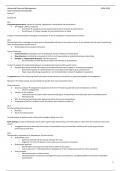
The concept map of the course
1
, 1. The corporation
1.1. Four types of firms
Sole proprietorship:
• Business owned and run by one person
• Few or no employees
+ easy to create
- no separation between firm and owner
- unlimited personal liability
- limited life
Partnership:
• Similar to sole proprietorship, but with more than one owner
• All partners are personally liable
o Lender can require any partner to repay all the firm’s outstanding debts
• Partnership ends with the dead or withdrawal of any single partner
• Limited partnerships have 2 types of owners:
o General partners (regular partners)
o Limited partners (have no management authority but have limited liability)
Limited liability company (LLC):
• All owners have limited liability, but they can also run the business
• Relative new business form in USA but common in Europe
Corporation:
• Legal entity is separated from the owners
• Corporation has many of the legal powers individuals have (i.e. enter contracts, own assets,
borrow money)
• Corporation is solely responsible for its own obligations
o Owners are not liable for any obligation the corporation enters into
• Corporations must be legally formed.
o Some countries offer more attractive environments for corporations
• Ownership in a corporation
o Represented by shares of stock
o Owner of stock is called a shareholder, stockholder or equity holder
o Sum of all ownership value is called equity
o There is no limit to the number of shareholders and thus the amount of funds a
company can raise by selling stock
o Owner is entitled to dividend payments
• Corporation and double taxation
o Important tax-implication for corporations is the problem of double taxation (profits
are taxed twice)
Since a corporation is seen as a citizen from the law’s point of view its
income is taxed at a corporate tax rate
Dividends is a source of income of shareholders -> also taxed
2
,1.2. Ownership vs control in corporations
• In any corporation, ownership and direct control are typically separated
• See it as a democracy with shareholders being citizens, board of directors the parliament and
the CEO the prime minister
• Board of directors:
o Elected by shareholders
o Have ultimate decision-making authority
• CEO:
o Board typically delegates day-to-day decisions making to the CEO
• Financial manager
o Responsibilities:
• Investment decisions (Which projects to undertake)
• Financing decisions (How to finance investment projects (debt vs
equity))
• Cash management (How to manage liquidity needs)
• Objectives of a corporation
o Shareholders objectives: maximizing the value of shares
o Firm and society: (not always) increase in value of the firm’s equity must also benefit
society as a whole
It is a problem when increasing the firm’s equity comes at the expense of
others (pollution, privacy issues, …)
• Agency problems in a corporation
o Managers vs shareholders:
Managers act in their own interest rather than in the best interest of the
shareholders
One potential solution to align management’s compensation schemes with
the value of firms’ stock: performance bonuses and stock options
3
, • Negative effect: can lead to managerial myopia and excessive risk
taking
o Equity holders vs debtholders
Risk shifting incentives and debt overhang increase with debt financing
o Inside vs outside investors
Private benefit extraction by insiders; debt contract for outsiders
1.3. Private vs public corporations
• Public corporations have shares traded publicly at a stock exchange, the stock of private
corporations is not traded publicly
• Private firms can go public via Initial Public Offering (IPO), by selling its stock publicly to all
subscribed investors; after the IPO the firm’s stock is traded at a stock exchange
o Main reasons to go public include (1) raising external capital, (2) reducing the cost of
capital via improved transparency (higher reporting standards + market monitoring),
(3) allowing the insiders to cash out, (…) and other strategic reasons
• Public firms can go private: for example, by consolidating all of the shares of a private firm
investor can delist the firms from a stock exchange
o Main reasons to go private: To restructure with the hopes of eventually going public
once again in the future: the firms is struggling and a private equity firm is stepping
in to restructure.
1.4. Corporate bankruptcy
• Default is a failure to satisfy the terms of a debt contract or to repay debt timely
• Bankruptcy is a legal process through which firms that cannot repay debts to creditors (i.e.,
defaulted firms) may seek relief from some or all of their debts.
o In most jurisdictions, bankruptcy is imposed by a court order, often initiated by the
debtor
o Two prominent types of bankruptcy:
Reorganization: is an attempt to extend the life of a company facing
bankruptcy through special arrangements and restructuring to minimize the
possibility of past situations reoccurring
Liquidation: all the company’s assets are sold by an appointed trustee to
bring in cash to pay back as much of debt as possible to those that the
company owes
2. Firms’ financial information disclosure
• Anyone with money to invest is a potential investor
o This facilitates the firm's access to investment capital and corporations are often
widely held
• How do shareholders actually know what is happening in their firm?
o With the separation of ownership and control (management) and with often highly
dispersed shareholders
• How do prospective investors learn enough about a company to know whether or not to
they should invest in it?
• How can small investors (minority shareholders) be guaranteed equal information access
with larger investor (large blockholders)?
• Therefor there are public disclosre requirements for corporations
o This course focuses on financial information disclosure
4
The concept map of the course
1
, 1. The corporation
1.1. Four types of firms
Sole proprietorship:
• Business owned and run by one person
• Few or no employees
+ easy to create
- no separation between firm and owner
- unlimited personal liability
- limited life
Partnership:
• Similar to sole proprietorship, but with more than one owner
• All partners are personally liable
o Lender can require any partner to repay all the firm’s outstanding debts
• Partnership ends with the dead or withdrawal of any single partner
• Limited partnerships have 2 types of owners:
o General partners (regular partners)
o Limited partners (have no management authority but have limited liability)
Limited liability company (LLC):
• All owners have limited liability, but they can also run the business
• Relative new business form in USA but common in Europe
Corporation:
• Legal entity is separated from the owners
• Corporation has many of the legal powers individuals have (i.e. enter contracts, own assets,
borrow money)
• Corporation is solely responsible for its own obligations
o Owners are not liable for any obligation the corporation enters into
• Corporations must be legally formed.
o Some countries offer more attractive environments for corporations
• Ownership in a corporation
o Represented by shares of stock
o Owner of stock is called a shareholder, stockholder or equity holder
o Sum of all ownership value is called equity
o There is no limit to the number of shareholders and thus the amount of funds a
company can raise by selling stock
o Owner is entitled to dividend payments
• Corporation and double taxation
o Important tax-implication for corporations is the problem of double taxation (profits
are taxed twice)
Since a corporation is seen as a citizen from the law’s point of view its
income is taxed at a corporate tax rate
Dividends is a source of income of shareholders -> also taxed
2
,1.2. Ownership vs control in corporations
• In any corporation, ownership and direct control are typically separated
• See it as a democracy with shareholders being citizens, board of directors the parliament and
the CEO the prime minister
• Board of directors:
o Elected by shareholders
o Have ultimate decision-making authority
• CEO:
o Board typically delegates day-to-day decisions making to the CEO
• Financial manager
o Responsibilities:
• Investment decisions (Which projects to undertake)
• Financing decisions (How to finance investment projects (debt vs
equity))
• Cash management (How to manage liquidity needs)
• Objectives of a corporation
o Shareholders objectives: maximizing the value of shares
o Firm and society: (not always) increase in value of the firm’s equity must also benefit
society as a whole
It is a problem when increasing the firm’s equity comes at the expense of
others (pollution, privacy issues, …)
• Agency problems in a corporation
o Managers vs shareholders:
Managers act in their own interest rather than in the best interest of the
shareholders
One potential solution to align management’s compensation schemes with
the value of firms’ stock: performance bonuses and stock options
3
, • Negative effect: can lead to managerial myopia and excessive risk
taking
o Equity holders vs debtholders
Risk shifting incentives and debt overhang increase with debt financing
o Inside vs outside investors
Private benefit extraction by insiders; debt contract for outsiders
1.3. Private vs public corporations
• Public corporations have shares traded publicly at a stock exchange, the stock of private
corporations is not traded publicly
• Private firms can go public via Initial Public Offering (IPO), by selling its stock publicly to all
subscribed investors; after the IPO the firm’s stock is traded at a stock exchange
o Main reasons to go public include (1) raising external capital, (2) reducing the cost of
capital via improved transparency (higher reporting standards + market monitoring),
(3) allowing the insiders to cash out, (…) and other strategic reasons
• Public firms can go private: for example, by consolidating all of the shares of a private firm
investor can delist the firms from a stock exchange
o Main reasons to go private: To restructure with the hopes of eventually going public
once again in the future: the firms is struggling and a private equity firm is stepping
in to restructure.
1.4. Corporate bankruptcy
• Default is a failure to satisfy the terms of a debt contract or to repay debt timely
• Bankruptcy is a legal process through which firms that cannot repay debts to creditors (i.e.,
defaulted firms) may seek relief from some or all of their debts.
o In most jurisdictions, bankruptcy is imposed by a court order, often initiated by the
debtor
o Two prominent types of bankruptcy:
Reorganization: is an attempt to extend the life of a company facing
bankruptcy through special arrangements and restructuring to minimize the
possibility of past situations reoccurring
Liquidation: all the company’s assets are sold by an appointed trustee to
bring in cash to pay back as much of debt as possible to those that the
company owes
2. Firms’ financial information disclosure
• Anyone with money to invest is a potential investor
o This facilitates the firm's access to investment capital and corporations are often
widely held
• How do shareholders actually know what is happening in their firm?
o With the separation of ownership and control (management) and with often highly
dispersed shareholders
• How do prospective investors learn enough about a company to know whether or not to
they should invest in it?
• How can small investors (minority shareholders) be guaranteed equal information access
with larger investor (large blockholders)?
• Therefor there are public disclosre requirements for corporations
o This course focuses on financial information disclosure
4