NR 602 WOMENS HEALTH STUDY GUIDE – WEEK 5
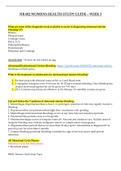
NR 602 WOMENS HEALTH STUDY GUIDE – WEEK 5 What are some of the diagnostic tools available to assist in diagnosing abnormal uterine bleeding? (7) History Physical exam Cytologic exam Pelvic U/S Endometrial Biopsy Hysteroscopy Dilatation and Curettage Anovulation - Ovaries do not release an egg Abnormal/Dysfunctional Uterine Bleeding- What is the treatment in adolescents for dysfunctional uterine bleeding? 1. Exclude preg with physical exam, pelvic u/s and blood tests. 2. Conjugated estrogens every 4-6 hours for 14-212days controls bleeding. Once bleeding has stoped medroxyprogesterone can be given for 7-10 days 3. OCs-3-4 times usual dose are effective; cyclic therapy 3-6 monthly courses are given List and define the 7 patterns of abnormal uterine bleeding. 1. Menorrhagia (hypermenorrhea)-is heavy or prolonged, presence of clots may signify excessive bleeding. 2. Hypomenorrhea (cryptomenorrhea)-light flow, sometimes only spotting. 3. Metrorrhagia (intermenstrual bleeding)-occurs at any time between menstrual periods. 4. Polymenorrhea-periods occur too frequently 5. Menometrorrhagia-occurs at irregular intervals. Amount and duration vary. Sudden onset of irregular bleeding may indicate malignant tumors or complications of pregnancy. 6. Oligomenorrhea-periods that occur more than 35 days apart. Amenorrhea is diagnosed if no period occurs for more than 6 months. 7. Contact bleeding (postcoital bleeding) considered a sign of cervical cancer until proven otherwise. All Menstrual Cycle Phases- Menstrual cycle has three phases • Menstrual phase • Proliferative phase • Secretory phase ↑ Progesterone The Ovulatory Phase of the menstrual cycle occurs in the middle of your menstrual cycle. An increase in the luteinizing hormone (LH) level causes the mature follicle to burst and release the egg, usually around day 14. This is what is commonly called ovulation Ovulation is the release of a mature egg from the surface of the ovary. This usually occurs mid-cycle, around two weeks or so before menstruation starts. During the follicular phase, the developing follicle causes a rise in the level of estrogen. The hypothalamus in the brain recognizes these rising levels and releases a chemical called gonadotrophin-releasing hormone (GnRH). This hormone prompts the pituitary gland to produce raised levels of luteinizing hormone (LH) and FSH. Within two days, ovulation is triggered by the high levels of LH. The egg is funneled into the fallopian tube and toward the uterus by waves of small, hair-like projections. The life span of the typical egg is only around 24 hours. Unless it meets a sperm during this time, it will die. When you want to have a baby you can improve your chance of getting pregnant if you know about ovulation and the ‘fertile window’ in the menstrual cycle. Read more on ovulation and fertility window. The follicular phase starts on the first day of menstruation and ends with ovulation. Prompted by the hypothalamus, the pituitary gland releases follicle stimulating hormone (FSH). This hormone stimulates the ovary to produce around five to 20 follicles (tiny nodules or cysts), which bead on the surface. Each follicle houses an immature egg. Usually, only one follicle will mature into an egg, while the others die. This can occur around day 10 of a 28-day cycle. The growth of the follicles stimulates the lining of the uterus to thicken in preparation for possible pregnancy. Luteal phase During ovulation, the egg bursts from its follicle, but the ruptured follicle stays on the surface of the ovary. For the next two weeks or so, the follicle transforms into a structure known as the corpus luteum. This structure starts releasing progesterone, along with small amounts of estrogen. This combination of hormones maintains the thickened lining of the uterus, waiting for a fertilized egg to stick (implant).
Escuela, estudio y materia
- Institución
- NR 602 WOMENS HEALTH STUDY GUIDE
- Grado
- NR 602 WOMENS HEALTH STUDY GUIDE
Información del documento
- Subido en
- 14 de diciembre de 2021
- Número de páginas
- 5
- Escrito en
- 2022/2023
- Tipo
- Examen
- Contiene
- Preguntas y respuestas
Temas
-
nr 602 womens health study guide – week 5
-
what are some of the diagnostic tools available to assist in diagnosing abnormal uterine bleeding 7 history physical exam cytologic exam pelvic us endomet

Documento también disponible en un lote