Interpersonal Relationships
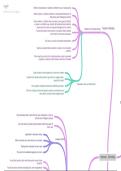
Lecture 1: relationships and well-being
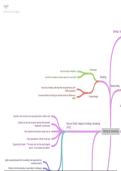
Why study relationships? Humans as social animals
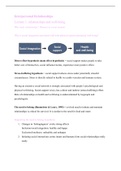
Why is social integration associated with both physical and psychological well-being?
Direct effect-hypothesis (main effect hypothesis) = social support makes people to take
better care of themselves, social influence/norms, experience more positive effect.
Stress-buffering hypothesis = social support reduces stress under potentially stressful
circumstances. Stress is directly related to health via cardio-vascular and immune system.
Having an extensive social network is strongly associated with people’s psychological and
physical well-being. Social support is key; has a direct and indirect (stress-buffering) effect.
Role of relationships on health and well-being is underestimated by laypeople and
psychologists.
The need to belong (Baumeister & Leary, 1995) = evolved need to initiate and maintain
relationships is critical for survival. It is similar to the need for food and water.
Supporting the need to belong-hypothesis
1. Changes in ‘belongingness’ evoke strong effects
Inclusion/social integration: healthy and happy
Exclusion/loneliness: unhealthy and unhappy
2. Initiating social interactions seems innate and humans form social relationships really
easily
Lecture 1: relationships and well-being
Why study relationships? Humans as social animals
Why is social integration associated with both physical and psychological well-being?
Direct effect-hypothesis (main effect hypothesis) = social support makes people to take
better care of themselves, social influence/norms, experience more positive effect.
Stress-buffering hypothesis = social support reduces stress under potentially stressful
circumstances. Stress is directly related to health via cardio-vascular and immune system.
Having an extensive social network is strongly associated with people’s psychological and
physical well-being. Social support is key; has a direct and indirect (stress-buffering) effect.
Role of relationships on health and well-being is underestimated by laypeople and
psychologists.
The need to belong (Baumeister & Leary, 1995) = evolved need to initiate and maintain
relationships is critical for survival. It is similar to the need for food and water.
Supporting the need to belong-hypothesis
1. Changes in ‘belongingness’ evoke strong effects
Inclusion/social integration: healthy and happy
Exclusion/loneliness: unhealthy and unhappy
2. Initiating social interactions seems innate and humans form social relationships really
easily