Summary Corporate Strategy
Business logic
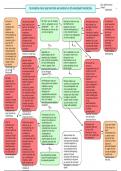
Business attractiveness: market profitability and competitive advantage (CA) → growth and size can be added
Grow the firm, add value relative to your competitors
Adding value: requires approach. More internally or externally focused?
Sell unit when: unattractive market and weak competitive position.
Competitive advantage: translates in low operation costs, higher prices, lower capital costs or all
three (measure by relative returns on capital employed).
• Weak business in attractive markets
- Risks: failing overtaking rival or rivals fight back (lower overall profitability). You might miss
capabilities to execute transformation. Risk is lower in fast growing markets.
- Strategy: grow business if market is fast growing and divest when market is mature. Or focus on
niches with capabilities. Or sell business
• Strong business in unattractive markets
Will still return above or around cost of capital.
Size
Bigger markets → offer more opportunity for investment (only attractive when returns are above
cost of capital)
Growth
B= ideal
A= worst: high growth in a market below cost of capital is worse than no growth at all (destroying
wealth. Most of the times necessary to invest in low return – high growth because returns are
expected to improve. It is an entry ticket. Can be attractive if they improve CA.
D= unattractive
C= hard to move. Returns above cost of capital if they have sufficient CA.
,Parenting logic
Adding value via HQ. Centralisation should improve performance.
Activities distracting attention from major sources → opportunity costs > benefits
Centralisation → more HQ managers interfering → higher risk of subtracted value
Distracting value when:
- You don’t understand the business
- Too distant to company’s location, slow moving
- Stock is plummeted (HQ risk averse)
Heartland matrix: positive balance between added and subtracted value. Practically weak: describes
what happened rather than predicting.
Ballast: stable and reliable. Sell units that consume scarce time of HQ without adding value
Value trap: opportunity to add value, but risk of subtracted value is high. Exit these businesses.
Reason to retain: learn how to reduce subtracted value so activity can be raised to ‘edge of
Heartland’.
Edge of Heartland: balance is unclear. Default position. Temporary home for businesses that have
potential to become part of Heartland.
Alien territory: by delays, lack of expertise
Adding value by: cross selling, centre R&D
Capital market logic
Affecting timing of decisions rather than composition. Imperfections and benefit from market valuation
State of capital markets → NPV of future cash flows= difference between present value of cash
inflows and outflows. Profitable for the future?
Stock market: How the market responses
Mainly used primarily to check decision made using the other two logics. Natural pairing with
parenting logic.
Fair Value Matrix: dynamic model, portfolio changes overtime. Decide whether or not acquire a firm.
, Strategy is a deliberate process: preserve the benefit (intentionally).
Business-level strategy: competitive strategy, CA, low cost, differentiation etc. Optimizing business.
What are we heading for, what are we doing? Focus is being better than others.
Corporate-level strategy: company-wide, create value for corporation as a whole, combining BU’s, how to
go about?
Portfolio= how to assess, what to look for and how to scout for growth? (research related)
Planning= coordination (having large HQ or not)
Single business firm
Advantages
Focus on same objective
Control
Agility in responding to changes
Optimization of resources
Disadvantages
All eggs in one basket
Growth rate, margins and profit decline when industry stagnates
High risk when needs change or innovations emerge
Risk of substitute appearance
Corporate strategy
- Value creation
- Configuration (multimarket scope: product, geographic, vertical boundaries. Doing more of the
same or different?)
- Coordination: HQ, different product groups, where to deploy resources
Key growth questions:
What is the growth target? Where and how to look for growth? How to construct portfolio? How to
execute?
Scope of the firm (triangle):
- Coordinating resources
- Coordinating relationships
- Boundaries of the firm: deciding which businesses belong to the firm
Ways for deciding when to invest:
External: Industrial Organisation Model of Superior Returns: deliberate: assemble skills
Internal: VRIO capabilities: RBV: assets → core competencies → VRIO → CA → enter market and face
competitors (decisions based on strengths)
Scale economies: increasing output of more of the same
Scope economies: cost economies from joining in the same company
Benefits: offsetting fixed costs, decreasing supply costs and increase market power
Business logic
Business attractiveness: market profitability and competitive advantage (CA) → growth and size can be added
Grow the firm, add value relative to your competitors
Adding value: requires approach. More internally or externally focused?
Sell unit when: unattractive market and weak competitive position.
Competitive advantage: translates in low operation costs, higher prices, lower capital costs or all
three (measure by relative returns on capital employed).
• Weak business in attractive markets
- Risks: failing overtaking rival or rivals fight back (lower overall profitability). You might miss
capabilities to execute transformation. Risk is lower in fast growing markets.
- Strategy: grow business if market is fast growing and divest when market is mature. Or focus on
niches with capabilities. Or sell business
• Strong business in unattractive markets
Will still return above or around cost of capital.
Size
Bigger markets → offer more opportunity for investment (only attractive when returns are above
cost of capital)
Growth
B= ideal
A= worst: high growth in a market below cost of capital is worse than no growth at all (destroying
wealth. Most of the times necessary to invest in low return – high growth because returns are
expected to improve. It is an entry ticket. Can be attractive if they improve CA.
D= unattractive
C= hard to move. Returns above cost of capital if they have sufficient CA.
,Parenting logic
Adding value via HQ. Centralisation should improve performance.
Activities distracting attention from major sources → opportunity costs > benefits
Centralisation → more HQ managers interfering → higher risk of subtracted value
Distracting value when:
- You don’t understand the business
- Too distant to company’s location, slow moving
- Stock is plummeted (HQ risk averse)
Heartland matrix: positive balance between added and subtracted value. Practically weak: describes
what happened rather than predicting.
Ballast: stable and reliable. Sell units that consume scarce time of HQ without adding value
Value trap: opportunity to add value, but risk of subtracted value is high. Exit these businesses.
Reason to retain: learn how to reduce subtracted value so activity can be raised to ‘edge of
Heartland’.
Edge of Heartland: balance is unclear. Default position. Temporary home for businesses that have
potential to become part of Heartland.
Alien territory: by delays, lack of expertise
Adding value by: cross selling, centre R&D
Capital market logic
Affecting timing of decisions rather than composition. Imperfections and benefit from market valuation
State of capital markets → NPV of future cash flows= difference between present value of cash
inflows and outflows. Profitable for the future?
Stock market: How the market responses
Mainly used primarily to check decision made using the other two logics. Natural pairing with
parenting logic.
Fair Value Matrix: dynamic model, portfolio changes overtime. Decide whether or not acquire a firm.
, Strategy is a deliberate process: preserve the benefit (intentionally).
Business-level strategy: competitive strategy, CA, low cost, differentiation etc. Optimizing business.
What are we heading for, what are we doing? Focus is being better than others.
Corporate-level strategy: company-wide, create value for corporation as a whole, combining BU’s, how to
go about?
Portfolio= how to assess, what to look for and how to scout for growth? (research related)
Planning= coordination (having large HQ or not)
Single business firm
Advantages
Focus on same objective
Control
Agility in responding to changes
Optimization of resources
Disadvantages
All eggs in one basket
Growth rate, margins and profit decline when industry stagnates
High risk when needs change or innovations emerge
Risk of substitute appearance
Corporate strategy
- Value creation
- Configuration (multimarket scope: product, geographic, vertical boundaries. Doing more of the
same or different?)
- Coordination: HQ, different product groups, where to deploy resources
Key growth questions:
What is the growth target? Where and how to look for growth? How to construct portfolio? How to
execute?
Scope of the firm (triangle):
- Coordinating resources
- Coordinating relationships
- Boundaries of the firm: deciding which businesses belong to the firm
Ways for deciding when to invest:
External: Industrial Organisation Model of Superior Returns: deliberate: assemble skills
Internal: VRIO capabilities: RBV: assets → core competencies → VRIO → CA → enter market and face
competitors (decisions based on strengths)
Scale economies: increasing output of more of the same
Scope economies: cost economies from joining in the same company
Benefits: offsetting fixed costs, decreasing supply costs and increase market power