

1
Week 1
LEC 1
Diversity (Galinsky et al. 2015)
● Benefits: Effective decision making, innovation, economic growth
● Challenges: Bias in recruitment, selection, promotion
History of diversity at workplace
● Workplace was domain of white males
● Assimilation of others into this environment (as opposed to integration) (Berry, 1997)
● Changes in population: changes in working population & in consumer base/clientele
Diversity on the work floor (Netherlands): Gender
● Low participation of women
● Few full-timers among women
● Few women in higher positions
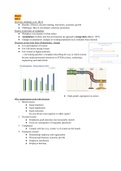
→ the leaking pipeline: a metaphor describing the way in which women
become underrepresented minorities in STEM (science, technology,
engineering and math) fields
● High gender segregation in sectors
Why organizations work with diversity
1. Moral reasons
● Equal treatment
● Equal opportunity
● Equal outcomes
Do you always want equality or rather equity?
2. Societal reasons
● Emphasize good outcomes (not necessarily moral)
● Focus on consequence of inequality (practical)
3. Compliance
● Comply with law (e.g. certain % of women on the board)
4. Synergetic reasons
● Relationship employee and organization
● Personal and business economic growth
● Employee satisfaction
● Employee harmony
, 2
5. Business-economic reasons
● Attract diverse employees
● Increase service to diverse populations
● Increase retention of employees
● Improve relations between employees
● Increase creativity & productivity → money
● Reduce lawsuits/legal challenges
● Enhance reputation
● “Companies with more than 30 percent women executives were more likely to
outperform companies where this percentage ranged from 10 to 30, and in turn these
companies were more likely to outperform those with even fewer women executives, or
none at all.
● More diversity = more money but progress is slow
Changing approach to diversity at work
Old perspective VS New perspective
● Focus on recruitment (quotas) VS Working with diversity
● Moral arguments VS Business-economic reasons
● Burden VS Benefit
● Ethnicity/gender VS all kinds of differences
● White males as guilty VS Universality of bias
● Learning about culture has advantages VS Learning about people as individuals
● “Golden” rule → treat other as you want to be treated yourself, you are the norm VS “Platinum”
rule → treat others as they want to be treated, they are the norm
● Assimilation VS Pluralism (integration)
SUMMARY
● Substantial and growing diversity in the population
● Less diversity in labor market – especially at highest levels
○ Differences in labor participation and position regarding gender, ethnicity, and age
● Organizations increasingly working with diversity
○ Different reasons
○ Shifting approach
Extra Article: Changing social contexts to foster equity in college science courses: an
ecological-belonging intervention (Binning et al., 2020)
, 3
Kanter (1976) - The Impact of Hierarchical Structures on the Work Behavior of Women and Men
● Absence of sex differenes in work behavior, instead that work attitudes and behavior are a
function of location in organizational structures
● Hierarchical arrangements must be changed to promote equity in the workplace
● Structural persepctive to social policy and intervention stretegy for the elimiantion of sex
discrimination: move beyond ‘sex differences’ and ‘sex roles’ and rather look at larger
orgnaizational context & opportunity and power structure. Avoid the ‘blame the victim’ approach,
instead look at the structuralist model.
● Effects of structure/ Structural variables:
○ Opportunity structure: hierarchical systems define which people are mobile, which will
advance, which positions lead to other positions and how many opportunities for growth
and change occur
○ Power structure: organizational systems define a network of power relations outside of
the authority within formal positions, the power network defines which people can be
influential beyond their occupational positions
○ Segregation: the distribution of social types and social characteristics among the
employees in different positions (e.g. age, race, sex) determine whether particular
individuals are relatively rare or common
■ Sex ratio: women more highly placed in hierarchies are often ‘tokens’ in groups
numerically dominated by men
● Opportunity structure, power structure, sex ratio shape women’s and men’s behavior
○ Women sometimes have lower aspirations, lesser involvement, greater concern with peer
group relations - so do men with limited or blocked mobility
○ Women are sometimes less preferred as leaders, generate lower morale among
subordinates, use directive-interfering leadership styles - so do men with little
organizational/system-wide power
○ Women in managerial/professional positions are sometimes isolated, stereotyped, overly
visible, cope by trying to limit their visibility - so are men who are ‘tokens’ and rare
among a majority of another social type
= structural position can account for what seems like sex differences. The differential distribution
across structural positions affects behavior - not how women differ from men
● Women are more often discriminated and at the bottom of opportunity and power hierarchies
BUT should be seen as a function of being at the bottom and not as a function of being a women
● ‘Primary’ socialization theories of women for family roles and men for work roles: state that
women tend to be less involved in their work and committed to it than men, more concerned with
relationships, lower levels of aspiration BUT Kanter argues this can be explained by the nature of
opportunity structure of organization
○ Women AND men in low-mobility/blocked-mobility situations have limited aspirations,
seek satisfaction in other activities, create sociable peer groups in which interpersonal
relationships are more important than work aspects
● Impact of opportunity structure on aspirations
○ Women tend to be concerned with local and immediate relationships → remaining loyal
to the local work group rather than identifying with the field as a whole and spring
promotions which cause them to leave the local environment
, 4
■ Correlation between professionalism and a ‘cosmopolitan’ rather than ‘local’
orientation. Exception was a female group of nurses. The more professional
nurses did not differ from others on their loyalty to their hospital (limited
visibility of their professional competence & limited mobility out of the current
organization → good peer relationships are important)
○ Women tend to have shorter chains of job opportunities, contain fewer advancement
opportunities (dead-end/short hierarchy jobs) → lower aspiractions, perceive themselves
as less competent in basic managerial skills, receive less encouragement from superiors to
improve, turn to others sources of satisfaction (Homall, 1974)
→ Women prioritize security, love, responsibility, happiness - not job advancement
○ Also for male workers ! Study showed that blue-collar men (hard manual labor) had
negative mobility perceptions (boring, repetitive work), low aspirations, seek satisfaction
in the family realm
○ Not only sex influences advnacement opporutnities but also age and education
○ Summary: Initial placement in an opportunity structure determines whether an individual
will develop the aspirations that maike further mobility possible. Disadvantaged
placement in organization/hierarchy → limited aspirations, less likely to be perceived as
promotable → vicious cycle. A social structural effect might be misleadingly
interpreted as a sex difference.
● Impact of opportunity structure on value for social relations
○ Peer relationships = motivational factor for men whereas hygiene factor for men (men
would miss but not push them to perform)
○ High mobility situation foster rivalry, instability in the composition of work groups,
upward comparisons, concerns with intrinsic job aspects VS Low-mobility< situation
foster camaraderie, stable composed groups, concerns with extrinsic rewards
○ Upward mobility as an institutionalized characteristic of a social system generates either
vertical or horizontal orientations
■ Favorable advancement opportunities → upward comparison, with one food out
of the current peer group = anticipatory socialization (non-group-members learn
to take on the values and standards of groups that they aspire to join)
■ Unfavorable advancement opportunities → comparison with peers and concern
with peer solidarity
= Limited/blocked mobility opportunities → women and men turn to relationships with
work peers.
● Impact of power on attention to social-emotional side of leadership
○ Tendency to give higher rating to men when they ‘initiated structure’; higher ratings to
women when they showed ‘consideration’ → shows raters reward people for
sec-role-appropriate behaviors
○ ‘Reward’ style is more effective when used by men. ‘Friendly-dependent’ style was
rather high for either sex. ‘Threat’ style effective for both sexes. = leadership styles do
not show much differantitation by sex
○ Structural explanation for preference for male leaders and for women’s occasional use of
authoritarian-controlling leadership styles. Nature of power structure of the organization
as a total system can account for
Week 1
LEC 1
Diversity (Galinsky et al. 2015)
● Benefits: Effective decision making, innovation, economic growth
● Challenges: Bias in recruitment, selection, promotion
History of diversity at workplace
● Workplace was domain of white males
● Assimilation of others into this environment (as opposed to integration) (Berry, 1997)
● Changes in population: changes in working population & in consumer base/clientele
Diversity on the work floor (Netherlands): Gender
● Low participation of women
● Few full-timers among women
● Few women in higher positions
→ the leaking pipeline: a metaphor describing the way in which women
become underrepresented minorities in STEM (science, technology,
engineering and math) fields
● High gender segregation in sectors
Why organizations work with diversity
1. Moral reasons
● Equal treatment
● Equal opportunity
● Equal outcomes
Do you always want equality or rather equity?
2. Societal reasons
● Emphasize good outcomes (not necessarily moral)
● Focus on consequence of inequality (practical)
3. Compliance
● Comply with law (e.g. certain % of women on the board)
4. Synergetic reasons
● Relationship employee and organization
● Personal and business economic growth
● Employee satisfaction
● Employee harmony
, 2
5. Business-economic reasons
● Attract diverse employees
● Increase service to diverse populations
● Increase retention of employees
● Improve relations between employees
● Increase creativity & productivity → money
● Reduce lawsuits/legal challenges
● Enhance reputation
● “Companies with more than 30 percent women executives were more likely to
outperform companies where this percentage ranged from 10 to 30, and in turn these
companies were more likely to outperform those with even fewer women executives, or
none at all.
● More diversity = more money but progress is slow
Changing approach to diversity at work
Old perspective VS New perspective
● Focus on recruitment (quotas) VS Working with diversity
● Moral arguments VS Business-economic reasons
● Burden VS Benefit
● Ethnicity/gender VS all kinds of differences
● White males as guilty VS Universality of bias
● Learning about culture has advantages VS Learning about people as individuals
● “Golden” rule → treat other as you want to be treated yourself, you are the norm VS “Platinum”
rule → treat others as they want to be treated, they are the norm
● Assimilation VS Pluralism (integration)
SUMMARY
● Substantial and growing diversity in the population
● Less diversity in labor market – especially at highest levels
○ Differences in labor participation and position regarding gender, ethnicity, and age
● Organizations increasingly working with diversity
○ Different reasons
○ Shifting approach
Extra Article: Changing social contexts to foster equity in college science courses: an
ecological-belonging intervention (Binning et al., 2020)
, 3
Kanter (1976) - The Impact of Hierarchical Structures on the Work Behavior of Women and Men
● Absence of sex differenes in work behavior, instead that work attitudes and behavior are a
function of location in organizational structures
● Hierarchical arrangements must be changed to promote equity in the workplace
● Structural persepctive to social policy and intervention stretegy for the elimiantion of sex
discrimination: move beyond ‘sex differences’ and ‘sex roles’ and rather look at larger
orgnaizational context & opportunity and power structure. Avoid the ‘blame the victim’ approach,
instead look at the structuralist model.
● Effects of structure/ Structural variables:
○ Opportunity structure: hierarchical systems define which people are mobile, which will
advance, which positions lead to other positions and how many opportunities for growth
and change occur
○ Power structure: organizational systems define a network of power relations outside of
the authority within formal positions, the power network defines which people can be
influential beyond their occupational positions
○ Segregation: the distribution of social types and social characteristics among the
employees in different positions (e.g. age, race, sex) determine whether particular
individuals are relatively rare or common
■ Sex ratio: women more highly placed in hierarchies are often ‘tokens’ in groups
numerically dominated by men
● Opportunity structure, power structure, sex ratio shape women’s and men’s behavior
○ Women sometimes have lower aspirations, lesser involvement, greater concern with peer
group relations - so do men with limited or blocked mobility
○ Women are sometimes less preferred as leaders, generate lower morale among
subordinates, use directive-interfering leadership styles - so do men with little
organizational/system-wide power
○ Women in managerial/professional positions are sometimes isolated, stereotyped, overly
visible, cope by trying to limit their visibility - so are men who are ‘tokens’ and rare
among a majority of another social type
= structural position can account for what seems like sex differences. The differential distribution
across structural positions affects behavior - not how women differ from men
● Women are more often discriminated and at the bottom of opportunity and power hierarchies
BUT should be seen as a function of being at the bottom and not as a function of being a women
● ‘Primary’ socialization theories of women for family roles and men for work roles: state that
women tend to be less involved in their work and committed to it than men, more concerned with
relationships, lower levels of aspiration BUT Kanter argues this can be explained by the nature of
opportunity structure of organization
○ Women AND men in low-mobility/blocked-mobility situations have limited aspirations,
seek satisfaction in other activities, create sociable peer groups in which interpersonal
relationships are more important than work aspects
● Impact of opportunity structure on aspirations
○ Women tend to be concerned with local and immediate relationships → remaining loyal
to the local work group rather than identifying with the field as a whole and spring
promotions which cause them to leave the local environment
, 4
■ Correlation between professionalism and a ‘cosmopolitan’ rather than ‘local’
orientation. Exception was a female group of nurses. The more professional
nurses did not differ from others on their loyalty to their hospital (limited
visibility of their professional competence & limited mobility out of the current
organization → good peer relationships are important)
○ Women tend to have shorter chains of job opportunities, contain fewer advancement
opportunities (dead-end/short hierarchy jobs) → lower aspiractions, perceive themselves
as less competent in basic managerial skills, receive less encouragement from superiors to
improve, turn to others sources of satisfaction (Homall, 1974)
→ Women prioritize security, love, responsibility, happiness - not job advancement
○ Also for male workers ! Study showed that blue-collar men (hard manual labor) had
negative mobility perceptions (boring, repetitive work), low aspirations, seek satisfaction
in the family realm
○ Not only sex influences advnacement opporutnities but also age and education
○ Summary: Initial placement in an opportunity structure determines whether an individual
will develop the aspirations that maike further mobility possible. Disadvantaged
placement in organization/hierarchy → limited aspirations, less likely to be perceived as
promotable → vicious cycle. A social structural effect might be misleadingly
interpreted as a sex difference.
● Impact of opportunity structure on value for social relations
○ Peer relationships = motivational factor for men whereas hygiene factor for men (men
would miss but not push them to perform)
○ High mobility situation foster rivalry, instability in the composition of work groups,
upward comparisons, concerns with intrinsic job aspects VS Low-mobility< situation
foster camaraderie, stable composed groups, concerns with extrinsic rewards
○ Upward mobility as an institutionalized characteristic of a social system generates either
vertical or horizontal orientations
■ Favorable advancement opportunities → upward comparison, with one food out
of the current peer group = anticipatory socialization (non-group-members learn
to take on the values and standards of groups that they aspire to join)
■ Unfavorable advancement opportunities → comparison with peers and concern
with peer solidarity
= Limited/blocked mobility opportunities → women and men turn to relationships with
work peers.
● Impact of power on attention to social-emotional side of leadership
○ Tendency to give higher rating to men when they ‘initiated structure’; higher ratings to
women when they showed ‘consideration’ → shows raters reward people for
sec-role-appropriate behaviors
○ ‘Reward’ style is more effective when used by men. ‘Friendly-dependent’ style was
rather high for either sex. ‘Threat’ style effective for both sexes. = leadership styles do
not show much differantitation by sex
○ Structural explanation for preference for male leaders and for women’s occasional use of
authoritarian-controlling leadership styles. Nature of power structure of the organization
as a total system can account for

