RNSG 2539 - Exam 3 Review.
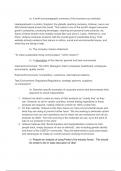
RNSG 2539 - Exam 3 Review/RNSG 2539 - Exam 3 Review. Pathophysiology Damage in SCI ranges from transient concussion (from which the patient fully recovers) to contusion, laceration, and compression of the spinal cord tissue (either alone or in combination), to complete transection (severing) of the spinal cord (which renders the patient paralyzed below the level of the injury). The vertebrae most frequently involved are the 5th, 6th, and 7th cervical vertebrae (C5–C7), the 12th thoracic vertebra (T12), and the 1st lumbar vertebra (L1). Clinical Manifestations Manifestations of SCI depend on the type and level of injury (see Chart 68-7). The type of injury refers to the extent of injury to the spinal cord itself. A complete spinal cord lesion signifies loss of both sensory and voluntary motor communication from the brain to the periphery, resulting in paraplegia or tetraplegia (Bader et al., 2016). Incomplete spinal cord lesion denotes that the ability of the spinal cord to relay messages to and from the brain is not completely absent. Sensory and/or motor fibers are preserved below the lesion. Injuries are classified according to the area of spinal cord damage: central, lateral, anterior, or peripheral (see Chart 68-
Escuela, estudio y materia
- Institución
- San Antonio College
- Grado
- RNSG 2539
Información del documento
- Subido en
- 19 de noviembre de 2021
- Número de páginas
- 83
- Escrito en
- 2021/2022
- Tipo
- Examen
- Contiene
- Preguntas y respuestas
Temas
-
rnsg 2539 exam 3 review

Documento también disponible en un lote