Romanticism
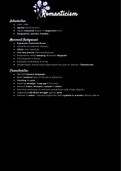
Introduction
● 1780 - 1850
● Against Neoclassicism
● Depict emotional matter in imaginative form
● Imagination, emotion, freedom
Movement Background
● Expression emotional drama
● Artworks of emotional intensity
● Colour very important
● Line less precise than neoclassicism
● Composition relies sweeping dramatics diagonals
● Full movement & drama
● Emotional involvement of artist
● Enlightenment create wave emotionalism last part of century = Romanticism
Characteristics
● Derived romance languages
● Refer medieval tales of chivalry & adventure
● Yearning for past
● Haunting nostalgic “Long ago & far away”
● Interest exotic, dramatic, unusual & violent
● Emotional expression & sentiment possibilities wide range subjects
● Supported individuals struggle against state
● Interest in colour - emotive properties, both symbolic & creation vibrant effects
Introduction
● 1780 - 1850
● Against Neoclassicism
● Depict emotional matter in imaginative form
● Imagination, emotion, freedom
Movement Background
● Expression emotional drama
● Artworks of emotional intensity
● Colour very important
● Line less precise than neoclassicism
● Composition relies sweeping dramatics diagonals
● Full movement & drama
● Emotional involvement of artist
● Enlightenment create wave emotionalism last part of century = Romanticism
Characteristics
● Derived romance languages
● Refer medieval tales of chivalry & adventure
● Yearning for past
● Haunting nostalgic “Long ago & far away”
● Interest exotic, dramatic, unusual & violent
● Emotional expression & sentiment possibilities wide range subjects
● Supported individuals struggle against state
● Interest in colour - emotive properties, both symbolic & creation vibrant effects