NR 602 MID TERM STUDY GUIDE COMPLETE
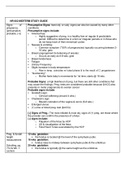
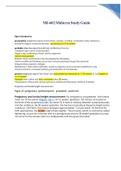
NR 602 MID TERM STUDY GUIDE COMPLETE SOLUTIONS NR 602 MID TERM STUDY GUIDE Signs of pregnancy. (presumptive, probable, (+)) Presumptive Signs: least obj. or subj. signs;can also be caused by many other conditions Presumptive signs include: • Amenorrhea: o Highly suggestive of preg. in a healthy fem w/ regular & predictable period. Difficult to determine in a fem w/ irregular periods or in those who do not keep track of their menstrual cycles • Nausea & vomiting: o Common symptom (~50% of pregnancies) typically occurring between 2- 16 wks. gest • Breast engorgement & darkening of areolas: o Occurs as early as 6-8 wks. gest • Breast tenderness • Fatigue • Urinary Frequency • Slight increase in body temperature: o Rise in temp. coincides w/ luteal phase & is the result of progesterone • “Quickening”: o Mother feels baby’s movements for 1st time; starts @ 16 wks. Probable Signs: a high likelihood of preg. but there are still other conditions that may cause the findings. Preg. tests are considered probable because β-hCG also presents in molar pregnancies & ovarian cancer Probable signs include: • Goodell’s sign: o Cervical softening (around 4 wks.) • Chadwick’s sign: o Blueish coloration of the vagina & cervix (6-8 wks.) • Enlarged uterus • (+) urine or blood preg. test (β-hCG) [+] Signs of Preg.: The most reliable & most obj. signs of (+) preg. are those where the provider can confirm the presence of a fetus (+) signs include: o Palpation of the fetus by HCP o US & visualization of the fetus o Fetal Heart Tones auscultated by the HCP Preg. & fundal height measurement Schuiling, pg. 774 & Wk. 1 Lecture 12 wks. gestation: • the fundus is located @ the level of the symphysis pubis. 16 wks. gestation: • fundus rises to midway between symphysis pubis & the umbilicus 20 wks. gestation: • the fundus is typically @ the same height as the umbilicus 20 wks. gestation: the fundus enlarges approx. 1cm/wk. As the time for birth approaches, the fundal height drops slightly. • This process, which is commonly called lightening, occurs for a woman who is a primigravida around 38 weeks’ gestation but may not occur for the woman who is a multigravida until she goes into labor 25-35 wks. gestation: Measure the distance between the upper edge of pubic symphysis & the top of the uterine fundus w/ a tape measure. Fundal height in centimeters equals the number of gestational weeks (+/- 2cm). For example, a 28- wk. gestation fetus should have a fundal height that measures between 26 & 30cm. Naegele’s rule The due date or expected date of confinement (EDC) can be calculated using Naegele’s Rule • Begin on the 1st day of the last menstrual period (LMP), subtract 3 mos., add 7 days, & then add 1 yr. Example LMP: February 14, 2015 Subtract 3 mos. (Great Scott x 3): November 14, 2014 Add 7 days (N-A-E-G-E-L-E): November 21, 2014 Add 1 bear (year): November 21, 2015 Hematological Nonpregnant Fem., Ages 19–65 changes during preg. Schuiling, pg. 778 TABLE 29-3 Lab Value Changes in Preg. o Hgb: 12–16 g/dL o Hct: 37–47% o RBC: 3.5–5.5/mm3 o WBC: 4.5–11/mm3 1st Trimester o Hgb: 11.6–13.9 g/dL o Hct: 31–41% o RBC: 3.4–5.2/mm3 o WBC: 4–13/mm3 2nd Trimester o Hgb: 9.7–14.8 g/dL o Hct: 30–39% o RBC: 2.8–4.5/mm3 o WBC: 6–14/mm3 3rd Trimester o Hgb: 9.5–15 g/dL o Hct: 28–40% o RBC: 2.7–4.4/mm3 o WBC: 6–17/mm3 Indications & contraindications for prescribing combined estrogen vs. progesterone- only birth control Combined Hormonal Contraceptives (COCs) • Most COCs contain 10-35 mcg of ethinyl estradiol & 1 of several different progestins. • Drospirenone has a mild K+-sparing diuretic effect; K+ levels checked during the 1st cycle in fem. using ACE inhibitors, chronic daily NSAIDs, angiotensin-II receptor antagonists, K+-sparing diuretics, heparin, or aldosterone antagonists. • Fem. w/ conditions that predispose them to hyperkalemia should not use drospirenone. COC Disadvantages: • Increase the risk of VTE. • May BP in some through an in plasma angiotensin. • HTN is a cofactor in the dev of CV disease • development of benign hepatocellular adenomas, this SE is very rare w/ low-dose pills. • a slightly risk of develop breast cancer; in the incidence of cervical cancer • Mood changes, depression, anxiety, irritability • Decreased libido & anorgasmia is unusual, but possible • No protection against STDs or HIV • N/V especially in the first few cycles • Breast tenderness or pain; HA may increase Estrogen Specific SEs include: • nausea • cervical ectopy & leukorrhea • telangiectasis • chloasma (darkening of sun-exposed skin) • growth of breast tissue (ductal tissue or fat deposition) • increased cholesterol content w/in the bile (can lead to gallstones) • benign hepatocellular adenomas/changes in the clotting cascade. Effects specific to the androgenic impact of progestins include • appetite & subsequent weight gain; mood changes & depression • fatigue; complexion changes; changes in carb metabolism • LDL & HDL cholesterol; libido; pruritus. Effects that can be either estrogen or progestin related include • HA; HTN; breast tenderness. COC Benefits • risk of ovarian cancer (by 20% for each 5 yrs. of COC use) • risk of endometrial cancer by approximately 50%. • rates of PID requiring hospitalization, fewer ectopic pregnancies, & incidence of endometriosis. • may Tx or improve anemia; Increased bone mineral density • Decreased pain & frequency of sickle cell disease crises • Reduces risk of ectopic preg. • Effective to treat acne, hirsutism & other androgen excess/sensitivity states • Reduced vasomotor symptoms & effective contraception in perimenopausal fem. • Decreased menstrual cramps & pain w/ more predictable menses • Can be used to manipulate the timing of menses • Effective Tx for mittelschmerz, dysmenorrhea, endometriosis, premenstrual symptoms, Progestin-only contraceptives: include the progestin-only pill (POP), injection/implant/ 3 progestin-IUD • are used continuously; no hormone-free interval • Minimal effects on coagulation factors, BP, or lipid levels & are generally considered safer for fem. w/ contraindications to estrogen, such as CV risk factors, migraine w/ aura, or a hx of VTE • do not provide the same cycle control as methods containing estrogen, & unscheduled bleeding is common w/ all progestin-only methods. • unscheduled bleeding occurs most frequently during the first 6 mos., w/ a substantial number of users becoming amenorrheic by 12 mos. • Overall blood loss decreases over time • protective against iron-deficiency anemia. • All are likely to improve menstrual symptoms, including dysmenorrhea, menorrhagia, premenstrual syndrome, & anemia • The thickening of cervical mucus is protective against PID. Progestin-Only-Pills (POP) • contain 0.35 mg of norethindrone. Each pill contains active ingredients; there is no hormone-free interval • Must be taken @ the same time each day; BC effect ends immediately upon d/c • have the fewest contraindications of all hormonal methods. • combo w/ rifampin or rifabutin effectiveness • POPs are a safe method for many fem. who cannot take estrogen for medical reasons. Similarly, fem. who are sensitive to even low estrogen pills, as manifested by nausea, breast tenderness, or HTN, but who still want an ORAL contraceptive, may do well on POPs. Progestin Injection • DMPA is safer than combo products overall & can be used by fem. who are not candidates for estrogen contraceptives • associated w/ an incidence of wt. change & irregular menstrual bleeding. • risk for osteoporosis r/t low estrogen. • Black-Box Warning for Depo-Provera: caution use 2yrs when other methods available; Bone density loss may extend beyond the duration of Tx. • Delays to return to fertility may also occur w/ IM progestin use. Intrauterine Progestin • Mirena: releases 20 mcg of levonorgestrel daily & can be left in place for 5 yrs. • many fem. experience a notable difference in menstrual flow or amenorrhea that may be more pronounced over time. • Normal endometrial function typically returns w/in 1-3 mos. after d/c Progestin Implants • Implanon provides contraception for up to 3 yrs. Menstrual cycle physiology The highest risk of preg. is in the 48 hrs. immediately preceding ovulation Vaccines during preg. Recommended Each Preg. • Influenza (flu)a o Rationale: Pregnant fem. @ risk for flu-related complications. o Timing: Anytime in preg. when vaccine available • Tetanus, diphtheria, pertussis (Tdap) o Rationale: After maternal vaccination, antibodies cross the placenta & decrease the risk of pertussis infection in the newborn. o Timing: 3rd trimester (ideally 27–36 wks.’ gestation) Advised If @ Risk • Hepatitis B o Rationale: If the woman is @ risk for acquiring HBV, she should be vaccinated. Indications include risk of occupational exposure to blood, Tx for a STI, 1 sex partner in the past 6 mos., recent IV drug use, & HBsAg + sex partner. o Timing: 3 injections beginning @ any point in gestation Contraindicated • Measles, mumps, rubella o Rationale: This live virus vaccine has a (theoretical) risk to the fetus. • Varicella o Rationale: This live virus vaccine has a (theoretical) risk to the fetus. Emergency contraception A dedicated combined ECP product is not available in United States, but numerous COCs can be used as combined ECPs • COCs containing norgestrel are preferable to those w/ norethindrone, as failure rates are slightly higher w/ norethindrone The Yuzpe (ECP) regimens • may be used w/in 120 hrs. of UPI • dramatic decline in effectiveness w/ time & should be used ASAP after an event of UPI. • consists of combined ECPs that must contain @ least 100 mcg of ethinyl estradiol & 0.50 mg of levonorgestrel, repeated in 12 hrs.. levonorgestrel (ECP) regimens • may be used w/in 120 hrs. of UPI • dramatic decline in their effectiveness w/ time & should be used ASAP after an event of UPI. • Contain either a 1.5-mg single dose (Plan B 1-Step) or 2-doses of 0.75 mg taken 12 hrs. apart (Next Choice & Plan B). • Fem. can take both doses in the 2-dose products (Next Choice & Plan B) as a single dose. • Available OTC to fem. & men 17yrs & older; fem. 16 need Rx • More effective than the Yuzpe regimen & have fewer SEs. ulipristal acetate emergency contraceptive pill (ECP) regimens • may all be used w/in 120 hrs. of UPI copper IUD • may all be used w/in 120 hrs. of UPI. Tier 1, 2 & 3 methods of contraception & efficacy Tier 1 methods • The most effective methods of contraception. Failure rate 1%. Tier 1 Includes: • Intrauterine Devices (IUD) • Paragard (copper T) failure ~ 0.8%; Mirena (levonorgestrel) failure ~ 0.2% • Depot Medroxyprogesterone Acetate (DMPA) • Depo-Provera: Fail rate ~ 6% • Progestin Implants • Implanon failure ~ 0.05% • Sterilization • Male: failure rate ~ 0.15%; Female: Failure rate ~ 0.5% The tier 2 methods • Failure rate between 2-3%, depending upon your reference • Include hormonal contraception other than LNG-IUSs & implanted devices. These include: • Combined ORAL contraceptive (COC) pills: Fail rate ~ 9% • ORAL contraceptive pill- progestin only "Minipill": Failure Rate ~ 9% • Emergency contraception • Transdermal patch: Failure rate ~ 9% • Ring: Failure rate ~ 9% Tier 3 methods The least reliable methods failure rate of up to roughly 20%. • Barrier methods • Spermicides: failure rate ~ 28% • Sponge: ▪ failure rate ~ 24% for Parous fem.. ▪ failure rate ~12% for Nulliparous fem. • Condoms ▪ Male: failure rate ~ 18%; Female: failure rate ~ 21% • Diaphragm: failure rate ~ 12% • natural family planning • Failure Rate ~24% • coitus interruptus • failure rate is around 22% Etiolog of ame y, dx, & Tx norrhea Amenorrhea simply means absence of menses & is part of the spectrum of ovulatory disorders classified as AUB-O. • The most common causes of amenorrhea are preg., hypothalamic amenorrhea, & PCOS fem. meeting any of the following criteria should be evaluated for amenorrhea: • No menses by age 14 in the absence of G&D of secondary sexual characteristics • No menses by age 16 regardless of the presence of normal G&D of secondary sexual characteristics • In fem. who have menstruated previously, no menses for an interval of time equivalent to a total of @ least three previous cycles, or 6 mos. Primary amenorrhea is the failure to begin menses by the age of 16. Any girl who has not reached menarche by age 15 yrs. or who has not had a menses w/in 3 yrs. of thelarche should be evaluated • Primary amenorrhea in a young woman may be indicative of HPOA disorder or anatomic factors, such as outflow tract obstruction. Secondary amenorrhea is defined as 3 mos. without a menses once menses has been established. any woman experiencing 3 mos. of amenorrhea once the menses is established should be evaluated Physiologic causes of amenorrhea include anatomic defects, ovarian failure, chronic anovulation, anterior pituitary disorders, & central nervous system disorders. General tests to consider for all types of AUB include the following: A preg. test (if the woman is of childbearing age): • Qualitative urine human chorionic gonadotropin (hCG). • Serial serum quantitative β-hCG to dx specific preg. disorders. Complete blood count (CBC): • Order if indicated or anemia is suspected. Thyroid-stimulating hormone (TSH): • Order if hypothyroidism or hyperthyroidism or other thyroid abnormality is suspected. Prolactin level: • Order if the woman reports headaches & has galactorrhea &/or peripheral vision changes. Etiology, dx, & Tx of dysmenorrhea (primary vs. secondary) ************* Dysmenorrhea can be classified into 2 categories: 1. Primary- Cyclical menstrual pain w/ no identifiable pelvic disease 2. Secondary- Cyclical menstrual pain that results from pelvic pathology Primary: • almost always associated w/ ovulatory cycles; usually does not occur immediately @ menarche, but rather w/in the first 6 mos.. • Typical age of onset is between 16-25 yrs. & becomes more severe w/ age • Risk Factors: Age30; BMI20; Smoking; Early menarche; History of sexual abuse; Premenstrual emotional symptoms; History of pelvic surgery; Depression • Pts usually present w/ cyclical pain that precedes or begins w/ menstrual flow & lasts for a few hrs. to a few days. • Pain is the primary complaint & is described as crampy or a dull ache usually in the midline of the lower abdomen which may radiate down the thighs & to the lower back. • Associated symptoms may include nausea & vomiting, diarrhea, headache & fatigue. • Physical exam should include a pelvic exam to check for pelvic infection, uterine or ovarian enlargement as well as other Abd masses - usually nonrevealing. • dx of EXCLUSION: secondary causes must be r/o before rendering the dx. • Primary dysmenorrhea is likely based on history as well as an unremarkable physical exam & a (-) preg. test. • NSAIDs are very effective in minimizing pain along w/ the application of heat over the abdomen. Combined ORAL Contraceptives (COCs) are also used in the Tx of primary dysmenorrhea. Secondary • pain due to an underlying pelvic pathology which may include, but is not limited to: PID, endometriosis, uterine fibroids & adenomyosis. Endometriosis is the MOST common cause of secondary dysmenorrhea. • Any pathology that causes irritation to the pelvic viscera may be a source of pain including bladder & bowel disorders. • Pain often begins a few days or several hrs. before menses starts. It is often relieved by menstrual flow & is described as a dull, continuous, diffuse pain over the lower abdomen; can also radiate down the thighs & to the lower back. • Testing should include ruling out preg. & sexually transmitted infections first, followed by ordering a transvaginal US which may identify pelvic abnormalities. • A definitive dx is made via laparoscopic biopsy & histology • The goal of medical management should include pain relief & cycle regulation: NSAIDS; heat application; COC’s • Conservative surgical management may be tried in fem. who do not respond to medication Tx which may include excision or destruction of the lesion(s) w/ laser or heat & lysis of adhesions if indicated. • Hysterectomy is reserved for fem. who have not responded to drug Tx or conservative surgery & who were not planning on becoming pregnant in the future. Differentiate between PMS & PMDD **the biggest difference between PMS & PMDD is both the number & type of symptoms. PMS Diagnostic Criteria • @ least 1 affective symptom plus 1 somatic symptom • Symptoms must occur during the 5 days prior to the onset of menstrual flow • Relief of symptoms must occur w/in 4 days of menses • Symptoms do not return until the luteal phase (cycle day #13 or after) • Symptoms should be have occurred 3 menstrual cycles • General medical conditions that mimic those symptoms of PMS & PMDD must be ruled out • The patient must report a (-) impact on social or economic function (i.e., ability to work) PMDD Dx requires @ least 5 symptoms from the following list, w/ @ least 1 of those symptoms from the first 4 symptoms listed: + Depressed mood or hopelessness + Anxiety or tension + Lability + Increased or persistent anger, irritability or interpersonal conflicts • Decreased pleasure or interest; Difficulty concentrating; Lethargy • Change in appetite; Insomnia or hypersomnia • Feeling overwhelmed or out of control • Breast tenderness or swelling; Abd bloating; Headache • Joint or muscle pain; Weight gain; Extremity swelling Abn. uterine bleeding terminology Amenorrhea- absence of menses Menorrhagia- Heavy menses Menometrorrhagia- Abn. & heavy menses Metrorrhagia - “irregular” intermenstrual bleeding or bleeding between menstrual periods Post-Coital-bleeding that occurs after intercourse Post-Menopausal -bleeding that occurs after a menopausal woman has not had a period for @ least 12 mos. Structural vs. Nonstructural etiologies of abn. uterine bleeding Structural abnormalities -PALM Non-structural abnormalities – COEIN Structural abnormalities associated w/ AUB coincide w/ the acronym “PALM” & include: Polyps • Cervical polyps are common, benign growths coming from the surface of the cervix which are smooth & bleed easily. Cervical polyps are most often associated w/ post-coital bleeding but may also cause intermenstrual bleeding. • Endometrial polyps are localized outgrowths of the endometrium which can result in heavy menstrual bleeding, intermenstrual bleeding & post- menopausal bleeding Adenomyosis • Adenomyosis is the presence of endometrial tissue in the myometrium of the uterus (see also dysmenorrhea content). Adenomyosis is a common cause of heavy menstrual bleeding. Leiomyoma • Leiomyomas are benign tumors that arise from uterine smooth muscle cells which contain fibrous tissue. Leiomyomas are more commonly known as uterine fibroids (see also dysmenorrhea content) & are responsible for heavy menstrual bleeding, intermenstrual bleeding, post-menopausal bleeding & irregular bleeding. Malignancy & hyperplasia • Cervical cancer is associated w/ intermenstrual bleeding & post-coital bleeding. • Endometrial cancer is associated w/ post-menopausal bleeding, heavy menstrual bleeding & irregular bleeding. Non-structural abnormalities which can cause AUB coincide w/ the acronym “COEIN” & include: Coagulopathy • Conditions causing coagulopathy which result in heavy menstrual bleeding include thrombocytopenia, chronic liver disease, leukemias, anticoagulant use & vonWillebrand’s disease Ovulatory dysfunction • Most common cause of AUB • Encompasses the 3 subcategories of anovulatory uterine bleeding, amenorrhea & ovulatory uterine bleeding • May result from endocrine disorders, obesity, excessive exercise & mental stress • Pts may present w/ periods of amenorrhea followed by scant or heavy menstrual bleeding Endometrial • Endometrial causes are associated w/ regular ovulatory cycles (predictable bleeding) that are without structural abnormality & presents w/ heavy menstrual bleeding • Infections may contribute to some forms of endometrial causes of abn. uterine bleeding Iatrogenic • Copper IUD can be assoc. w/ heavy menstrual bleeding • LNG-IUS can be associated w/ intermenstrual bleeding & irregular bleeding • Menopausal hormone therapy & hormonal contraception can cause intermenstrual & irregular bleeding • Other medications which can disrupt the HPOA (i.e., TCAs & phenothiazines) Not yet classified • Conditions that do not fit into any of the other aforementioned categories (i.e., arterial-venous malformation) Evaluation & Definitive management of AUB should focus on normalizing bleeding, correcting anemia (if present), preventing cancer & restoring quality of life for the patient. • The Tx options that are available for AUB are based on the cause & may include pharmacologic measures such as contraceptives, GnRHs, NSAIDs & antifibrinolytics. • Non-pharmacological interventions typically include surgical methods such as endometrial ablation, thermal endometrium destruction, uterine artery embolization & hysterectomy. • Referral is indicated for an unidentified cause of AUB, complicated cases, refractory Tx, & surgery. management of abn. uterine bleeding Breast mass types & diagnostic studies The most common benign breast masses are fibroadenomas & cysts. Lipomas, fat necroses, phyllodes tumors, hamartomas, & galactoceles may also be encountered. 1. Fibroadenomas: composed of dense epithelial & fibroblastic tissue, are usually nontender, encapsulated, round, movable, & firm. They are the most common type of breast mass in adolescents & young fem.. Their incidence w/ increasing age, but they still account for 12% of masses in menopausal fem. 2. Cysts: fluid-filled masses that are most commonly found in fem. aged 35 to 50 yrs. They are thought to result from cystic lobular involution. Although many of these lesions can be dismissed as benign simple cysts requiring intervention only for symptomatic relief, complex cystic & solid masses require biopsy. 3. Lipoma: an area of fatty tissue that may occur in the breast or other areas of the body, including the arms, legs, & abdomen. Lipomas typically occur in the later reproductive yrs. Fat necrosis is usually the result of trauma to the breast *a result of external force against the tissue (e.g., a seat belt in a motor vehicle accident) or subsequent to surgical manipulation of tissue 4. Phyllodes tumors: form from periductal stromal cells of the breast & present as a firm, palpable mass. These typically large & fast-growing masses account for fewer than 1% of all breast neoplasms. Phyllodes tumors, which can range from a benign mass to a sarcoma, are usually seen in fem. aged 30 to 50 yrs. 5. Hamartomas: are composed of glandular tissue, fat, & fibrous connective tissue; the average age @ presentation for these masses is 45 yrs. 6. Galactoceles: are milk-filled cysts that usually occur during or after lactation. They result from duct dilation & often have an inflammatory component Diagnostic Studies: • Palpable area of concern, order an US if 30yrs. Schuiling pg. 363 • Order a diagnostic mammogram w/ or w/out an US if she is 30 yrs. • If the mass is suspicious for malignancy & woman is least 30 yrs., order a mammogram & US • US helps to distinguish a cystic mass vs. solid mass o not as accurate as tissue sampling. • Mammography used to detect nonpalpable abn. o if appropriate screening age or has a solid mass. o Palpable masses may not be visible w/ diagnostic imaging tests • Biopsy is required to definitively ascertain whether a mass is solid versus cystic, & benign versus malignant. o A fine-needle aspiration (FNA) biopsy is a minimally invasive way to differentiate solid & cystic masses, provides for cytologic evaluation of a palpable mass. o FNA biopsy may also be therapeutic if the mass is filled w/ fluid. DDx for pelvic pain Schuiling pg.720 GYN Origin • Endometriosis; Fibroids; Uterine fibroids; Chronic PID; Dysmenorrhea, primary & secondary; Pelvic adhesions; Pelvic congestion; Mittelschmerz; Vulvodynia • Uterine prolapse; Ovarian cyst; Ovarian remnant syndrome; Adenomyosis; Ovarian cancer; Cervical cancer; Torsion of adnexa; Tubo-ovarian abscess; Ectopic preg.; Abortion, threatened or incomplete Non-GYN Origin GI: Irritable bowel syndrome (IBS); Diverticulitis; Bowel obstruction; Constipation; Gastroenteritis; Appendicitis; Colon cancer GU: Interstitial cystitis; UTI; Pyelonephritis; Urinary retention; Renal calculi; Ureteral lithiasis; Bladder neoplasm Musculoskeletal: Scoliosis; Radiculopathy; Arthritis; Herniated disk; Hernia; Abd wall hematoma Other: Aortic aneurysm; Pelvic thrombophlebitis; Acute porphyria; Abd angina; Psychiatric, depression; Somatization disorder; Prior or current physical or sexual abuse; Substance abuse Etiology, dx, & Tx of common breast disorders Mastalgia/mastodynia: ETIOLOGY • Mild cyclic Mastalgia a normal, physiologic condition caused by the hormonal changes of the menstrual cycle It is clearly linked to the reproductive cycle, w/ onset @ menarche, monthly cycling, & cessation @ menopause. • Mastalgia can also be caused by certain medications, including combined estrogen & progestin contraceptives (i.e., pills, vag. ring, & transdermal patch), hormone therapy (HT), antidepressants, digoxin, methyldopa, cimetidine, spironolactone, oxymetholone, & chlorpromazine DX: • Preg. testing if indicated by hx, b/c Mastalgia can be a sign of preg.. • A mammogram w/ US can be performed for fem. 30 yrs. • Targeted US is recom 30yrs. • helpful only to rule out the unlikely dx of cancer, b/c no radiologic findings associated w/ Mastalgia • Mammography or other appropriate imaging should also be considered for fem. w/ focal breast pain who have a family hx of early breast cancer or other breast cancer risk factors TX: • Reassurance is the first-line Tx for Mastalgia • Wearing a supportive & well-fitting bra • Reductions in caffeine & dietary fat • NSAIDs • Evening primrose oil & vitamin E supplementation- utility is controversial • Danazol, bromocriptine & tamoxifen have been found effective & used for severe cases, but the significant SEs have limited the acceptability of their use • Changing to contraceptive pill or hormone replacement therapy w/ less estrogen or progesterone may offer some relief associated w/ cyclic Mastalgia Nipple D/c: ETIOLOGY: • preg. & lactation, galactorrhea, intraductal papilloma, mammary duct ectasia, & cancer DX: • If bilateral, milky d/c, perform a preg. test. • If (-), obtain a serum prolactin level & TSH measurement o If hyperprolactinemia is present, MRI of the Sella turcica should be performed to r/o a pituitary prolactin-secreting tumor • Nipple d/c should be collected on a slide & sent for cyto according to recommended lab collection procedures • Spontaneous, unilateral, uniductal, & reproducible d/c on exam: o a mammogram & US should be performed if the 30 yrs. o If 30yrs., an US of the affected breast is recommended & possibly a diagnostic mammogram • Additional evaluation is based on imaging findings. • Referral to a surgeon for evaluation for duct incision may be offered. • If the d/c occurs only w/ manipulation, is multiductal, & is yellow, green, brown, or gray in color o pt. can be observed & advised to avoid nipple stimulation, w/ a f/u examination occurring in 3-4 mos. • Excision of the affected duct or ducts allows for definitive evaluation, remains the gold standard, & may also be therapeutic. TX: • Expression of colostrum during preg.: avoid nipple stimulation • Tx of galactorrhea unrelated to preg./lactation depends on the etiology. o Pituitary tumors may be tx’d surgically, w/ medications, or expectantly in certain circumstances o D/c medication that causes galactorrhea or treating hypothyroidism may resolve the d/c o Bromocriptine & cabergoline can be used to Tx galactorrhea, symptoms often recur upon d/c of meds; long-term therapy usually required • Intraductal papilloma’s w/o atypia that are solitary & 1 cm in size are generally not removed: multiple papilloma’s or a single papilloma 1cm Tx w/ duct excision • Mammary duct ectasia can be managed expectantly, or surgically tx’d w/ removal of the subareolar duct system if imaging shows focal thickening of the duct wall or if symptoms are severe. Clinical signs & symptoms of ectopic preg. **Ectopic preg. is a potentially life- threatening form of preg. complication resulting from implantation of the fertilized egg outside the uterus, usually in the fallopian tube Classic clinical triad: + Unilateral lower Abd pain or tenderness gradually becoming rigid, esp. if fallopian tube ruptured + Amenorrhea + Vag. bleeding • Initially may have normal signs of preg. • 1st trimester vag. bleeding w/ or without clots • Rt-sided shoulder pain d/t irritation of subdiaphragmatic phrenic nerve by blood • Shock if bleeding profusely & rapid hypotension, tachycardia; cardiac arrest • Fainting or dizziness • GI tract symptoms: nausea/vomiting • Pelvic exam findings: Slightly enlarged & soft uterus, Uterine or cervical motion tenderness, Adnexal mass palpated but difficulty determining if ipsilateral ovary + hCG level 3,000 mIU/mL, a gestational sac should be visible w/in the uterus. • Ectopic pregnancies tend to have slowly rising hCG levels that increase but do not double w/in 48 hrs.. Fem. w/ ectopic pregnancies need Tx to avoid tubal rupture that could lead to maternal death. • Management can include Outpt. medication therapy or Inpt. surgery; prompt referral can assist fem. in avoiding complications & preserving future fertility. Transfer of medical records can expedite Tx Breast cancer risk factors • Female; Advancing age • Personal hx of invasive Bca, DCIS, or LCIS; Family hx of invasive Bca *1st- degree relatives; Inherited detrimental genetic mutations • Biopsy-confirmed proliferative breast lesions w/ atypia • Dense breast tissue on mammogram • -dose radiation to chest *puberty or young adulthood • Menarche 12 yrs. • Menopause ≥55 yrs. • Nulliparity; 1st full-term preg. after age 30 • Current use of COCs & COC hormone therapy after menopause • Overweight or obese status after age 18; Physical inactivity • Consumption of 1+ ETOH beverages/day • Jewish ancestry (Ashkenazi); Place of birth *North America, Northern Europe* Breast cancer screening guidelines (USPSTF) American Academy of Family Physicians (AAFP) & US Preventative Services Task Force (USPSTF) • Decision to start screening mammography in fem. 40-49yrs. should be an individual 1. • Fem. who place higher value on the potential benefits than on potential harms can choose to begin screening Q 2yrs. • Fem. 50-74 yrs. • should undergo screening Q 2yrs. • Fem. 75 yrs. • screening is not recommended as current evidence is insufficient to assess the balance of benefits & harms Dx & Tx of non- STI vaginitis (vulvovaginal candidiasis, bacterial vaginosis) Vaginitis is primarily a clinical dx, but a complete H&P & lab evaluation is necessary for accurate dx Bacterial vaginosis is a gynecologic condition that is r/t alterations in the normal vag. flora & is the most common cause of vaginitis among reproductive-age fem. Risk Factors • positively associated w/ non-white ethnicity, low educational attainment, increasing lifetime sexual partners, & increased frequency of douching • Condoms & ORAL contraceptive pills are protective. Manifestations • Up to half of all fem. w/ BV have no symptoms. • If symptomatic, most fem. w/ BV will have a malodorous (“fishy odor”), homogenous, clear, white or gray vag. d/c that is reported more commonly after sexual intercourse & after completion of menses; labial &/or vulvar swelling & other s/s of inflammation are typically absent. • Symptoms may remit spontaneously. Dx Amsel’s Criteria: The presence of 3/4 of the following criteria provides sufficient evidence for a clinical dx: • Vag. pH 4.5, *most sensitive but least specific • The presence of “clue cells” (bacterial clumping upon the borders of epithelial cells) on wet mount examination. To meet the criteria for (+) clue cells, the clue cells should constitute @ least 20% of vag. epithelial cells viewed on saline microscopy (an occasional clue cell does not fulfill this criterion). • (+) amine, "whiff" or "fishy odor" test (liberation of biologic amines w/ or without the addition of 10% KOH). • Homogeneous, nonviscous, milky-white d/c adherent to the vag. walls. Gram’s Stain • The gold standard for dx of BV is vag. Gram’s stain w/ Nugent scoring • A normal Gram's stain should show lactobacillus only, or lactobacillus w/ few Gardnerella morphotypes. • Gram's stain showing a more mixed flora w/ relatively lower numbers of lactobacilli is consistent w/ bacterial vaginosis. Polymerase Chain Reaction • The recent FDA-approved BD MAX Vag. Panel test can detect the microorganisms responsible for causing BV, trichomoniasis, & vulvovaginal candidiasis. • multiplex, real-time PCR assay that amplifies the following DNA targets: Lactobacillus species (L. crispatus & L. jensenii), Gardnerella vaginalis, Atopobium vaginae, BV Assoc bacteria-2 (BVAB-2), & Megasphaera-1. • The dx of BV is based on the relative concentrations of these organisms, Additional Diagnostic Tests: • BD Affirm VPIII DNA hybridization probe (can detect T. vaginalis, C. albicans, & G. vaginalis); indirect testing for enzymatic activity associated w/ the organisms causing BV: PIP testing measures proline aminopeptidase activity & OSOM BV-blue testing measures sialidase • Neither culture nor cervical Pap testing is recommended due to low sensitivity & specificity Tx of BV in Nonpregnant Fem. • The 2015 STD Tx Guidelines recommend Tx in symptomatic fem. w/ BV. Recommended regimens include: • metronidazole 500 mg PO BID x for 7 days; • metronidazole gel 0.75%, 2 grams intra-vag. QD x 5 days; • clindamycin cream 2%, 2 grams intra-vag.@ bedtime x 7 days; alternative regimens include • Tinidazole2 g PO daily x 2 days • Tinidazole1 g PO daily x 5 days • Clindamycin 300 mg PO BID x 7 days • Clindamycin ovules 100mg @ bedtime x3 days o Clindamycin ovules use an oleaginous base that might weaken latex/rubber products. Use of such products w/in 72 hrs. following Tx not recommended. Screening of asymptomatic fem. for BV is generally not indicated, except in fem. undergoing surgical abortion or hysterectomy; treating BV in these fem. has been shown to decrease rates of post-surgical infections. Vulvovaginal Candidiasis Candida albicans is responsible for 85%-95% of cases in US. • commonly called a "yeast" infection, highest incidence during the reproductive yrs. • Most fem. dx w/ VC have an uncomplicated course of infection & Tx. complicated VC, which is defined as infection that is • moderate-severe, • Assoc w/ preg. or other conditions (immunosuppression, DM), • recurs 4x/yr. in immunocompetent fem.. • Complicated vulvovaginal candidiasis requires further dx testing w/ culture & may necessitate longer Tx courses or maintenance therapy w/ antifungal medications. Clinical Manifestations: • classically presents w/ pruritus (most common), vag. soreness, dyspareunia, vulvar burning, external dysuria, & abn. vag. d/c. • Vulvar & labial erythema, fissures, & satellite papular lesions may be present • Symptoms tend to flare prior to the onset of menses. • Vag. d/c is usually described as thick, white, & clumpy ("cottage-cheese- like"), but it may be watery, minimal, or not present, & there is typically little, if any, associated odor. Diagnostic Methods Most pts. w/ symptomatic VC can be readily dx on the basis of a microscopic examination of vag. secretions. Vag. pH • The vag. pH should be normal (3.8-4.5) in candidiasis. • If the pH is abnormally high ( 4.5), it suggests an alternative dx of BV or trichomoniasis, or a mixed infection. Potassium Hydroxide (KOH) & Saline Wet Mount Preparation & Microscopy • Visualization under microscopy of pseudohyphae (mycelia) &/or budding yeast (conidia) on 10% KOH wet prep examination or saline wet mount can confirm the dx of vulvovaginal candidiasis; • a wet mount KOH is preferred over the Gram's stain. Gram's Stain • may show large strongly gram-(+) staining yeasts, & in some instances, hyphae Culture • Fungal cultures are not useful for the routine dx of VC since (+) cultures may detect colonization rather than clinically significant infections. • In some circumstances, fungal culture may be useful to detect non-albicans species Tx of Uncomplicated Vulvovaginal Candidiasis Infections Recommended: OTC Intravaginal Agents • Clotrimazole 1% cream:5g intra-vag. x 7–14 days • Clotrimazole 2% cream: 5g intra-vag. daily x3 days • Miconazole 2% cream: 5g intra-vag daily x7 days • Miconazole 4% cream: 5g intra-vag daily for 3 days • Miconazole 100mg vag suppository: 1 suppos. daily x 7 days • Miconazole 200mg vag suppository: 1 suppos daily x 3 days • Miconazole 1,200mg vag suppository: 1 suppos, x 1 day • Tioconazole 6.5% ointment: 5g intra-vag in a single application o Note: This ointment is oil-based & might weaken latex condoms & diaphragms. Recommended: Prescription Intravaginal Agents • Butoconazole 2% cream: 5g intra-vag in a single application • Terconazole 0.4% cream: 5 g intra-vag daily x7 days • Terconazole 0.8% cream: 5 g intra-vag daily x3 days • Terconazole 80mg vag. suppository: 1 suppository daily x3 days o Note: This suppository is oil-based & might weaken latex condoms & diaphragms. Refer to condom product labeling for further information. Recommended: ORAL Agent • Fluconazole: 150mg PO in a single dose Etiology, incidence, transmission, clinical findings, dx, associated risks & Tx of STIs *Laws & regulations in all states require that persons dx’d w/ chlamydia be reported to public health authorities by clinicians, laboratories, or both. Chlamydia • the most common reportable bacterial STI in the US Incidence o higher in females; higher in 20-24yr-old age group o highest rates in all persons 20-24yrs., 2nd highest: 15-19yrs. o Increased in blacks o Increased in southern states Causative Organism: Chlamydia trachomatis Risk Factors: • New or multiple sexual partners • failure to use barrier methods of contraception. • Hx of or presence of another STI Transmission Chlamydia has a gram- [-]-like cell wall, but is not visible using a standard Gram’s stain. This organism is an obligate intracellular pathogen. During the life cycle of C. trachomatis, the elementary body is the infectious form & the reticulate body is the replicative form • Sexual transmission • mother---infant via the genital tract during birth. Clinical Findings Fem.: • Often asymptomatic (85%) • Mucopurulent cervicitis; Edematous, congested, friable cervix • Vag. d/c &/or vag. bleeding, breakthrough bleeding/spotting • D/c from Bartholin’s gland when milked • Cervical motion tenderness • Dysuria/pyuria; Urethritis; Pelvic pain/salpingitis • Higher risk of PROM & preterm delivery during pregnancy • Proctitis Men: • Dysuria (urethritis); Proctitis (rectal pain); Epididymitis (scrotal pain); Prostatitis (prostate pain); Penile d/c Infants: • Afebrile; Pneumonia; Conjunctivitis Diagnosis **Laws & regulations in all states require clinicians, laboratories, or both to report persons w/ gonorrhea to public health • Testing can be performed using first-catch urine or swab specimens from the endocervix or vagina • The nucleic acid amplification test (NAAT) *preferred method to dx chlamydial infection* o FDA approved for use on urine specimens from men & fem., urethral swabs in men, & endocervical swabs in fem. • Other screening tests: cell culture, direct immunofluorescence, enzyme immunoassay (EIA), & nucleic acid hybridization tests Tx of Urogenital Chlamydial Infections in Adolescents & Adults • Azithromycin 1 g PO in a single dose OR • Doxycycline 100 mg PO BID x 7 days Alternative Tx • Erythromycin base 500 mg PO QID x 7 days • Erythromycin ethyl succinate 800 mg PO QID x 7 days • Levofloxacin 500 mg PO once daily x 7 days • Ofloxacin 300 mg PO BID x 7 days Treating Partners • Partners within 60 days of onset of s/s or dx should be referred for Tx. • Partners w/ exposure 60 days preceding the onset of s/s or dx do not need to be routinely screened or tx’d. • Referral & Tx should occur for the most recent partner, even if contact occurred 60 days prior. AG: Pts. should be instructed to abstain from sex for 7 days after a single dose of azithromycin or until completion of a 7-day regimen of doxycycline; they should not resume sexual activity until all symptoms r/t the chlamydial infection have resolved & their sex partners have received Tx. Follow-Up The CDC does not recommend routine test-of-cure after completing therapy for chlamydia in nonpregnant persons, but all females & males should return for repeat testing approximately 3 mos. after receiving Tx for chlamydia due to the substantial risk of reinfection during the 3-month period following initial dx of chlamydial infection Gonorrhea • caused by the aerobic, gram- [-] diplococcus Neisseria gonorrhoeae • the second most reported bacterial STI in the US, after chlamydia Incidence • The rate of infection was slightly higher in men • rates are highest among aged 15-24 yrs. • The rate 12x higher in black fem. vs white fem. Transmitted by infection: authorities. • Sexual contact • Vertical transmission from infected mother - infant during childbirth • Penile-rectal contact Associated Risks • New or multiple sexual partners • failure to use barrier methods of contraception. • Hx of or presence of another STI • Recent gonococcal infection: due to reinfection from untreated partner Clinical findings Neisseria gonorrhoeae is a gram- [-] diplococcus that binds preferentially to mucus- secreting epithelial cells. Although N. gonorrhoeae can bind to other cell types, it utilizes its surface structures to bind to the urogenital epithelial cells Symptoms may manifest within 10 days of infection Men • Urethritis: purulent urethral d/c; blood-tinged • Dysuria; Penile edema; Acute epididymitis: testicular pain (unilateral) • Prostatitis: decreased stream, trouble initiating urine flow, frequency, painful ejaculation Fem. • Endocervical/vag. d/c: thin, purulent, & mildly odorous; usually minimal • Dysuria • Intermenstrual/abn. bleeding • Dyspareunia • Bartholin’s gland abscess • Symptoms of rectal infection (40% of infected fem. have rectal infection) • Symptoms of PID: abdominal pain, cervical motion tenderness, adnexal tenderness, or pain/fever Both Sexes • Rectal infection: rectal d/c, tenesmus, rectal burning, or itching • Pharyngeal infection: exudative pharyngitis, cervical lymphadenopathy • Conjunctiva infection: purulent d/c from eye (usually unilateral) Neonates • Most common: bilateral conjunctivitis (ophthalmia neonatorum); Eye pain, redness, purulent d/c (usually bilateral) Dx • NAATs are primary test used to dx N. gonorrhoeae genital infections. • Gram's stain can make a presumptive dx of gonorrhea. o In the clinical setting, Gram’s stain is most often performed on a male w/ purulent urethral d/c. • Culture is available for the detection of infection of the rectum & pharynx • Culture is recommended if antimicrobial resistance is a concern, esp. in HSV is not a reportable infection. cases of Tx failure Recommended Tx of Uncomplicated Gonococcal Infections of the Cervix, Urethra, & Rectum • Ceftriaxone 250 mg IM in a single dose + Azithromycin 1 g PO in a single dose o Note: As dual therapy, ceftriaxone & azithromycin should be administered together on the same day, preferably simultaneously & under direct observation. Alternative if Ceftriaxone is not available: • Cefixime 400mg PO in a single dose + Azithromycin 1g PO in a single dose Doxycycline is considered acceptable to use in place of azithromycin only in the context of azithromycin allergy. MANAGEMENT OF SEX PARTNERS • Recent partners 60 days preceding onset of s/s or dx should be referred for evaluation, testing, & presumptive dual Tx. • The most recent partner should be tx’d regardless of interval from dx. • To avoid reinfection, sex partners should be instructed to abstain from unprotected sex for 7 days after they & their sex partner(s) have completed antimicrobial Tx & symptoms have resolved. Test of Cure/Repeat Testing • All pts. dx’d w/ gonorrhea should have repeat testing in 3 mos. at the anatomic site of exposure, regardless of whether they have symptoms HSV • incurable viral infection characterized by painful vesicular eruptions of the skin & mucosa of the genitals. • Genital HSV is the leading cause of genital ulcer disease worldwide. • Genital HSV is among the most prevalent STI in US HSV-1 • more commonly associated w/ gingivostomatitis & ORAL ulcers (fever blisters) • can potentially cause genital infection • transmitted either nonsexual or through ORAL–genital contact HSV-2 • cause of most cases of genital HSV in US • HSV-2 is usually transmitted sexually • more commonly Assoc w/ genital lesions • infection significantly the risk of fem. acquiring HIV Incidence • At least 50 million people in the US are infected w/ HSV type 1 or 2 • 15.7% of US adults are infected w/ HSV-2 • Fem. Men • Incidence of HSV-2 is highest in black people Risk Factors • Sexual activity • Use of immunosuppressive medication • HIV infection Transmission • Transmitted by direct contact w/ active lesions or w/ virus-containing fluid • An asymptomatic patient can be infectious while shedding virus • Usual incubation period is 2-12 days Clinical Manifestations Primary infection: • Initial infection may be asymptomatic • Painful ulceration(s) • Hyperesthesia; Headache; Malaise; Myalgia • Dysuria; Lymphadenopathy • Localized pruritus Recurrent infections: • Prodrome of pain, burning, &/or paresthesia over area of eruption • Burning genital pain • Lesions (vesicular or ulcerative) that resolve within 7-10 days Dx: • physical exam cannot distinguish between disease caused by HSV-1 & HSV- 2 • HSV PCR: higher sensitivity than viral culture o Isolation of HSV in cell culture or PCR is preferred test in fem. who have genital ulcers or other mucocutaneous lesions. • 2 types of HSV virologic tests are recommended in the 2015 CDC STD Tx guidelines: PCR & viral culture • *IgG* Type-specific serologic assays (usually [+] 4-6 wks. after onset of symptoms) o Seroconversion can take up to 6 mos. May repeat testing in 6 mos. if initially IgG [-] • For pts. w/ active clinical lesions, the virologic tests offer a significant advantage over serologic tests Tx • PO antiviral therapy offers clinical benefits to most pts. w/ symptomatic herpes & is the mainstay of Tx. Tx of First Clinical Episode of Genital Herpes Recommended: • Acyclovir 400mg PO TID x 7–10 days • Acyclovir 200mg PO 5x/day x 7–10 days • Valacyclovir 1g PO BID x 7–10 days • Famciclovir 250mg PO TID x 7–10 days o Note: Tx can be extended if healing is incomplete after 10 days of therapy. HPV • the most common STI in US • This viral infection may produce warts in the anogenital or genital area or may exist without producing signs or symptoms. • Many strains of HPV are oncogenic. • 170 types of HPV have been classified • 40 types of HPV can infect the genital tract of humans Classified into 2 Groups • Infections w/ Low-risk types (non-oncogenic) o are not associated w/ cancer but can cause genital warts & benign or low-grade cervical cellular changes. o Types 6 & 11 most commonly cause genital warts • Infections w/ high-risk types (oncogenic) *HPV types 16 & 18, can cause o low-grade cervical cellular changes o high-grade cervical cellular changes (mod-severe Pap abnorm) o cancer of the cervix Incidence • 25% of fem. in the U.S. are HPV- [+] • 30-50% of sexually active adults are currently infected w/ HPV • 75-90% of sexually active adults will acquire genital tract HPV infection before age 50 • Black fem. have highest incidence of persistent HPV infection Associated risks • Sexual activity • Multiple sexual partners • Exposure without barrier protection • Prior STD • Circumcision status (uncircumcised men have slower rates of HPV clearance compared to circumcised men) • Men who have sex w/ men have highest risk for anogenital HPV infection Transmission • Transmission of genital HPV is predominantly associated w/ sexual activity • Transmission does not require presence of visible lesions in the source individual & • transmission of HPV frequently occurs from persons who are asymptomatic or have subclinical infection. clinical findings • Most HPV infections are transient, asymptomatic, or subclinical, &, among immunocompetent individuals, most HPV infections have no clinical consequences • The three most common clinically significant manifestations associated w/ HPV infection are: o anogenital warts o cervical cellular abnormalities (or lesions that are detected by Pap test or enhanced visual inspection methods) o anal cancer in men who have sex w/ men. Assessment Findings: • Soft, painless, flesh-colored warts • Wart surface: smooth & rough • Multiple finger-like projections • May be confluent • Perianal warts usually rough & cauliflower-like • Penile lesions often smooth & papular • Pruritus; Irritation and Yrs. W/ Treated Treat Diagnosis Diagnosed Abn. Laboratory Oral Intravenous Intramuscular Hrs. Weeks • Bleeding secondary to trauma or irritation • Vag. d/c possible • Common sites of infection in men: penile glans & shaft, anus, buttocks; scrotal involvement uncommon • Common sites of infection in fem.: labia, clitoral hood, periurethral area, perineum, vagina, cervix, anus, buttocks Dx • most anogenital warts may be dx’d & tx’d based on a careful H&P, biopsy confirmation may be indicated in any of the following situations: • the patient is immunocompromised • warts are atypical (pigmented, indurated, or fixed) • lesions do not respond to standard Tx • there is persistent ulceration or bleeding • Pap smear, is a useful screening test to detect cervical cytologic abnormalities Tx • Tx of anogenital warts should be guided by the preference of the patient, available resources, experience of the health care provider, location of the lesion, pregnancy status. o Patient age, HPV type, & prior history of warts do not play a significant role in the decision of Tx method. • Cryotherapy & surgical removal are feasible options in all anatomic locations. • Trichloroacetic acid (TCA) or bichloroacetic acid (BCA) is acceptable in vag., cervical, & intra-anal warts. o The use of TCA, BCA, or podophyllin is contraindicated for urethral meatus warts. Tx Guidelines: External Anogenital Warts • External anogenital warts include penis, groin, scrotum, vulva, perineum, external anus, & perianal* Recommended for Pt-APPLIED Therapy • Podofilox 0.5% solution or gel o Apply podofilox solution or podofilox gel to anogenital warts BID x3 days, followed by 4 days of no therapy. Repeat the cycle, as necessary, for up to 4 cycles. ▪ The total wart area tx’d should not 10 cm2, & the total volume Every Patient Inpatient Outpatient Negative Positive Penicillin of podofilox should be limited to 0.5 mL per day. • Imiquimod 3.75% cream o Apply the 3.75% cream once at bedtime, Q night consecutively for 16 wks. The Tx area should be washed w/ soap & water 6-10 hrs. after the application. ▪ Note: Imiquimod might weaken condoms & vag. diaphragms. • Imiquimod 5% cream o Apply the 5% cream once at bedtime, 3x/wk. for up to 16 wks. The Tx area should be washed w/ soap & water 6-10 hrs. after the application. • Sine catechins 15% ointment o Apply TID (0.5 cm strand of ointment to each wart) using a finger to ensure coverage w/ a thin layer of ointment until complete clearance of warts is achieved. This product should not be continued for 16 wks. Do not wash off after use. Syphilis • A systemic infection caused by Treponema pallidum, a spirochete bacterium that is transmitted primarily through sexual activity Etiology characterized by sequential stages • Primary • Secondary • Latent (infection present at least 12 mos.) • Tertiary Incidence • 15,000 new cases annually: more than 300 are congenital • More prevalent among people 15-24 yrs. old • Men Fem. (6:1) • Highest risk is men who have sex w/ men (MSM) • MSM account for 61.1% of primary & secondary syphilis cases; half of these men also have HIV Associated Risks • Multiple/new sexual partners • Men who have sex w/ men • IV drug users • HIV infection • Presence of another STI • Infant born to infected mother Transmission • penetrates intact skin or mucous membranes during intercourse. • It enters the blood stream & is transported to other tissues, where it infects the central nervous system & results in neurosyphilis. • Congenital syphilis is acquired trans-placentally from infected mother. Clinical Findings Primary syphilis: • Chancre at site of inoculation begins as papule, then ulcerates w/ a hard edge & clean, yellow base; indurated & painless; usually located on genitalia; may be solitary or multiple; persists for 1-5 wks. & heals spontaneously • Chancre may go unnoticed in fem. • Regional lymphadenopathy Secondary syphilis: • Rash that is bilaterally symmetrical, polymorphic, nonpruritic, frequently on soles & palms, & usually persists for 2-6 wks. before resolving spontaneously • Condyloma Lata: moist, pink, peripheral warty lesions; may be present on glans, perianal & vulval areas, & intertriginous areas • Mucous patches in mouth, throat, & cervix • Generalized lymphadenopathy • Flu-like symptoms • Mild hepatosplenomegaly Latent syphilis: • Asymptomatic Tertiary syphilis: • Cardiovascular manifestations: aortic valve disease, aneurysms • Neurological manifestations: meningitis, encephalitis, tabes dorsalis, dementia • Integumentary manifestations: gummas • Orthopedic manifestations: charcot joints, osteomyelitis Dx Serologic testing remains the primary tool for dx in most pts. w/ syphilis & these tests include “nontreponemal” & “treponemal” tests. • Nontreponemal antibody tests such as the VDRL & RPR are used as screening tests & are relatively inexpensive, sensitive, moderately nonspecific, & fast. False- [+] results are not unusual w/ these tests & can occur in the setting of increased age, autoimmune disorders, malignancy, pregnancy, injection drug use, & recent vaccination o A high titer (more than 1:16) usually indicates active infection. o A fourfold change in the titer (e.g., from 1:16 - 1:4 or from 1:8 - 1:32) is considered clinically significant. • The treponemal tests—the fluorescent treponemal antibody absorbed (FTA- ABS) test & the T. pallidum passive particle agglutination (TP-PA) assay—are used to confirm [+] nontreponemal test results The 2015 STD Tx Guidelines: Syphilis Adults w/ Primary or Secondary • Benzathine PCN G 2.4 million units IM in a single dose Infants & Children w/ Primary or Secondary • Benzathine PCN G 50,000 units/kg IM, up to the adult dose of 2.4 million units in a single dose Adults w/ Early Latent Syphilis • Benzathine PCN G 2.4 million units IM in a single dose Adults w/ Late Latent or Latent Syphilis of Unknown Duration • Benzathine PCN G 7.2 million units total, administered as 3 doses of 2.4 million units IM each at 1-wk. intervals Infants & Children w/ Early Latent Syphilis • Benzathine PCN G 50,000 units/kg IM, up to the adult dose of 2.4 million units in a single dose Infants & Children w/ Late Latent Syphilis • Benzathine PCN G 50,000 units/kg IM, up to the adult dose of 2.4 million units: 3 doses at 1-wk. intervals (total 150,000 units/kg up to the adult total dose of 7.2 million units) Recommended for Tx of Tertiary Syphilis • Benzathine PCN G 7.2 million units’ total: 3 doses of 2.4 million units IM each at 1-wk. intervals Dx & Tx of vag. masses complain of = c/o Ovarian cysts • often asymptomatic or Dull, vague lower abdominal pain is the most common may be accompanied by dyspareunia & urinary urgency. • found on routine pelvic examination or sonography. • Follicular & luteal cysts typically resolve spont & without complication. • COCs can be used to suppress ovulation & cyst formation Complications of ovarian cysts include • ovarian torsion & ovarian cyst rupture. Ovarian torsion • sudden, sharp, unilateral pain in the lower abdomen/pelvis accompanied by fever, nausea & vomiting. • When a ruptured ovarian cyst occurs, fem. will often complain of sudden, sharp unilateral pain in the lower abdomen/pelvis w/ accompanying peritoneal signs & distension. • Fem. w/ either presentation should be referred to the emergency room. **An ovarian mass in a post-menopausal woman is a major red flag because ovarian cancer is more common in this age group than cysts & should be thoroughly evaluated by a specialist. Dx • qualitative urine pregnancy test to rule out pregnancy. • A thorough menstrual & sex history • pelvic exam & STI cultures (as indicated). • Transvaginal sonography is the first line imaging modality for evaluation of ovarian masses & is useful in categorizing masses as cystic, solid, or complex. o MRI & CT are usually reserved for more thorough evaluation of complex masses by a specialist. Management • Ovarian cysts 10cm are managed typically w/ serial sonograph evaluation in 3 - 6- month intervals to establish stability. • COCs can minimize the recurrence of cysts. • Laparoscopic evaluation is indicated for complex masses or ovarian cysts 10cm. Nationally reportable infections Syphilis, Chlamydia, Gonorrhea, Chancroid, Hep B, Hep C, HIV Pelvic exam cyto (classification & Tx) Abn. cervical cytology, previously called dysplasia, is now referred to as Cervical Intraepithelial Neoplasia (CIN). CIN lesions are categorized into 3 groups (CIN 1, 2, & 3) which are based on their presence & depth into the epithelial layer of the cervix. CIN 1 lesions involve the initial 1/3 of the epithelial layer CIN 2 lesions involve 1/3 - 2/3 of the epithelial layer CIN 3 lesions involve 2/3 of the epithelial layer to full thickness Bethesda Categories of Epithelial Cell Abnormalities ASC-US *Atypical squamous cells of undetermined significance. • This term is used when the squamous cells do not appear completely normal, but it is not possible to determine the cause of the abn. cells. • An estimated 10–20% of fem. w/ ASC-UC may have CIN 2 or 3. • An estimated 1 in 1,000 fem. w/ ASC-UC may have invasive cancer. • Reflex testing for HPV on abn. PAP results & repeat testing is based on those results ASC-H *Atypical squamous cells—cannot exclude HSIL. • Atypical Glandular Cells (AGCs) o More common in older fem. (ages 40-69 yrs.) o 1/3 of cases are associated w/ pre-malignancy or malignancy o Risk of cancer w/ age • Refer for Endometrial Biopsy LSIL *Low-grade squamous intraepithelial neoplasia. Encompasses: o HPV transient infection o CIN 1 (mild dysplasia): Lesion involves the initial 1/3 of the epithelial layer • Appropriateness of repeat screening vs. referral for diagnostic testing is largely dependent upon whether or not the woman is HPV + & age HSIL *High-grade squamous intraepithelial neoplasia. Encompasses: o HPV persistent infection o CIN 2 (moderate dysplasia): Lesion involves 1/3 to 2/3 of the epithelial layer o CIN 3 (severe dysplasia, carcinoma in situ): Lesion involves 2/3 of the epithelial layer to full thickness o Abn. cervical cells which are more likely to be associated w/ premalignancy & malignancy. • Refer immediately for cervical biopsy & Tx (Colposcopy or LEEP procedure) Squamous carcinoma • Malignant cells penetrate the basement membrane of the cervical epithelium & infiltrate the stromal tissue (supporting tissue).In advanced cases, cancer may spread to adjacent organs such as the bladder or rectum, or to distant sites in the body via the bloodstream & lymphatic channels. Tx of precancerous lesions & CIS (stage 0; Tis, N0, M0) includes cryosurgery or laser ablation to kill abn. cells. Loop electrosurgical excision or cold-knife conization can be used for definitive Tx in fem. w/ early-stage IA1 (T1a1, N0, M0) who want to preserve fertility Hysterectomy is a choice for stage IA1 cancers & some stage 0 disease if cone biopsy reveals [+] margins. For cervical cancer stages IA2 (T1a2, N0, M), IB (T1b, N0M), & sometimes IIA (T2a, N0, M), a radical hysterectomy removing the uterus, parametria & uterosacral ligaments, upper part of the vagina, & sometimes lymph nodes is indicated. Clinical findings, dx, associated PID • occurs in the upper female genital tract & includes any combination of risks & Tx of PID endometritis, salpingitis, tubo-ovarian abscess, & pelvic peritonitis • Each of these disease processes is characterized by ascending spread of organisms from the vagina or cervix to the structures of the upper female genital tract. Etiology • Can be caused by N. gonorrhea, C. trachomatis, anaerobe organisms, Myco. genitalium, G. vaginalis, H. influenza, gram- [-] rods, & Strep-agalactiae • Most infections are polymicrobial, but chlamydia &/or gonorrhea are common pathogens. • Regardless of the infecting pathogen, PID should be viewed & tx’d as a mixed polymicrobial infection. Incidence • PID is unusual before puberty or after menopause. Pregnant fem. & adolescents are especially susceptible to PID. • Adolescents have the highest risk of developing PID because of their decreased immunity to infectious organisms & increased risk of contracting gonorrhea & chlamydia Associated risks • Multiple partners • age 20 yrs. • current or prior infection w/ gonorrhea or chlamydia • Douching • Intercourse during menses • Fem. w/ IUD risk for PID, but no causation has been established Clinical findings • Asymptomatic • Symptoms often begin during or within 1 wk. of menses • Unusual/new onset AUB; dysmenorrhea w/ or w/o menorrhagia • Lower abdominal tenderness or pain/rebound tenderness • Fever, malaise • Vag. d/c or lesion • Urinary discomfort; N/V; Abdominal tenderness • Cervical motion tenderness/uterine tenderness; Dyspareunia • Subclinical PID; Adnexal tenderness Dx of PID & Criteria for Initiating Presumptive Tx *Criteria for Initiating Presumptive Tx for PID — Presumptive Tx for PID in sexually active young fem. & other fem. at risk for STDs if they are experiencing pelvic or lower abdominal pain, if no cause for the illness other than PID can be identified, & 1 of the following minimum clinical criteria are present on pelvic examination: • Cervical motion tenderness or • Uterine tenderness or • Adnexal tenderness Additional Criteria - 1 or more of the following additional criteria can be used to enhance the specificity of the minimum clinical criteria & support a dx of PID): • ORAL temperature 101°F (38.3°C). • Abn. cervica
Escuela, estudio y materia
- Institución
- NR 602 MIDTERM STUDY GUIDE LATEST 2021 COMPLETE SOLUTION
- Grado
- NR 602 MIDTERM STUDY GUIDE LATEST 2021 COMPLETE SOLUTION
Información del documento
- Subido en
- 25 de octubre de 2021
- Número de páginas
- 44
- Escrito en
- 2022/2023
- Tipo
- Otro
- Personaje
- Desconocido
Temas
-
probable
-
nr 602 midterm study guide complete solutions
-
nr 602 midterm study guide signs of pregnancy presumptive
-
presumptive signs least obj or subj signscan also be caused by many other

Documento también disponible en un lote