Behaviour & Environment 3
Summary of the lectures
Lecture 1 – Thinking before doing
Lecture 2 – Attitudes in action
Lecture 3 – Goals & intentions
Lecture 4 – Stereotypes & prejudice
Lecture 5 – Fatigue & concentration
Lecture 6 – Incentives & reinforces
Lecture 7 – Person perception
, Lecture 1 – thinking before doing
Mental representations can be defined as any mental content or operation that stands for
something else in the world. Examples of mental representations are categories, exemplars symbols,
mental images, memories, truth values, probabilities, schema’s etc.
So, why do we have mental representations?
• They help us understanding the world around us. Lipmann stated; ‘for the most part we do
not first see and then define, but define first and then see’. So, we use our mental
representations, and then observe the world around us.
• Classification; we classify humans, but also objects, like a glass of water.
• Additional attributes become also active; what can we do with a glass of water? Is it healthy
to drink a glass of water?
• Steering attention and interpretation; when you’re thirsty and drinking is on your mind, you
probably will be able to detect a glass of water sooner than when you’re not thirsty. So,
when you’re thirsty, the mental representation of a glass of water is more active in your
mind.
• It might help in communicating with people and objects in the world around us.
• It also help in thinking about these people and objects.
There are two aspects of mental representation that need further explanation:
1. Availability: availability of mental representations refers to the
idea that all kinds of knowledge is available to us; we have it
stored in our heads. At the same time, there is only a limited part
of the available information accessible. What is accessible to the
women in the picture is the documents in front of her, but not
those behind her. Those behind her are available though.
2. Accessibility: Higgins stated it as ‘accessibility can be defined as
the activation potential of available knowledge’. So, we have a
lot of knowledge stored and some of this information is available
to us and helps us in interpreting the world around us.
Take this example; Marie’s mother comes from Luxemburg. Her mother
tells her a lot about her native country, so Marie knows a lot of it. One
day Marie is laying on the beach in Florida. Is the information about Luxemburg available, accessible,
or both? The right answer is that the information is available, but not accessible. Marie has this
information stored, so it is available, but she’s not in an environment that will activate mental
representations about Luxemburg, so it’s not accessible.
There are many models that explain how knowledge is stored.
• Associative Network Models: this type of models is based on the idea that the mind works
as a computer. For each mental representation there are information nodes that can become
active.
For example: as soon as you see a cup of coffee, there are
all kinds of nodes that can become active by spreading
activation. Think of ‘tasty’, ‘caffeine’, ‘black’ and ‘awake’.
Activation is facilitated for connections in the network
that are more strongly associated. In this example, you
can see the stronger link between ‘coffee’ and ‘tasty’ as
you like coffee very much.
,• Schema Models: Schema Models provide another way to look at the same question of how
mental representations are stored. Information about all kinds of objects is stored in an
abstract form. Knowledge about that object, such as coffee, can be activated the moment
you perceive or think about the object. Schema’s provide understanding of those
connections between the features about a specific object, but also provide rules of the
situation (so you know how to make a cup of coffee).
When a schema is activated, it operates as a lens, through which you perceive the world
around you. They can direct your attention and memory, but also affect judgements.
• Predictive Coding: similar to Schema Models, predictive coding or predictive processing
states that we use prior knowledge in perceiving the world around us. So, you might have all
kinds of priors about coffee. When you go to a new place to get a cup of coffee, you might
activate those priors of coffee, like the useful prior of being careful taking hot coffee or the
violated prior that coffee is tasty, because you didn’t like the coffee. As a consequence of
the violated prior and following the predictive coding model, you would update your prior,
related to coffee at this specific bar to something which is called the posterior. This is the
comparison between the perception between the cup of coffee and the prior.
• Connectionist Models: these models have
quite some overlap with associative network
models. First of all, both models have nodes
that may vary in their level of activation. Next,
these nodes may have facilitated links, so one
node activating another node. However, there
are also differences:
o Besides the facilitated links, there are
also links that inhibit other nodes.
o Most connectionist models assume
that a specific node doesn’t have
semantic meaning. It is only the full
set of nodes that is activated together with the weights attributed to these nodes,
that make a mental representation. Therefor these representations are not static,
but strongly affected by the environment. The environment affects the input, which
results in a different output.
• Multiple Format Models: in contrast to the previous models, this type of model suggest that
there are multiple kind of mental representations. Amodio stated for example that
representations are created and stored in the same way. Within the memory system model,
which is an example of a multiple format models, he states that there are multiple learning
mechanisms, that are related to different memory systems. Each system is represented in a
different part of the brain, so they have different neural underpinnings. Three systems that
are distinguished are affective, semantic and procedural memory sytems.
• Embodied Cognition: as the previous models are focused on the mind as some sort of
computer, the question being asked right now is ‘do mental representations extend outside
the mind, both to the body and to the external environment?’. So a large distinction between
the previous models and Embodied Cognition, is that it states that representations are
modality specific. Stated differently; representations are constituted of sensory experiences.
So what does that mean? We’re going back to our coffee example. When you drink coffee,
you might have experienced smelling coffee beans of feeling the heat of your cup. So
Embodied Cognition states that all these sensory experiences are included in the mental
representation. They also state that just by thinking or activating the mental representation,
to some extent, you’re activating the sensory experiences. So, by thinking a cup of coffee,
you can sometimes imagine smelling the coffee beans.
, • Situated Cognition: taking the previous model one step further, Situated Cognition states
that mental representations result from dynamic interaction between the mind, the body
and the environment. Where the original models were mainly thinking of mental
representation starts as a computer, over mind those model became more and more liberal
and included the body, or even the situation and thinking about mental representations.
Situated cognition stated that by relying less on internal information, the brain can delegate
to features of the environment and simplify decision making.
Summary of the lectures
Lecture 1 – Thinking before doing
Lecture 2 – Attitudes in action
Lecture 3 – Goals & intentions
Lecture 4 – Stereotypes & prejudice
Lecture 5 – Fatigue & concentration
Lecture 6 – Incentives & reinforces
Lecture 7 – Person perception
, Lecture 1 – thinking before doing
Mental representations can be defined as any mental content or operation that stands for
something else in the world. Examples of mental representations are categories, exemplars symbols,
mental images, memories, truth values, probabilities, schema’s etc.
So, why do we have mental representations?
• They help us understanding the world around us. Lipmann stated; ‘for the most part we do
not first see and then define, but define first and then see’. So, we use our mental
representations, and then observe the world around us.
• Classification; we classify humans, but also objects, like a glass of water.
• Additional attributes become also active; what can we do with a glass of water? Is it healthy
to drink a glass of water?
• Steering attention and interpretation; when you’re thirsty and drinking is on your mind, you
probably will be able to detect a glass of water sooner than when you’re not thirsty. So,
when you’re thirsty, the mental representation of a glass of water is more active in your
mind.
• It might help in communicating with people and objects in the world around us.
• It also help in thinking about these people and objects.
There are two aspects of mental representation that need further explanation:
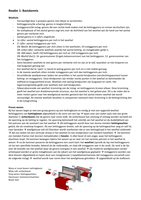
1. Availability: availability of mental representations refers to the
idea that all kinds of knowledge is available to us; we have it
stored in our heads. At the same time, there is only a limited part
of the available information accessible. What is accessible to the
women in the picture is the documents in front of her, but not
those behind her. Those behind her are available though.
2. Accessibility: Higgins stated it as ‘accessibility can be defined as
the activation potential of available knowledge’. So, we have a
lot of knowledge stored and some of this information is available
to us and helps us in interpreting the world around us.
Take this example; Marie’s mother comes from Luxemburg. Her mother
tells her a lot about her native country, so Marie knows a lot of it. One
day Marie is laying on the beach in Florida. Is the information about Luxemburg available, accessible,
or both? The right answer is that the information is available, but not accessible. Marie has this
information stored, so it is available, but she’s not in an environment that will activate mental
representations about Luxemburg, so it’s not accessible.
There are many models that explain how knowledge is stored.
• Associative Network Models: this type of models is based on the idea that the mind works
as a computer. For each mental representation there are information nodes that can become
active.
For example: as soon as you see a cup of coffee, there are
all kinds of nodes that can become active by spreading
activation. Think of ‘tasty’, ‘caffeine’, ‘black’ and ‘awake’.
Activation is facilitated for connections in the network
that are more strongly associated. In this example, you
can see the stronger link between ‘coffee’ and ‘tasty’ as
you like coffee very much.
,• Schema Models: Schema Models provide another way to look at the same question of how
mental representations are stored. Information about all kinds of objects is stored in an
abstract form. Knowledge about that object, such as coffee, can be activated the moment
you perceive or think about the object. Schema’s provide understanding of those
connections between the features about a specific object, but also provide rules of the
situation (so you know how to make a cup of coffee).
When a schema is activated, it operates as a lens, through which you perceive the world
around you. They can direct your attention and memory, but also affect judgements.
• Predictive Coding: similar to Schema Models, predictive coding or predictive processing
states that we use prior knowledge in perceiving the world around us. So, you might have all
kinds of priors about coffee. When you go to a new place to get a cup of coffee, you might
activate those priors of coffee, like the useful prior of being careful taking hot coffee or the
violated prior that coffee is tasty, because you didn’t like the coffee. As a consequence of
the violated prior and following the predictive coding model, you would update your prior,
related to coffee at this specific bar to something which is called the posterior. This is the
comparison between the perception between the cup of coffee and the prior.
• Connectionist Models: these models have
quite some overlap with associative network
models. First of all, both models have nodes
that may vary in their level of activation. Next,
these nodes may have facilitated links, so one
node activating another node. However, there
are also differences:
o Besides the facilitated links, there are
also links that inhibit other nodes.
o Most connectionist models assume
that a specific node doesn’t have
semantic meaning. It is only the full
set of nodes that is activated together with the weights attributed to these nodes,
that make a mental representation. Therefor these representations are not static,
but strongly affected by the environment. The environment affects the input, which
results in a different output.
• Multiple Format Models: in contrast to the previous models, this type of model suggest that
there are multiple kind of mental representations. Amodio stated for example that
representations are created and stored in the same way. Within the memory system model,
which is an example of a multiple format models, he states that there are multiple learning
mechanisms, that are related to different memory systems. Each system is represented in a
different part of the brain, so they have different neural underpinnings. Three systems that
are distinguished are affective, semantic and procedural memory sytems.
• Embodied Cognition: as the previous models are focused on the mind as some sort of
computer, the question being asked right now is ‘do mental representations extend outside
the mind, both to the body and to the external environment?’. So a large distinction between
the previous models and Embodied Cognition, is that it states that representations are
modality specific. Stated differently; representations are constituted of sensory experiences.
So what does that mean? We’re going back to our coffee example. When you drink coffee,
you might have experienced smelling coffee beans of feeling the heat of your cup. So
Embodied Cognition states that all these sensory experiences are included in the mental
representation. They also state that just by thinking or activating the mental representation,
to some extent, you’re activating the sensory experiences. So, by thinking a cup of coffee,
you can sometimes imagine smelling the coffee beans.
, • Situated Cognition: taking the previous model one step further, Situated Cognition states
that mental representations result from dynamic interaction between the mind, the body
and the environment. Where the original models were mainly thinking of mental
representation starts as a computer, over mind those model became more and more liberal
and included the body, or even the situation and thinking about mental representations.
Situated cognition stated that by relying less on internal information, the brain can delegate
to features of the environment and simplify decision making.