L1 Introduction
- Assessment:
o Essay 9th March 2000 words
o Exam – 2/6 Questions
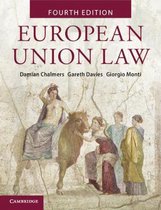
o D. Chalmers, G. Davies, G. Monti, European Union Law. Text and Materials
(Cambridge University Press, 4th edition, 2019)
o
• Who said it?
o ‘[T]here is a remedy… to re-create the European Family or as much of it as we
can, and provide it with a structure under which it can dwell in peace, in
safety and in freedom. We must build a kind of United States of Europe.’
• Original goal
o anti-war rationale (in the aftermath of WWII) a union to create mutual
dependence and therefore peace
o necessity to get Europe back on its feet economically.
o Robert SCHUMAN DECLARATION : State should come together and form and
alliance, it wont happen in a day but started with coal and steel
9 May 1950\
• Achieving integration
o Allocate power – who has power to do what, did this by:
o Create institutions: allocated powers to the institutions on behalf of the
states
o Create binding rules
o Enforce those rules
• 1. ALLOCATE POWERS
o Internal market
§ Create a market between states that looks like a single state market –
no national borders, it would work everywhere
§ Initially, just an European Coal and Steal Community…
§ Soon to be expanded to a true internal market, implying fee
movement of: goods, services, capital and labour.
§ What do you need to do in order to have that?
§ REMOVE ALL BARRIERS TO TRADE
§ Scenario A
• You have a company producing margarine.
• You export your products to Belgium.
• Belgium asks for customs duty.
• Tax, if buying across countries
§ Scenario B
• You have a company producing butter. You sell your margarine
in rectangle-shaped packages.
• You export your products to Belgium.
• Belgium does not ask for a custom duty, but has a law saying
that butter can only be sold in cube-shaped packages.
• More tax = Less incentive for consumers
• Protects national economy
, • When there is more competition, prices go down because less
monopoly over the product
• So the competition means better and cheaper products for
consumers
§ EU Member States need to…
• Eliminate tariff barriers …
• Eliminate non-tariff barriers…
• Positive and negative integration
§ National sensitivities?
Case C-36/02, Omega
• Inflicts fundamental morals of the constitution
• Germany was allowed
• States are still able to make exemptions of the free movement
of economic goods and services
•
§ EU citizenship
Case C-200/02 Chen
• Is it all about money? No
• Created a citizenship
• Individuals have rights because they are attached to a super
national union
• Not all agree on certain matters…
o SCHENGEN
§ area without internal borders,
§ citizens, many non-EU nationals, business people and tourists can
freely circulate without being subjected to border checks.
§ (26 EU and non-EU countries!)
o The euro (€)
o the official currency of 19 out of 28 EU countries of the EU (The EUROZONE)
• Policies of the EU
Humanitarian aid
Human rights
Information society
Institutional affairs
Internal market
Justice, freedom and security
Maritime affairs and fisheries
Public health
Regional policy
Research and innovation
Taxation
Transport
Employment and social affairs
Energy
Enlargement
Enterprise
, Environment
External relations
External trade
Fight against fraud
Food safety
Foreign and security policy
Agriculture
Audiovisual and media
Budget
Competition
Consumers
Culture
Customs
Development and Cooperation
Economic and monetary affairs
Education, training, youth
• Which one of the following is not an institution of the European Union?
o The Council
o The European Council
o The Council of Europe
• The European Parliament is in…
o Brussels, Belgium
o Strasbourg, France
o Luxembourg.
o All of the above.
• Which is the most powerful?
o The Treaty
o A Regulation
o A Directive
o A Decision
o A Recommendation
• UK’s membership to the EU
o 1957: Treaty of Rome
o Applied to join EEC in 1961-entry vetoed twice by French president Charles
de Gaulle
o UK entered in 1973
o UK Membership referendum 1975: 67% voting in favour
o And then…BREXIT!
• Brexit: Why does it matter?
o What is Brexit?
§ British exit or the UK’s withdrawal from the European Union
o Why does it matter?
§ Economy: Europe is Britain’s most important export market and its
biggest source of foreign investment
§ Politics: Irish border; European integration is put into question
§ Security: UK-EU exchange of information
• The basic process of Brexit: Article 50 TEU
, o UK notifies of its intention to withdraw => 2 year deadline begins unless
extended
o UK and EU: Withdrawal agreement on the terms of Brexit
o UK and EU: Agreement on their future partnership
• Deal or no deal?
o Why a deal is important?
o Legal certainty
o Transitional period reduces adverse effects
o Condition for future UK/EU relationship
o Political solution to the ‘Irish problem’
• Where are we now?
o UK-EU Withdrawal agreement passed at UK Parliament
o UK exits the EU on 31st January 2020
o EU law will cease to apply to and in the UK on 31 December 2020.
o Future partnership to be determined…
• 3 points to keep from today…
o EU is a ‘work in progress’: stop comparing it, and start understanding it
o EU started with the economy….but progressed to develop individual rights
and political cooperation
o EU is about security and prosperity: It changes due to certain events…
§ End of the cold war in 1989: end of bipolarity
§ 9/11 events: security threats are internal and external, are less
predictable
§ Climate change: environmental threats
§ Financial crisis: threats to the neo-liberal paradigm
§ Migration crisis: national security vs human security
§ Brexit
- Assessment:
o Essay 9th March 2000 words
o Exam – 2/6 Questions
o D. Chalmers, G. Davies, G. Monti, European Union Law. Text and Materials
(Cambridge University Press, 4th edition, 2019)
o
• Who said it?
o ‘[T]here is a remedy… to re-create the European Family or as much of it as we
can, and provide it with a structure under which it can dwell in peace, in
safety and in freedom. We must build a kind of United States of Europe.’
• Original goal
o anti-war rationale (in the aftermath of WWII) a union to create mutual
dependence and therefore peace
o necessity to get Europe back on its feet economically.
o Robert SCHUMAN DECLARATION : State should come together and form and
alliance, it wont happen in a day but started with coal and steel
9 May 1950\
• Achieving integration
o Allocate power – who has power to do what, did this by:
o Create institutions: allocated powers to the institutions on behalf of the
states
o Create binding rules
o Enforce those rules
• 1. ALLOCATE POWERS
o Internal market
§ Create a market between states that looks like a single state market –
no national borders, it would work everywhere
§ Initially, just an European Coal and Steal Community…
§ Soon to be expanded to a true internal market, implying fee
movement of: goods, services, capital and labour.
§ What do you need to do in order to have that?
§ REMOVE ALL BARRIERS TO TRADE
§ Scenario A
• You have a company producing margarine.
• You export your products to Belgium.
• Belgium asks for customs duty.
• Tax, if buying across countries
§ Scenario B
• You have a company producing butter. You sell your margarine
in rectangle-shaped packages.
• You export your products to Belgium.
• Belgium does not ask for a custom duty, but has a law saying
that butter can only be sold in cube-shaped packages.
• More tax = Less incentive for consumers
• Protects national economy
, • When there is more competition, prices go down because less
monopoly over the product
• So the competition means better and cheaper products for
consumers
§ EU Member States need to…
• Eliminate tariff barriers …
• Eliminate non-tariff barriers…
• Positive and negative integration
§ National sensitivities?
Case C-36/02, Omega
• Inflicts fundamental morals of the constitution
• Germany was allowed
• States are still able to make exemptions of the free movement
of economic goods and services
•
§ EU citizenship
Case C-200/02 Chen
• Is it all about money? No
• Created a citizenship
• Individuals have rights because they are attached to a super
national union
• Not all agree on certain matters…
o SCHENGEN
§ area without internal borders,
§ citizens, many non-EU nationals, business people and tourists can
freely circulate without being subjected to border checks.
§ (26 EU and non-EU countries!)
o The euro (€)
o the official currency of 19 out of 28 EU countries of the EU (The EUROZONE)
• Policies of the EU
Humanitarian aid
Human rights
Information society
Institutional affairs
Internal market
Justice, freedom and security
Maritime affairs and fisheries
Public health
Regional policy
Research and innovation
Taxation
Transport
Employment and social affairs
Energy
Enlargement
Enterprise
, Environment
External relations
External trade
Fight against fraud
Food safety
Foreign and security policy
Agriculture
Audiovisual and media
Budget
Competition
Consumers
Culture
Customs
Development and Cooperation
Economic and monetary affairs
Education, training, youth
• Which one of the following is not an institution of the European Union?
o The Council
o The European Council
o The Council of Europe
• The European Parliament is in…
o Brussels, Belgium
o Strasbourg, France
o Luxembourg.
o All of the above.
• Which is the most powerful?
o The Treaty
o A Regulation
o A Directive
o A Decision
o A Recommendation
• UK’s membership to the EU
o 1957: Treaty of Rome
o Applied to join EEC in 1961-entry vetoed twice by French president Charles
de Gaulle
o UK entered in 1973
o UK Membership referendum 1975: 67% voting in favour
o And then…BREXIT!
• Brexit: Why does it matter?
o What is Brexit?
§ British exit or the UK’s withdrawal from the European Union
o Why does it matter?
§ Economy: Europe is Britain’s most important export market and its
biggest source of foreign investment
§ Politics: Irish border; European integration is put into question
§ Security: UK-EU exchange of information
• The basic process of Brexit: Article 50 TEU
, o UK notifies of its intention to withdraw => 2 year deadline begins unless
extended
o UK and EU: Withdrawal agreement on the terms of Brexit
o UK and EU: Agreement on their future partnership
• Deal or no deal?
o Why a deal is important?
o Legal certainty
o Transitional period reduces adverse effects
o Condition for future UK/EU relationship
o Political solution to the ‘Irish problem’
• Where are we now?
o UK-EU Withdrawal agreement passed at UK Parliament
o UK exits the EU on 31st January 2020
o EU law will cease to apply to and in the UK on 31 December 2020.
o Future partnership to be determined…
• 3 points to keep from today…
o EU is a ‘work in progress’: stop comparing it, and start understanding it
o EU started with the economy….but progressed to develop individual rights
and political cooperation
o EU is about security and prosperity: It changes due to certain events…
§ End of the cold war in 1989: end of bipolarity
§ 9/11 events: security threats are internal and external, are less
predictable
§ Climate change: environmental threats
§ Financial crisis: threats to the neo-liberal paradigm
§ Migration crisis: national security vs human security
§ Brexit