Financial Management
TOPIC 1
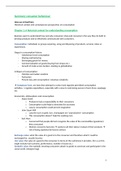
Investors/shareholders
normal people
Managers/leaders
Bondholders normal people Citizens
normal people maximize the value of the firm normal people
Manager: has to make the best/optimal
- Investment decision
o Invest in assets that earn a return greater than the minimum acceptable hurdle rate
- Financing decision
o Find the right kind of debt for your firm and the right mix of debt and equity to fund your operations
- Payout decision
o If you cannot find a lucrative investment that satisfies your minimum acceptable rate, then distribute the
cash to the owners
Pie mentality
“Everyone in the same team”
“A company thus serves not only investors, but also colleagues, customers, suppliers,
the environment, communities and the government. Together, these other
constituencies are known as enterprise’s stakeholders who, collectively,
enjoy value. Members refer to either investors or stakeholders and citizens are
the people who live in society. Not only” – Alex Edman
Ignoring the pie is costly
- More conflict, more pressure on pressure on regulators
- If we only focus on shareholder maximization, the trust on capitalism may
decay
Trade-off is there:
- Some people may be out as a result of creative destruction
- Parato improvements: when the pie grows, it is always possible to find a way of compensating those slices would
otherwise fall (Coarse Theorem0=)
Eternalities: the consequence that enterprises exert on society, but don’t feedback into their earnings
- Negative externality: example: Martin Shkreli’s hiking the prices of Daraprim
- Positive externalities: donating medicine for curing river blindness
1|Page
,TOPIC 2
“… corporate governance system is the combination of mechanism which ensures that the management runs the firm for the benefit of one
or several stakeholders. Such stakeholders may cover shareholders, creditors, suppliers, clients, employees and other parties with whom the
firm conduct its business”
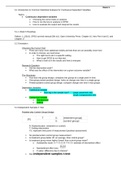
Principal – agent problem Asymmetric information
Moral hazard
Principal Agent
Moral hazard
Moral hazard once a contract is signed, it may be of interest if the agent behaves badly or less responsibly
Agency problems arise when an agent acts on behalf of a principal
Her act may not be in the best interest of the principal
Some examples: insufficient effort, extravagant investment, entrenchment, self dealing, lack of transparency, accounting manipulations
How to mitigate the principal agent problem? complete contracts!
Complete contracts should specify:
- What the managers must do in each future contingency of the world
- What the distribution of profits will be in each contingency
Principal: cannot keep track of the agent’s actions at all times
Agent: usually the agent has more information
Separation of ownership and control
Jensen & Meckling (1976) principle agent problem
Owner-manager Agent
- No conflict of interest - She has only α % of the shares
- Maximum incentive to work harder - Conflict of interest starts
- Additional revenue will always be accrued by her - If she works harder, the fruits will go to the shareholders
Principal Agent
- Has the required funds - She knows how to run the firm
- Not qualified to run the firm - But lack of funds to finance its operations
What if the manager runs the company in her interest rather than the principal?
Agency cost
1. Monitoring 2. Bonding cost 3. Residual loss
Agency cost is the sum of these three components
1. Monitoring
- It consists of the principal observing the agent and keeping a record of the agent’s behaviour
- Also intervening in various ways to constraint the agent’s behaviour and to avoid unwanted actions
2. Bonding costs
- The costs is incurred by the agent in order to signal credibility to the principal that she will act in the interest of the principal
- For example: buy shares of the firm
3. Residual loss
- Incurred by the principal
- Agent may not make the decision that maximizes the value of the firm
2|Page
,Agency problems between managers and shareholders
Agency problems (two forms): Perquisites and Empire building
Perquisites
- Consumption by the management
- Benefit accrue to the management
- Cost borne to the shareholder
Examples: CEO mansions, giving job to the family members, corporate jets
Empire building
- Free cash flow problem
- The management pursuing growth rather than shareholder maximization
- Management should invest only if project NPV > 0
- NPV < 0: destroys shareholder value
E.g.: buying other firms whose PVGO are negative
Why do managers enjoy increasing size of the firm?
- Power and social status (etc)
- Managerial compensation grows with the company size
While a company may have limited investment opportunities, shareholders have access to a wide range of investment
opportunities
Managerial entrenchment
- Shielding themselves against hostile takeovers
- Family firms and suboptimal human capital allocations
- Quiet life managerial shirking managerial risk aversion
Agency problems of debt and equity
Remember: Firm value = Debt + Equity
Example
I borrow 100m Euros for my firm. I finance my project with only debt financing
Scenario 1 Scenario 2 Scenario 3
My firm value next year 80 120 500
The value of my debt 80 100 100
The value of my equity 0 20 400
Do I financial distress? Yes, because 80<100 No because 120>100 No
What is interesting here?
1) Debt has seniority on firm assets, but limited claim up to the value of debt
2) Equity holder gets the leftover on firm assets. Unlimited gain
- Debt and Equity-Holders (we discussed before)
- Highly debt financed firm may gamble other people’s money
- If they fail, the cost borne to debtholder; but if they are successful,
there will be a massive pay-off to the shareholders
3|Page
, The classical agency problem vs. the expropriation of minority shareholders
- Out-of-western world, unusually there are large shareholders
- Does it create another conflict or not?
- Minor vs. Major shareholder!
Who are these larger shareholders? corporations, families, government, etc.
Usually there are two different types of shareholders
1. Controlling shareholders
2. Minority shareholders
It is about expropriation of minority shareholders. There are four forms:
1. Tunnelling
Consists of the large shareholder transferring the firm’s assets or profits into his own pockets
2. Transfer pricing
I.e. by overcharging the firm for services or assets provided
Tunnelling and transfer pricing involving the large shareholder are also sometimes referred to as related-party transactions
Large shareholders may be even more tempted to engage in related-party transaction in the presence of ownership pyramids.
3. Nepotism
Consists of the large family shareholder appointing family members to top management positions rather than the most
suitable candidates on the job market
4. Infighting
May not necessarily be a wilful form of expropriating the firm’s minority shareholders, but nevertheless is likely to deflect
management time as well as other firm resources.
4|Page
TOPIC 1
Investors/shareholders
normal people
Managers/leaders
Bondholders normal people Citizens
normal people maximize the value of the firm normal people
Manager: has to make the best/optimal
- Investment decision
o Invest in assets that earn a return greater than the minimum acceptable hurdle rate
- Financing decision
o Find the right kind of debt for your firm and the right mix of debt and equity to fund your operations
- Payout decision
o If you cannot find a lucrative investment that satisfies your minimum acceptable rate, then distribute the
cash to the owners
Pie mentality
“Everyone in the same team”
“A company thus serves not only investors, but also colleagues, customers, suppliers,
the environment, communities and the government. Together, these other
constituencies are known as enterprise’s stakeholders who, collectively,
enjoy value. Members refer to either investors or stakeholders and citizens are
the people who live in society. Not only” – Alex Edman
Ignoring the pie is costly
- More conflict, more pressure on pressure on regulators
- If we only focus on shareholder maximization, the trust on capitalism may
decay
Trade-off is there:
- Some people may be out as a result of creative destruction
- Parato improvements: when the pie grows, it is always possible to find a way of compensating those slices would
otherwise fall (Coarse Theorem0=)
Eternalities: the consequence that enterprises exert on society, but don’t feedback into their earnings
- Negative externality: example: Martin Shkreli’s hiking the prices of Daraprim
- Positive externalities: donating medicine for curing river blindness
1|Page
,TOPIC 2
“… corporate governance system is the combination of mechanism which ensures that the management runs the firm for the benefit of one
or several stakeholders. Such stakeholders may cover shareholders, creditors, suppliers, clients, employees and other parties with whom the
firm conduct its business”
Principal – agent problem Asymmetric information
Moral hazard
Principal Agent
Moral hazard
Moral hazard once a contract is signed, it may be of interest if the agent behaves badly or less responsibly
Agency problems arise when an agent acts on behalf of a principal
Her act may not be in the best interest of the principal
Some examples: insufficient effort, extravagant investment, entrenchment, self dealing, lack of transparency, accounting manipulations
How to mitigate the principal agent problem? complete contracts!
Complete contracts should specify:
- What the managers must do in each future contingency of the world
- What the distribution of profits will be in each contingency
Principal: cannot keep track of the agent’s actions at all times
Agent: usually the agent has more information
Separation of ownership and control
Jensen & Meckling (1976) principle agent problem
Owner-manager Agent
- No conflict of interest - She has only α % of the shares
- Maximum incentive to work harder - Conflict of interest starts
- Additional revenue will always be accrued by her - If she works harder, the fruits will go to the shareholders
Principal Agent
- Has the required funds - She knows how to run the firm
- Not qualified to run the firm - But lack of funds to finance its operations
What if the manager runs the company in her interest rather than the principal?
Agency cost
1. Monitoring 2. Bonding cost 3. Residual loss
Agency cost is the sum of these three components
1. Monitoring
- It consists of the principal observing the agent and keeping a record of the agent’s behaviour
- Also intervening in various ways to constraint the agent’s behaviour and to avoid unwanted actions
2. Bonding costs
- The costs is incurred by the agent in order to signal credibility to the principal that she will act in the interest of the principal
- For example: buy shares of the firm
3. Residual loss
- Incurred by the principal
- Agent may not make the decision that maximizes the value of the firm
2|Page
,Agency problems between managers and shareholders
Agency problems (two forms): Perquisites and Empire building
Perquisites
- Consumption by the management
- Benefit accrue to the management
- Cost borne to the shareholder
Examples: CEO mansions, giving job to the family members, corporate jets
Empire building
- Free cash flow problem
- The management pursuing growth rather than shareholder maximization
- Management should invest only if project NPV > 0
- NPV < 0: destroys shareholder value
E.g.: buying other firms whose PVGO are negative
Why do managers enjoy increasing size of the firm?
- Power and social status (etc)
- Managerial compensation grows with the company size
While a company may have limited investment opportunities, shareholders have access to a wide range of investment
opportunities
Managerial entrenchment
- Shielding themselves against hostile takeovers
- Family firms and suboptimal human capital allocations
- Quiet life managerial shirking managerial risk aversion
Agency problems of debt and equity
Remember: Firm value = Debt + Equity
Example
I borrow 100m Euros for my firm. I finance my project with only debt financing
Scenario 1 Scenario 2 Scenario 3
My firm value next year 80 120 500
The value of my debt 80 100 100
The value of my equity 0 20 400
Do I financial distress? Yes, because 80<100 No because 120>100 No
What is interesting here?
1) Debt has seniority on firm assets, but limited claim up to the value of debt
2) Equity holder gets the leftover on firm assets. Unlimited gain
- Debt and Equity-Holders (we discussed before)
- Highly debt financed firm may gamble other people’s money
- If they fail, the cost borne to debtholder; but if they are successful,
there will be a massive pay-off to the shareholders
3|Page
, The classical agency problem vs. the expropriation of minority shareholders
- Out-of-western world, unusually there are large shareholders
- Does it create another conflict or not?
- Minor vs. Major shareholder!
Who are these larger shareholders? corporations, families, government, etc.
Usually there are two different types of shareholders
1. Controlling shareholders
2. Minority shareholders
It is about expropriation of minority shareholders. There are four forms:
1. Tunnelling
Consists of the large shareholder transferring the firm’s assets or profits into his own pockets
2. Transfer pricing
I.e. by overcharging the firm for services or assets provided
Tunnelling and transfer pricing involving the large shareholder are also sometimes referred to as related-party transactions
Large shareholders may be even more tempted to engage in related-party transaction in the presence of ownership pyramids.
3. Nepotism
Consists of the large family shareholder appointing family members to top management positions rather than the most
suitable candidates on the job market
4. Infighting
May not necessarily be a wilful form of expropriating the firm’s minority shareholders, but nevertheless is likely to deflect
management time as well as other firm resources.
4|Page