CHURCH REFORMS
Ref: S. Waller, France in Revolution, 1774-1815, (Oxford,2016) pp.50-53
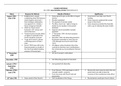
Dates Reasons for Reform Details of Reform Significance
August 1789 - Enlightenment- people Clergy agreed to give up the tithe in August Government now takes over Church
June 1790 complaining about link between decrees funding
Ancien Regime and church + Pluralism abolished These measures weakened the secular
their privileges; philosophes The payment of annates ended power of the church
very against it inc. Voltaire + The tithe, church tax + right of clergy to Some measures provided the Assembly
Sieyes (clergyman himself) decide its own taxation in don gratuit with a way of relieving the state of debt
Attack on church power abolished
featured in 18th century anti- Separate church assemblies (synods)
clerical literature abolished
Temporal power (secular affairs 2nd November 1789- all church property
as oppose to spiritual) of the nationalised
church should be removed December 1789- full citizenship granted to
To get rid of church’s abuses- Protestants (extended to some Jews Jan
conflicting powers of Pope + 1790 although most had to wait til Sept
state 1791)
End of 1789 France still in dire All religious orders dissolved unless they
financial position so wealth of could prove that they were contributing to
the church provided tempting the community eg. by providing for the poor
prospect of financial gain or sick
2nd November All church property nationalised
1789
December 1789 Full citizenship granted to Protestants
January 1790 + Jews granted full citizenship
September
1791
February 1790 + From February 1790 state began to sell of Became the main means by which the new
June 1790 monastic wealth + property government was able to keep the
From June state sold Church land and economy of the revolutionary state afloat
possessions
12th July 1790 State control of the Church’s Civil Constitution of the Clergy: Elected priests would give French citizens
Ref: S. Waller, France in Revolution, 1774-1815, (Oxford,2016) pp.50-53
Dates Reasons for Reform Details of Reform Significance
August 1789 - Enlightenment- people Clergy agreed to give up the tithe in August Government now takes over Church
June 1790 complaining about link between decrees funding
Ancien Regime and church + Pluralism abolished These measures weakened the secular
their privileges; philosophes The payment of annates ended power of the church
very against it inc. Voltaire + The tithe, church tax + right of clergy to Some measures provided the Assembly
Sieyes (clergyman himself) decide its own taxation in don gratuit with a way of relieving the state of debt
Attack on church power abolished
featured in 18th century anti- Separate church assemblies (synods)
clerical literature abolished
Temporal power (secular affairs 2nd November 1789- all church property
as oppose to spiritual) of the nationalised
church should be removed December 1789- full citizenship granted to
To get rid of church’s abuses- Protestants (extended to some Jews Jan
conflicting powers of Pope + 1790 although most had to wait til Sept
state 1791)
End of 1789 France still in dire All religious orders dissolved unless they
financial position so wealth of could prove that they were contributing to
the church provided tempting the community eg. by providing for the poor
prospect of financial gain or sick
2nd November All church property nationalised
1789
December 1789 Full citizenship granted to Protestants
January 1790 + Jews granted full citizenship
September
1791
February 1790 + From February 1790 state began to sell of Became the main means by which the new
June 1790 monastic wealth + property government was able to keep the
From June state sold Church land and economy of the revolutionary state afloat
possessions
12th July 1790 State control of the Church’s Civil Constitution of the Clergy: Elected priests would give French citizens