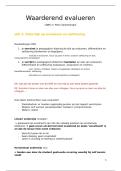
Summary Papers Business Level
Strategy
2020 –2021
MSc. Strategic Management
Tilburg University
1
,Performance implications of delayed competitive responses (Boys & Bresser,
2008)
Week 2
Main contribution
The article contributes to ongoing efforts to develop theory on first mover and follower
advantages by revisiting the issue of response timing, that is, the consequences of fast versus
delayed competitive responses. Developing a better understanding of the performance
implications of different response timing scenarios is important because by focusing on quick
responses and the risks of being lazy, the literature overlooks the risks of responding too fast,
that is, performance disadvantages that may result from hasty commitments and ill-devised
responses.
Theory
The general proposition regarding response timing is straightforward: Theoretical first mover
research in economics, marketing, and management advocates quick responses to
competitive challenges to limit the first mover’s ability to build competitive advantage.
Complementary reasons for why quick responses are important:
- Profit advantages of imitation, that is, a ‘fast second strategy’ is considered more
profitable than acting first
- The fast second firm may enjoy cost advantages because it can learn from a rival’s
mistakes and improve upon the original action before the first mover has had time to
build a sizeable advantage
- In marketing, theoretical research recommends response aggressiveness, that is, fast
marketing mix reactions to entry. Aggressive marketing responses such as price or
advertising adjustments are advocated to prevent the first mover from building major
market share and profitability advantages.
- In management, theory emphasizes the importance of aggressive and fast responses,
as well. Porter (1985) stresses two reasons why a quick response is important to profit.
1. Quick responses prevent the first mover from building barriers such as buyer
switching costs that may be difficult for late responders to overcome.
2. Quick responses are called for because they signal incumbent commitment to
defend market positions.
Generally, then, theoretical research on response timing argues that attacked incumbents
need to respond as quickly as possible, because response performance will be increasingly
limited as a first mover becomes more established. This reasoning suggests a negative linear
relationship between response delay and responder performance.
While empirical evidence suggesting that a fast follower strategy may be effective is mixed,
there is some empirical support favoring delayed responses. Response delays may be
advantageous because they allow firms to collect more information about a pioneer’s action.
Delays may allow for the resolution of market or technological uncertainties, and the
development of more effective responses such as a better product or a superior marketing
program.
A curvilinear relationship
A response timing decision is always a balancing act, and its effectiveness depends on a firm’s
ability to assess market dynamics correctly and develop an effective response. A balance must
be found between the risks of premature entry against missed opportunity. If a firm responds
2
, too early because it has not waited long enough for uncertainties to subside or to develop an
effective response, its performance is likely to suffer. If a firm responds too late, it may not be
able to expand successfully because earlier movers will have gained enough leadership to
dominate the market.
Thus, the puzzle surrounding the performance effect of response timing may be resolved by
proposing a curvilinear relationship: On average, there will be lower success for fast
responders, higher success for responders with intermediate delays, and lower success for
late responders. Responders with intermediate delays can be expected to outperform fast and
late responders because a measured delay will allow for designing an appropriate response
without moving too late.
Bad luck, choices, and ‘blind spots’ in competitor analysis
Firms respond to competitive challenges too quickly or too slowly for several reasons: bad
luck, conscious choices, and blind spots in competitor analysis. Bad luck refers to situations
where a competitor makes an appropriate response timing decision based on available
information at the time of the response. In hindsight, however, unforeseen developments
invalidate this analysis. Conscious choices are also based on a correct analysis of the market
dynamics, but the responder consciously chooses to deviate from the appropriate response
timing scenario, and thus accepts the risk of responding too early or too late. In the case of
blind spots, response timing errors occur because a firm’s response timing is based on an
incomplete and/or incorrect analysis of the available information.
Many inappropriate response timing decisions can be attributed to blind spots in competitor
analysis. Blind spots are cognitive biases that lead to judgmental mistakes as when ‘a
competitor will either not see the significance of events (such as a strategic move) at all, will
perceive them incorrectly, or will perceive them only very slowly. Three types of blind spots
manifest themselves in strategic decision making:
1. Competitors use a limited perspective to frame their competitive problems
2. They engage in a nonrational escalation of commitment with respect to previously
chosen strategic directions
3. They show unjustified overconfidence in their judgment and abilities.
3
Strategy
2020 –2021
MSc. Strategic Management
Tilburg University
1
,Performance implications of delayed competitive responses (Boys & Bresser,
2008)
Week 2
Main contribution
The article contributes to ongoing efforts to develop theory on first mover and follower
advantages by revisiting the issue of response timing, that is, the consequences of fast versus
delayed competitive responses. Developing a better understanding of the performance
implications of different response timing scenarios is important because by focusing on quick
responses and the risks of being lazy, the literature overlooks the risks of responding too fast,
that is, performance disadvantages that may result from hasty commitments and ill-devised
responses.
Theory
The general proposition regarding response timing is straightforward: Theoretical first mover
research in economics, marketing, and management advocates quick responses to
competitive challenges to limit the first mover’s ability to build competitive advantage.
Complementary reasons for why quick responses are important:
- Profit advantages of imitation, that is, a ‘fast second strategy’ is considered more
profitable than acting first
- The fast second firm may enjoy cost advantages because it can learn from a rival’s
mistakes and improve upon the original action before the first mover has had time to
build a sizeable advantage
- In marketing, theoretical research recommends response aggressiveness, that is, fast
marketing mix reactions to entry. Aggressive marketing responses such as price or
advertising adjustments are advocated to prevent the first mover from building major
market share and profitability advantages.
- In management, theory emphasizes the importance of aggressive and fast responses,
as well. Porter (1985) stresses two reasons why a quick response is important to profit.
1. Quick responses prevent the first mover from building barriers such as buyer
switching costs that may be difficult for late responders to overcome.
2. Quick responses are called for because they signal incumbent commitment to
defend market positions.
Generally, then, theoretical research on response timing argues that attacked incumbents
need to respond as quickly as possible, because response performance will be increasingly
limited as a first mover becomes more established. This reasoning suggests a negative linear
relationship between response delay and responder performance.
While empirical evidence suggesting that a fast follower strategy may be effective is mixed,
there is some empirical support favoring delayed responses. Response delays may be
advantageous because they allow firms to collect more information about a pioneer’s action.
Delays may allow for the resolution of market or technological uncertainties, and the
development of more effective responses such as a better product or a superior marketing
program.
A curvilinear relationship
A response timing decision is always a balancing act, and its effectiveness depends on a firm’s
ability to assess market dynamics correctly and develop an effective response. A balance must
be found between the risks of premature entry against missed opportunity. If a firm responds
2
, too early because it has not waited long enough for uncertainties to subside or to develop an
effective response, its performance is likely to suffer. If a firm responds too late, it may not be
able to expand successfully because earlier movers will have gained enough leadership to
dominate the market.
Thus, the puzzle surrounding the performance effect of response timing may be resolved by
proposing a curvilinear relationship: On average, there will be lower success for fast
responders, higher success for responders with intermediate delays, and lower success for
late responders. Responders with intermediate delays can be expected to outperform fast and
late responders because a measured delay will allow for designing an appropriate response
without moving too late.
Bad luck, choices, and ‘blind spots’ in competitor analysis
Firms respond to competitive challenges too quickly or too slowly for several reasons: bad
luck, conscious choices, and blind spots in competitor analysis. Bad luck refers to situations
where a competitor makes an appropriate response timing decision based on available
information at the time of the response. In hindsight, however, unforeseen developments
invalidate this analysis. Conscious choices are also based on a correct analysis of the market
dynamics, but the responder consciously chooses to deviate from the appropriate response
timing scenario, and thus accepts the risk of responding too early or too late. In the case of
blind spots, response timing errors occur because a firm’s response timing is based on an
incomplete and/or incorrect analysis of the available information.
Many inappropriate response timing decisions can be attributed to blind spots in competitor
analysis. Blind spots are cognitive biases that lead to judgmental mistakes as when ‘a
competitor will either not see the significance of events (such as a strategic move) at all, will
perceive them incorrectly, or will perceive them only very slowly. Three types of blind spots
manifest themselves in strategic decision making:
1. Competitors use a limited perspective to frame their competitive problems
2. They engage in a nonrational escalation of commitment with respect to previously
chosen strategic directions
3. They show unjustified overconfidence in their judgment and abilities.
3