Vladyslava Panasovska ()
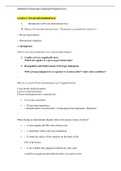
Lecture 1: Private International Law
I. Introduction to Private International Law
What is Private International Law? question on jurisdiction (which C)
› Private legal matters
› International situations
1. Jurisdiction
Which court has jurisdiction over a given legal dispute?
2. Conflict of Laws (applicable law):
Which law applies to a given legal relationship?
3. Recognition and Enforcement of Foreign Judgments
Will a foreign judgment be recognised, is it enforceable? Under what conditions?
›
Why do we need Private International Law? Legal diversity
Cross-border judicial matters
Lack of a universal basis
Private international law is national law
Every day occurrence
› Of growing importance:
• Intensification of world trade • Technological developments • Migration
›
When facing an international dispute what is the proper course of action?
› A court applies the PIL rules of the forum.
› 1) determine which court has jurisdiction
› 2) make the choice of law analysis on the basis of the
PIL of the forum
› 3) see whether the judgment rendered by such court
would be recognised and enforced where you need it to be
,Vladyslava Panasovska ()
Lecture 2: Private International Law
Private International Law comprises of three elements:
- Jurisdiction: which court can I go to? which court is competent/allowed to
hear my case?
- Conflict of Laws (Applicable Law): which law govern my claim?
- Recognition and Enforcement
Conflict of Laws
- Theory of Von Savignymodern day PIL is mostly eclectic in its
approach in the sense that it does not necessary take one of the previously
developed theories and apply it to PIL we take the theory of Von
Savigny and build upon this theory under this theory we must always
seek to find the seat of legal relations (a geographical location where
these legal relations actually belong) to find actually the laws of the
country to which this legal relationship is most closely connected this is
still at the heart of the modern day PIL
Entscheidungsharmonie- harmony of decisions.
I. Jurisdiction
National courtwhich court has jurisdiction?
Only Private law matter + international or cross border component
Determination of jurisdiction is one-sided in characterthis means that the court
will only assess whether it itself has jurisdiction. It will not say anything about the
jurisdiction of another court. In determining jurisdiction, the court will only
decide on the basis of its own rules of private international law whether they
themselves have jurisdiction but remain silent on the jurisdiction of other foreign
courts.
II. Conflict of Laws or applicable law is the second element in the scheme of PIL
There must be an international legal relationship component in order to PIL to
come into play
The rules of PIL here are national in nature as well e.g. once we have
established that the Dutch court have jurisdiction, the Dutch court on the basis
on its own national law and national rules on PIL determine which law applies
to these particular legal relations in that, we still largely apply the theory of
Von Savigny on the principle of the closest connection. So, we still aim to
bring these legal relationships home, to the place where it actually has its seat.
In establishing which law applies to the given legal relationship we
distinguish three different set of rules:
- Unilateral conflict rules rules which mainly establish when they
themselves apply. The question is when should my own law apply?
- Multilateral conflict rules as opposed to unilateral rules provides the
option to have several rules to be applicable. It is more neutral rules and
mostly based on the theory of Von Savigny. The example of such a rule is
for instance “the law of immovable property is the law of the country
,Vladyslava Panasovska ()
where the property is located”. Therefore, this particular rule does not say
when e.g Dutch law applies.
- Substantive conflict rules as such substantive law as opposed to private
international law. But they already have a clear scope at themselves. For
example, the Vienna convention on the International Sales of Goods
actually provides unified private law.
Connecting factor in establishing the applicable law we want to find what is
the country to which the legal relationship is mostly connected. We must find
it on the basis of certain rules.
- Singular
- Combined (cumulative, tiered and facultative )
- Article 4(1)(c) Rome I Regulation: “A contract relating to a right in rem
in immovable property or to a tenancy of immovable property shall be
governed by the law of the country where the property is situated” it is
combined connecting factor. Domicile (location of the property) here is a
connecting factor. It is the only relevant factor. Right in rem in
immovable property or tenancy of immovable property both things are
covered by one connecting factor “or” points to the combined
facultative connective factor. it can be tiered connecting factor if the
wording is “if you cannot find the location than look at right in rem”
- Article 8 Rome I Rome Regulation: “2. to the extent that the law
applicable to the individual employment contract has not been chosen by
the parties, the contract shall by governed by the law of the country in
which the employee habitually carries out his work or, failing that, from
which the employee habitually carries out his work in performance of the
contract (...).” this is a combined tiered connecting factor first we see
the connection to the individual employment contract. But if we cannot
find it, we should look into the place from which the employee carries out
his work.
- › 3. Where the law applicable cannot be determined pursuant to paragraph
2, the contract shall be governed by the law of the country where the place
of business through which the employee was engaged is situated
combined
- › 4. where it appears from all circumstances as a whole that the contract is
more closely connected with a country other than that indicated in
paragraphs 2 and 3, the law of that other country shall apply.
- Art. 4 Hague Products Liability Convention facultative connecting
fact in a sense that we don’t need to satisfy all the conditions in this
particular article. We only need to satisfy place of injury combined
with the condition a or b or c.
- › The applicable law shall be the internal law of the State of the place of
injury, if that State is also –
- › a) the place of the habitual residence of the person directly suffering
damage, or
- › b) the principal place of business of the person claimed to be liable, or
, Vladyslava Panasovska ()
- › c) the place where the product was acquired by the person directly
suffering damage
III. Recognition and Enforcement
Element of PIL that deals with the litigation abroad or having foreign
judgement recognized and enforced in the country.
Case Data protection Max Schrems II
Jurisdiction: Pablo and Alvaro case
Case: Jacques from Canada, Rasmus from Estonia, Pablo and Alvaro from
Spain. Three international students living in Groningen (Jacques, Rasmus and
Pablo) and Alvaro from Spain who is visiting his friend. The first three
domiciled in NL, Alvaro domiciled in Spain. They were involved in the ice
skating incident where the Dutch national sustained injuries. Issues of
jurisdiction. Dutch national want to sue Pablo and Alvaro for damages.
Jurisdiction:
- Europe unified on the European level.
- Brussels I-bis Regulation dual instrument because it regulates both
jurisdiction and recognition and enforcement.
- Scope: Article 1 civil and commercial matters definition of civil and
commercial matters is very broad. Not left to the Member States to
decide. This is determined by the CJEU.
- General rule: Article 4 domicile dual purpose. Sets out the formal
scope of the regulation in the sense that only those who is domicile within
the EU Member States can be sued on the basis of this Regulation. So,
those who outside the EU Member States cannot be sued on the basis of
this regulation but instead they must refer to the national rules of PIL. In
addition, this general rule sets that the defendant must be sued before the
court of the place where he is domiciled. Domicile is the connecting
factor.
- Special jurisdiction: Article 7 et seq alternative rule to the general
rule.
- Exclusive jurisdiction: Article 24 provides exclusive jurisdiction to
some particular courts. If the case fall under the exclusive jurisdiction
rules, then the general rule no longer applies.
- Choice of court: Article 25 + 26 referred in regulation as prorogation
of jurisdiction. Can be explicit or tacit. The parties have party autonomy
and they can themselves insert the choice of court agreement within their
particular contract.
1. Scope of Brussels I-bis Regulation all three scopes of the
regulation should be determined in the exam questions! All three
must be satisfied to apply regulation.
- › Substantive (Article 1) Is it a civil and commercial matter under
Article 1?Yes.
- › Formal (Article 4 (cf. Article 6) is defended domicile in the EU
Member State?
Lecture 1: Private International Law
I. Introduction to Private International Law
What is Private International Law? question on jurisdiction (which C)
› Private legal matters
› International situations
1. Jurisdiction
Which court has jurisdiction over a given legal dispute?
2. Conflict of Laws (applicable law):
Which law applies to a given legal relationship?
3. Recognition and Enforcement of Foreign Judgments
Will a foreign judgment be recognised, is it enforceable? Under what conditions?
›
Why do we need Private International Law? Legal diversity
Cross-border judicial matters
Lack of a universal basis
Private international law is national law
Every day occurrence
› Of growing importance:
• Intensification of world trade • Technological developments • Migration
›
When facing an international dispute what is the proper course of action?
› A court applies the PIL rules of the forum.
› 1) determine which court has jurisdiction
› 2) make the choice of law analysis on the basis of the
PIL of the forum
› 3) see whether the judgment rendered by such court
would be recognised and enforced where you need it to be
,Vladyslava Panasovska ()
Lecture 2: Private International Law
Private International Law comprises of three elements:
- Jurisdiction: which court can I go to? which court is competent/allowed to
hear my case?
- Conflict of Laws (Applicable Law): which law govern my claim?
- Recognition and Enforcement
Conflict of Laws
- Theory of Von Savignymodern day PIL is mostly eclectic in its
approach in the sense that it does not necessary take one of the previously
developed theories and apply it to PIL we take the theory of Von
Savigny and build upon this theory under this theory we must always
seek to find the seat of legal relations (a geographical location where
these legal relations actually belong) to find actually the laws of the
country to which this legal relationship is most closely connected this is
still at the heart of the modern day PIL
Entscheidungsharmonie- harmony of decisions.
I. Jurisdiction
National courtwhich court has jurisdiction?
Only Private law matter + international or cross border component
Determination of jurisdiction is one-sided in characterthis means that the court
will only assess whether it itself has jurisdiction. It will not say anything about the
jurisdiction of another court. In determining jurisdiction, the court will only
decide on the basis of its own rules of private international law whether they
themselves have jurisdiction but remain silent on the jurisdiction of other foreign
courts.
II. Conflict of Laws or applicable law is the second element in the scheme of PIL
There must be an international legal relationship component in order to PIL to
come into play
The rules of PIL here are national in nature as well e.g. once we have
established that the Dutch court have jurisdiction, the Dutch court on the basis
on its own national law and national rules on PIL determine which law applies
to these particular legal relations in that, we still largely apply the theory of
Von Savigny on the principle of the closest connection. So, we still aim to
bring these legal relationships home, to the place where it actually has its seat.
In establishing which law applies to the given legal relationship we
distinguish three different set of rules:
- Unilateral conflict rules rules which mainly establish when they
themselves apply. The question is when should my own law apply?
- Multilateral conflict rules as opposed to unilateral rules provides the
option to have several rules to be applicable. It is more neutral rules and
mostly based on the theory of Von Savigny. The example of such a rule is
for instance “the law of immovable property is the law of the country
,Vladyslava Panasovska ()
where the property is located”. Therefore, this particular rule does not say
when e.g Dutch law applies.
- Substantive conflict rules as such substantive law as opposed to private
international law. But they already have a clear scope at themselves. For
example, the Vienna convention on the International Sales of Goods
actually provides unified private law.
Connecting factor in establishing the applicable law we want to find what is
the country to which the legal relationship is mostly connected. We must find
it on the basis of certain rules.
- Singular
- Combined (cumulative, tiered and facultative )
- Article 4(1)(c) Rome I Regulation: “A contract relating to a right in rem
in immovable property or to a tenancy of immovable property shall be
governed by the law of the country where the property is situated” it is
combined connecting factor. Domicile (location of the property) here is a
connecting factor. It is the only relevant factor. Right in rem in
immovable property or tenancy of immovable property both things are
covered by one connecting factor “or” points to the combined
facultative connective factor. it can be tiered connecting factor if the
wording is “if you cannot find the location than look at right in rem”
- Article 8 Rome I Rome Regulation: “2. to the extent that the law
applicable to the individual employment contract has not been chosen by
the parties, the contract shall by governed by the law of the country in
which the employee habitually carries out his work or, failing that, from
which the employee habitually carries out his work in performance of the
contract (...).” this is a combined tiered connecting factor first we see
the connection to the individual employment contract. But if we cannot
find it, we should look into the place from which the employee carries out
his work.
- › 3. Where the law applicable cannot be determined pursuant to paragraph
2, the contract shall be governed by the law of the country where the place
of business through which the employee was engaged is situated
combined
- › 4. where it appears from all circumstances as a whole that the contract is
more closely connected with a country other than that indicated in
paragraphs 2 and 3, the law of that other country shall apply.
- Art. 4 Hague Products Liability Convention facultative connecting
fact in a sense that we don’t need to satisfy all the conditions in this
particular article. We only need to satisfy place of injury combined
with the condition a or b or c.
- › The applicable law shall be the internal law of the State of the place of
injury, if that State is also –
- › a) the place of the habitual residence of the person directly suffering
damage, or
- › b) the principal place of business of the person claimed to be liable, or
, Vladyslava Panasovska ()
- › c) the place where the product was acquired by the person directly
suffering damage
III. Recognition and Enforcement
Element of PIL that deals with the litigation abroad or having foreign
judgement recognized and enforced in the country.
Case Data protection Max Schrems II
Jurisdiction: Pablo and Alvaro case
Case: Jacques from Canada, Rasmus from Estonia, Pablo and Alvaro from
Spain. Three international students living in Groningen (Jacques, Rasmus and
Pablo) and Alvaro from Spain who is visiting his friend. The first three
domiciled in NL, Alvaro domiciled in Spain. They were involved in the ice
skating incident where the Dutch national sustained injuries. Issues of
jurisdiction. Dutch national want to sue Pablo and Alvaro for damages.
Jurisdiction:
- Europe unified on the European level.
- Brussels I-bis Regulation dual instrument because it regulates both
jurisdiction and recognition and enforcement.
- Scope: Article 1 civil and commercial matters definition of civil and
commercial matters is very broad. Not left to the Member States to
decide. This is determined by the CJEU.
- General rule: Article 4 domicile dual purpose. Sets out the formal
scope of the regulation in the sense that only those who is domicile within
the EU Member States can be sued on the basis of this Regulation. So,
those who outside the EU Member States cannot be sued on the basis of
this regulation but instead they must refer to the national rules of PIL. In
addition, this general rule sets that the defendant must be sued before the
court of the place where he is domiciled. Domicile is the connecting
factor.
- Special jurisdiction: Article 7 et seq alternative rule to the general
rule.
- Exclusive jurisdiction: Article 24 provides exclusive jurisdiction to
some particular courts. If the case fall under the exclusive jurisdiction
rules, then the general rule no longer applies.
- Choice of court: Article 25 + 26 referred in regulation as prorogation
of jurisdiction. Can be explicit or tacit. The parties have party autonomy
and they can themselves insert the choice of court agreement within their
particular contract.
1. Scope of Brussels I-bis Regulation all three scopes of the
regulation should be determined in the exam questions! All three
must be satisfied to apply regulation.
- › Substantive (Article 1) Is it a civil and commercial matter under
Article 1?Yes.
- › Formal (Article 4 (cf. Article 6) is defended domicile in the EU
Member State?