All lectures MTO-E-MAW
Unit 1 – MTO-E
Qualitative research
Contrasting qualitative and quantitative research
Voordat je een onderzoek start moet je eerst een belief hebben. Je moet geloven dat er iets
bestaat en dat je kennis kan werven over dat wat je gelooft.
in other words our ontological and epistemological beliefs decide if and how we can
practice science
Ontology gaat over de aard van de werkelijkheid en wat er over de wereld te weten valt
Epistemology houdt zich bezig met vragen over hoe we deze wereld kennen filosofische
vragen. Antwoord op deze vragen beïnvloedt wat je wilt onderzoeken en hoe je dat wilt.
Ontology: assumptions about the nature of reality
Ontological beliefs influence both the kind of topics you want to research and the way you
want to do research.
Ontological beliefs influence epistemological beliefs, i.e. beliefs about how we can acquire
knowledge.
Two major positions in social science: objectivism and constructionism
(note: use of different names realism & idealism, but objectivism and constructionism are
more current)
Ontology
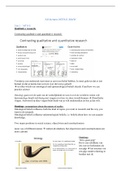
“dit is geen pijp”
Het is een schilderij van
iets wat we herkennen als
een pijp het noemen van
een pijp zonder rekening te
houden met de
,geconstrueerde aard van het beeld kan worden beschouwd als een realistische of
objectivistische benadering. De pijp wordt gepresenteerd als een objectieve werkelijkheid. Als
je ontkent dat het een pijp is dan wordt de aandacht gelegd op het geconstrueerde karakter van
deze pijp.
Epistemology
Objectivism empiricism
Constructionism interpretivism: how people construct meaning from their experiences
Ontological positions have consequences for our epistemological position.
als we aannemen dat er een externe realiteit is, volgt hieruit dat we deze realiteit kunnen
bestuderen met behulp van onze zintuigen: we kunnen het zien, horen, ruiken etc. Het idee dat
we de werkelijkheid kunnen kennen door gebruik te maken van onze zintuigen heet
empirisme (empiricism). Als we geloven dat de werkelijkheid geconstrueerd is, moeten we
een andere manier kiezen om kennis te krijgen over die werkelijkheid bijv. erkennen dat
mensen de werkelijkheid op verschillende manieren construeren.
Ontology + epistemology = paradigm
Paradigms
Scientific paradigms:
1. Positivism er is een externe realiteit en die kunnen we kennen door gebruik te
maken van onze zintuigen
2. Post-positivism positivism is later genuanceerd omdat de werkelijkheid nooit
volledig bekend kan zijn (maar post-positivism nog steeds een objectieve benadering)
3. Interpetivism het is belangrijk om te weten te komen hoe mensen de wereld om hen
heen begrijpen en interpreteren. Als mensen situaties als reëel definiëren, zijn ze reëel
in hun gevolgen.
4. Constructionism Als mensen de werkelijkheid waarin ze leven construeren, dan
doen onderzoekers dat ook. Het is daarom belangrijk dat sociale onderzoekers
voortdurend nadenken over hun eigen rol. Een ander inzicht dat de constructivistische
benadering met zich meebrengt, is de erkenning van het belang van taal
5. Critical-theory Bovendien heeft de erkenning van de rol van onderzoekers zelf in
het construeren van realiteiten aanleiding gegeven tot (participatief) actie-onderzoek.
, In het besef dat zij deel uitmaken van de constructie, zijn de onderzoekers zich
verantwoordelijk gaan voelen voor de uitkomsten van hun onderzoek. Dit had ertoe
geleid dat de onderzoekers zich gingen bezighouden met onderzoek dat de bestaande
realiteiten in twijfel trekt, zoals in de kritische theorie, of dat zou leiden tot concrete
voordelen voor de betrokkenen, zoals actie-onderzoek.
oParadigms and the qualitative/quantitative divide
Example questions:
Opties:
A. The title suggests a qualitative approach
B. The title suggests a quantitative approach
C. the title suggests a mixed methods approach
D. The title suggests a theoretical study
1. Organizational culture of participation: Development and validation of a measure B
2. How employees with different national identities experience a geocentric organizational
culture of a global corporation A
3. Drinking beer and understanding organizational culture embodiment A
Unit 2 (deel 1) – MTO-E
Part 1: Quality of research
When is research good research?
→ According to different paradigms. One’s paradigm influences one’s beliefs of what good
research is.
→ Different approaches, je moet de verschillende paradigms kunnen koppelen aan een ‘goede
manier’.
Good research - Quality criteria implied in positivism:
In positivism, it is assumed that there is an objective reality that we can know more or less
unproblematically by adopting an empirical approach.
- Findings are an accurate reflection of reality - validity (various types)
- Another researcher will be able to conduct the same research - replicability
- When another researcher will conduct the research, the results will be the same -
reliability
kwaliteit kan worden bewezen door het leveren van statistisch bewijs over
confidence intervals etc.
, Quality criteria for social sciences:
Approach described above is not always satisfying, especially when working with an
interpretivist or constructivist approach they are also interested in people’s experiences, to
interpret their stories. Such an interpretivist approach can not produce statistical evidence.
So how to judge the quality of qualitative research?
→ there are different ‘schools’. Some researchers have a more positivist orientation: they
believe that there is a reality that we can know. They may still speak about the quality of their
research in terms of validity, reliability, and replicability.
Sommige onderzoekers vinden deze drie concepten te veel geassocieerd met kwantitatief
onderzoek en met ontological and epistemological positions that are too different from their
own. Daarom stellen zij voor om het anders te verwoorden, in terms like ‘trustworthiness’.
↴
Different formulation:
Trustworthiness has four dimensions
- Credibility - being confident that the findings provide a good picture of what was
studied/ confidence in the ‘truth’ of the findings.
- Transferability - showing that findings are relevant beyond the case that was studied/
that the findings have applicability in other contexts.
- Dependability - showing that the findings are consistent and could be repeated.
- Confirmability - a degree of neutrality or the extent to which the findings of a study
are shaped by the respondents and not researcher bias, motivation or interest.
⇒ The definitions of these four dimensions sound quite similar to validity, reliability and
replicability.
In the constructivist paradigm en action research they argue that research should not only be
judged in its own terms, but also on its social relevance (usefulness). Some researches even
adopt this criterion as the main criterion.
Techniques to establish trustworthiness in qualitative research
1. To create CREDIBILITY
- Prolonged engagement & persistent observation: Findings are more credible if
researchers can show that they have spent enough time on data collection.
- Triangulation: using multiple data sources in an investigation to produce
understanding. This provides a better picture.
- Peer debriefing: exposing oneself to a disinterested peer in a manner paralleling an
analytical session and for the purpose of exploring aspects of the inquiry that
might otherwise remain only implicit.
- Negative case analysis: Analysis of deviant cases may revise, broaden and confirm the
patterns emerging from data analysis.
- Referential adequacy: checking interpretations against data that have not been
analysed yet.
- Member-checking (= respondent validation): data, analytic categories, interpretations
and conclusions are tested with members of those groups from whom the data were
originally obtained. Can be confusing if they do not agree.
2. to create TRANSFERABILITY
Unit 1 – MTO-E
Qualitative research
Contrasting qualitative and quantitative research
Voordat je een onderzoek start moet je eerst een belief hebben. Je moet geloven dat er iets
bestaat en dat je kennis kan werven over dat wat je gelooft.
in other words our ontological and epistemological beliefs decide if and how we can
practice science
Ontology gaat over de aard van de werkelijkheid en wat er over de wereld te weten valt
Epistemology houdt zich bezig met vragen over hoe we deze wereld kennen filosofische
vragen. Antwoord op deze vragen beïnvloedt wat je wilt onderzoeken en hoe je dat wilt.
Ontology: assumptions about the nature of reality
Ontological beliefs influence both the kind of topics you want to research and the way you
want to do research.
Ontological beliefs influence epistemological beliefs, i.e. beliefs about how we can acquire
knowledge.
Two major positions in social science: objectivism and constructionism
(note: use of different names realism & idealism, but objectivism and constructionism are
more current)
Ontology
“dit is geen pijp”
Het is een schilderij van
iets wat we herkennen als
een pijp het noemen van
een pijp zonder rekening te
houden met de
,geconstrueerde aard van het beeld kan worden beschouwd als een realistische of
objectivistische benadering. De pijp wordt gepresenteerd als een objectieve werkelijkheid. Als
je ontkent dat het een pijp is dan wordt de aandacht gelegd op het geconstrueerde karakter van
deze pijp.
Epistemology
Objectivism empiricism
Constructionism interpretivism: how people construct meaning from their experiences
Ontological positions have consequences for our epistemological position.
als we aannemen dat er een externe realiteit is, volgt hieruit dat we deze realiteit kunnen
bestuderen met behulp van onze zintuigen: we kunnen het zien, horen, ruiken etc. Het idee dat
we de werkelijkheid kunnen kennen door gebruik te maken van onze zintuigen heet
empirisme (empiricism). Als we geloven dat de werkelijkheid geconstrueerd is, moeten we
een andere manier kiezen om kennis te krijgen over die werkelijkheid bijv. erkennen dat
mensen de werkelijkheid op verschillende manieren construeren.
Ontology + epistemology = paradigm
Paradigms
Scientific paradigms:
1. Positivism er is een externe realiteit en die kunnen we kennen door gebruik te
maken van onze zintuigen
2. Post-positivism positivism is later genuanceerd omdat de werkelijkheid nooit
volledig bekend kan zijn (maar post-positivism nog steeds een objectieve benadering)
3. Interpetivism het is belangrijk om te weten te komen hoe mensen de wereld om hen
heen begrijpen en interpreteren. Als mensen situaties als reëel definiëren, zijn ze reëel
in hun gevolgen.
4. Constructionism Als mensen de werkelijkheid waarin ze leven construeren, dan
doen onderzoekers dat ook. Het is daarom belangrijk dat sociale onderzoekers
voortdurend nadenken over hun eigen rol. Een ander inzicht dat de constructivistische
benadering met zich meebrengt, is de erkenning van het belang van taal
5. Critical-theory Bovendien heeft de erkenning van de rol van onderzoekers zelf in
het construeren van realiteiten aanleiding gegeven tot (participatief) actie-onderzoek.
, In het besef dat zij deel uitmaken van de constructie, zijn de onderzoekers zich
verantwoordelijk gaan voelen voor de uitkomsten van hun onderzoek. Dit had ertoe
geleid dat de onderzoekers zich gingen bezighouden met onderzoek dat de bestaande
realiteiten in twijfel trekt, zoals in de kritische theorie, of dat zou leiden tot concrete
voordelen voor de betrokkenen, zoals actie-onderzoek.
oParadigms and the qualitative/quantitative divide
Example questions:
Opties:
A. The title suggests a qualitative approach
B. The title suggests a quantitative approach
C. the title suggests a mixed methods approach
D. The title suggests a theoretical study
1. Organizational culture of participation: Development and validation of a measure B
2. How employees with different national identities experience a geocentric organizational
culture of a global corporation A
3. Drinking beer and understanding organizational culture embodiment A
Unit 2 (deel 1) – MTO-E
Part 1: Quality of research
When is research good research?
→ According to different paradigms. One’s paradigm influences one’s beliefs of what good
research is.
→ Different approaches, je moet de verschillende paradigms kunnen koppelen aan een ‘goede
manier’.
Good research - Quality criteria implied in positivism:
In positivism, it is assumed that there is an objective reality that we can know more or less
unproblematically by adopting an empirical approach.
- Findings are an accurate reflection of reality - validity (various types)
- Another researcher will be able to conduct the same research - replicability
- When another researcher will conduct the research, the results will be the same -
reliability
kwaliteit kan worden bewezen door het leveren van statistisch bewijs over
confidence intervals etc.
, Quality criteria for social sciences:
Approach described above is not always satisfying, especially when working with an
interpretivist or constructivist approach they are also interested in people’s experiences, to
interpret their stories. Such an interpretivist approach can not produce statistical evidence.
So how to judge the quality of qualitative research?
→ there are different ‘schools’. Some researchers have a more positivist orientation: they
believe that there is a reality that we can know. They may still speak about the quality of their
research in terms of validity, reliability, and replicability.
Sommige onderzoekers vinden deze drie concepten te veel geassocieerd met kwantitatief
onderzoek en met ontological and epistemological positions that are too different from their
own. Daarom stellen zij voor om het anders te verwoorden, in terms like ‘trustworthiness’.
↴
Different formulation:
Trustworthiness has four dimensions
- Credibility - being confident that the findings provide a good picture of what was
studied/ confidence in the ‘truth’ of the findings.
- Transferability - showing that findings are relevant beyond the case that was studied/
that the findings have applicability in other contexts.
- Dependability - showing that the findings are consistent and could be repeated.
- Confirmability - a degree of neutrality or the extent to which the findings of a study
are shaped by the respondents and not researcher bias, motivation or interest.
⇒ The definitions of these four dimensions sound quite similar to validity, reliability and
replicability.
In the constructivist paradigm en action research they argue that research should not only be
judged in its own terms, but also on its social relevance (usefulness). Some researches even
adopt this criterion as the main criterion.
Techniques to establish trustworthiness in qualitative research
1. To create CREDIBILITY
- Prolonged engagement & persistent observation: Findings are more credible if
researchers can show that they have spent enough time on data collection.
- Triangulation: using multiple data sources in an investigation to produce
understanding. This provides a better picture.
- Peer debriefing: exposing oneself to a disinterested peer in a manner paralleling an
analytical session and for the purpose of exploring aspects of the inquiry that
might otherwise remain only implicit.
- Negative case analysis: Analysis of deviant cases may revise, broaden and confirm the
patterns emerging from data analysis.
- Referential adequacy: checking interpretations against data that have not been
analysed yet.
- Member-checking (= respondent validation): data, analytic categories, interpretations
and conclusions are tested with members of those groups from whom the data were
originally obtained. Can be confusing if they do not agree.
2. to create TRANSFERABILITY