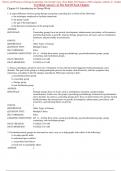
Financial Accounting Theory Analysis Chapter 1 SUMMARY GUIDE TO YOUR EXAMS
Financial Accounting Theory Analysis Chapter 1 In its simplest form, the theory may be just a belief, but in order for a theory to be useful, it must have wide acceptance. Webster defines theory as Systematically organized knowledge, applicable in a relatively wide variety of circumstances, a system of assumptions, accepted principles and rules of procedure to analyze, predict or otherwise explain the nature of the behavior of a specified set of phenomena.1 The objective of theory is to explain and predict. Consequently, one of the basic goals of the theory of a particular discipline is to have a well-defined body of knowledge that has been systematically accumulated, organized, and verified well enough to provide a frame of reference for future actions. Theories may be described as normative or positive. Normative theories explain what should be, whereas positive theories explain what is. Ideally, there should be no such distinction, because a well-developed and complete theory encompasses both what should be and what is. The goal of accounting theory is to provide a set of principles and relationships that explains observed practices and predicts unobserved practices. That is, accounting theory should be able to both explain why business organizations elect certain accounting methods over other alternatives and predict the attributes of firms that elect various accounting methods. Accounting theory should also be verifiable through accounting research. The development of a general theory of accounting is important because of the role, accounting plays in our economic society. We live in a capitalistic society, which is characterized by a self-regulated market that operates through the forces of supply and demand. Goods and services are available for purchase in markets, and individuals are free to enter or exit the market to pursue their economic goals. All societies are constrained by scarce resources that limit the attainment of all individual or group economic goals. The role of accounting in our society is to report how organizations use scarce resources and on the status of resources and claims to resources. As discussed in more detail in Chapter 4, there are various “theories of accounting,” including the fundamental analysis model, the efficient markets hypothesis, the capital asset pricing model, the human information processing model, positive accounting theory, and the critical perspective model. These often competing theories exist because accounting theory has not yet developed into the state described by Webster’s definition. Accounting research is needed to attain a more general theory of accounting, and in this regard, the various theories of accounting that have been posited must be subjected to verification. A critical question concerns the usefulness of accounting data to users. That is, does the use of a theory help individual decision-makers make more correct decisions? Various suggestions on the empirical testing of accounting theories have been offered.2 As theories are tested and either confirmed or discarded, we will move closer to a general theory of accounting. The goal of this text is to provide a user perspective on accounting theory. To this end, we first review the development of accounting theory in an effort to illustrate how investor needs have been perceived over time. Next, we review the current status of accounting theory with an emphasis on how investors and potential investors use accounting and other financial information. Finally, we illustrate current disclosure requirements for various financial statement items and show how various companies are complying with these disclosure requirements.
Escuela, estudio y materia
- Institución
- Chamberlain College Nursing
- Grado
- FNP 509
Información del documento
- Subido en
- 1 de septiembre de 2021
- Archivo actualizado en
- 14 de septiembre de 2021
- Número de páginas
- 29
- Escrito en
- 2021/2022
- Tipo
- OTRO
- Personaje
- Desconocido
Temas
-
financial accounting
-
financial accounting theory analysis chapter 1
-
financial accounting theory analysis
-
financial accounting theory
-
summary guide to your exams
-
download for grade a